Creamy Coconut Mochi Ball Soup (Ginataang Bilo Bilo)
Ginataang Bilo Bilo Recipe
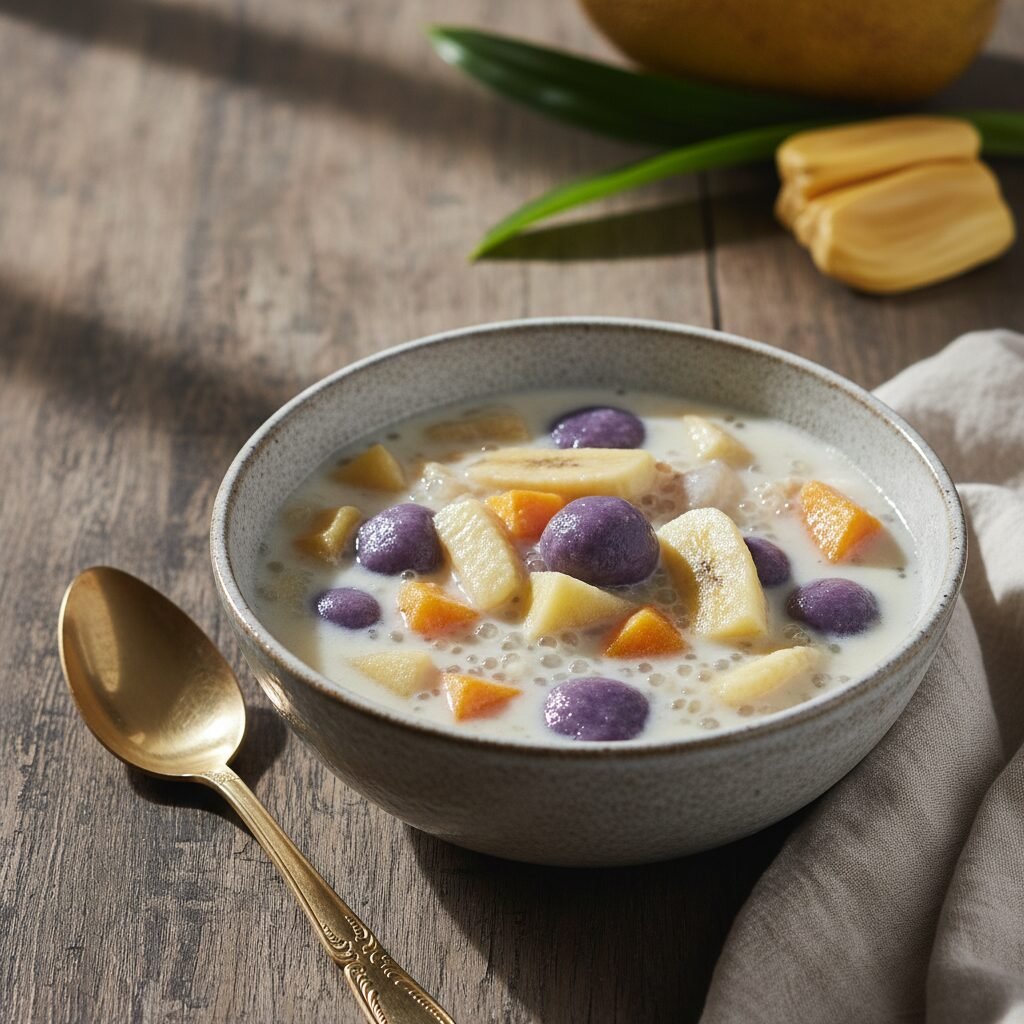
Get ready to fall in love with the ultimate Filipino comfort food! This Ginataang Bilo Bilo is a warm, cozy hug in a bowl, filled with chewy ube-tinted mochi balls, sweet fruits, and tender root vegetables all swimming in a dreamy, sweet coconut milk broth. It’s the perfect treat for a lazy afternoon or a satisfying dessert that feels both nostalgic and wonderfully unique.
25 minutes
30 minutes
55 minutes
6-8 servings
Dessert
Stovetop
Filipino
Gluten-Free, Vegan
Why You’ll Love This Recipe
- Irresistibly chewy mochi-like rice balls (bilo bilo).
- A rich, creamy, and perfectly sweet coconut milk base.
- Packed with colorful, tender sweet potatoes, bananas, and jackfruit.
- Naturally gluten-free and easily made vegan.
Equipment You’ll Need
- Large heavy-bottomed pot or Dutch oven
- Large mixing bowl
- Small bowl (for tapioca pearls)
- Cutting board
- Chef’s knife
- Slotted spoon
- Ladle
Ingredients
- For the Bilo Bilo (Mochi Balls):
- 1 1/2 cups glutinous sweet rice flour (like Mochiko brand)
- 1/2 to 3/4 cup warm water
- 1/2 teaspoon ube extract (optional, for color and flavor)
- For the Coconut Soup & Fillings:
- 1/2 cup small tapioca pearls (sago)
- 2 cups water, for boiling tapioca
- 2 (13.5 oz) cans full-fat coconut milk
- 2 cups water
- 3/4 cup granulated white sugar (adjust to taste)
- 1/4 teaspoon salt
- 1 large sweet potato (about 1 lb), peeled and cubed into 1/2-inch pieces
- 3 ripe saba bananas (or firm plantains), peeled and sliced 1/2-inch thick
- 1 cup ripe jackfruit, sliced (canned in syrup, drained, works great)
Instructions
- First, let’s prepare the tapioca pearls. Bring 2 cups of water to a rolling boil in a small saucepan. Add the tapioca pearls and cook for about 10-15 minutes, stirring occasionally, until they are translucent. Drain them and rinse with cold water to stop the cooking process and remove excess starch. Set them aside.
- Now, for the fun part – the bilo bilo! In a large mixing bowl, combine the glutinous rice flour and the ube extract, if using. Gradually pour in the warm water, starting with 1/2 cup, while mixing with your hand or a spatula. Knead the mixture until it forms a smooth, pliable dough that doesn’t stick to your hands. If it’s too dry, add more water a tablespoon at a time. If it’s too sticky, add a little more flour.
- Pinch off small pieces of the dough and roll them between your palms to form 1/2-inch balls. Place the finished balls on a plate or baking sheet dusted with a little rice flour to prevent them from sticking together. Set aside.
- In a large, heavy-bottomed pot or Dutch oven, combine the two cans of coconut milk, 2 cups of water, sugar, and salt. Whisk everything together and bring it to a gentle simmer over medium heat. Do not let it come to a hard boil, as this can cause the coconut milk to curdle. Stir until the sugar is fully dissolved.
- Once the coconut milk mixture is simmering, carefully add the cubed sweet potatoes. Let them cook for about 10-12 minutes, or until they are tender but not mushy. You should be able to pierce them easily with a fork.
- Gently drop the bilo bilo into the pot one by one, stirring gently to prevent them from clumping. Cook for about 5-7 minutes. You’ll know they’re done when they float to the surface.
- Once the bilo bilo have floated, add the sliced saba bananas to the pot. Cook for another 2-3 minutes, just until the bananas are softened but still hold their shape.
- Finally, stir in the cooked tapioca pearls and the sliced jackfruit. Let everything simmer together for one last minute to allow the flavors to meld. Give it a final taste and add more sugar if you prefer it sweeter.
- Remove the pot from the heat. The ginataang bilo bilo will thicken slightly as it cools. Serve it warm in individual bowls and enjoy the cozy, comforting goodness!
Expert Cooking Tips
- Use full-fat, canned coconut milk for the richest, creamiest texture. The kind in a carton is too thin and won’t give you that luscious consistency.
- Add the ingredients in stages according to their cooking time. Root vegetables go in first, followed by the bilo bilo, and finally the softer fruits like bananas and jackfruit. This ensures everything is perfectly cooked without turning to mush.
- Stir the pot gently but frequently, especially after adding the bilo bilo and tapioca, to prevent them from sticking to the bottom and burning.
- For perfectly chewy, not gummy, bilo bilo, make sure your dough is the right consistency—like soft clay. If it’s too wet, they can dissolve in the soup.
Substitutions and Variations
This recipe is wonderfully versatile! Feel free to add other traditional ingredients like taro root (gabi) or purple yam (ube), adding them along with the sweet potatoes. If you can’t find saba bananas, firm yellow plantains are the best substitute. No jackfruit? You can leave it out or add some ripe mango chunks at the very end. For a richer flavor, you can use brown sugar or coconut sugar instead of white sugar.
Common Mistakes to Avoid
The most common mistake is boiling the coconut milk too vigorously, which can cause it to separate and become oily or curdled. Maintain a gentle, steady simmer throughout the cooking process. Another pitfall is not stirring enough, leading to the ingredients sticking and scorching at the bottom of the pot. Lastly, avoid overcooking the components; the goal is for each ingredient to be tender while retaining its distinct texture and shape.
Serving Suggestions
Ginataang Bilo Bilo is best served warm, ladled into deep, cozy bowls. For a beautiful presentation and an extra layer of texture, you can garnish it with a sprinkle of toasted sesame seeds or toasted coconut flakes. While it’s traditionally enjoyed as a sweet afternoon snack (merienda) or dessert, it’s hearty enough to be a light meal on its own. Some also enjoy it chilled, especially on a warm day!
Storage and Reheating Tips
Store any leftovers in an airtight container in the refrigerator for up to 3 days. The soup will thicken considerably once chilled. To reheat, gently warm it in a saucepan over low heat, adding a splash of water or coconut milk to loosen it back to its original consistency. Avoid microwaving, as it can make the bilo bilo tough.
Nutrition Facts (Estimated)
| Serving Size | 1 bowl (approx. 1.5 cups) |
| Calories | 465 kcal |
| Fat | 22 g |
| Saturated Fat | 19 g |
| Unsaturated Fat | 2 g |
| Trans Fat | 0 g |
| Cholesterol | 0 mg |
| Sodium | 160 mg |
| Carbohydrates | 68 g |
| Fiber | 6 g |
| Sugar | 28 g |
| Protein | 5 g |
Frequently Asked Questions
Can I use pre-made mochi instead of making my own bilo bilo?
While you could technically use unflavored, pre-made mochi, making your own bilo bilo is a key part of the experience and taste. The homemade version is much softer and absorbs the coconut milk flavor beautifully. It’s surprisingly easy to make, so I highly recommend giving it a try!
Where can I find glutinous sweet rice flour and saba bananas?
You can find glutinous sweet rice flour (often the Mochiko brand with the blue box) in the international or baking aisle of most large supermarkets, or at any Asian grocery store. Saba bananas, jackfruit, and ube extract are most commonly found at Asian or international markets.
Why did my coconut milk curdle or look oily?
This usually happens when the coconut milk is boiled at too high a temperature. The key is to maintain a gentle, consistent simmer and never let it reach a rolling boil. Constant, gentle stirring also helps keep the emulsion stable and creamy.
Can I make this ahead of time?
You can, but it’s best enjoyed fresh as the texture of the bilo bilo is optimal right after cooking. If you need to make it ahead, it will keep for a couple of days in the fridge, but be prepared to thin it out with a little water or coconut milk upon reheating as it will thicken significantly.
Conclusion
There’s something truly special about a warm bowl of Ginataang Bilo Bilo. It’s a dessert that’s bursting with different textures and flavors—from the chewy rice balls to the sweet, tender fruit. I hope this recipe brings a little bit of warmth and comfort to your kitchen. If you try it, I would be absolutely thrilled to see your creation! Please snap a photo and share it on Pinterest or Instagram, and don’t forget to tag me!