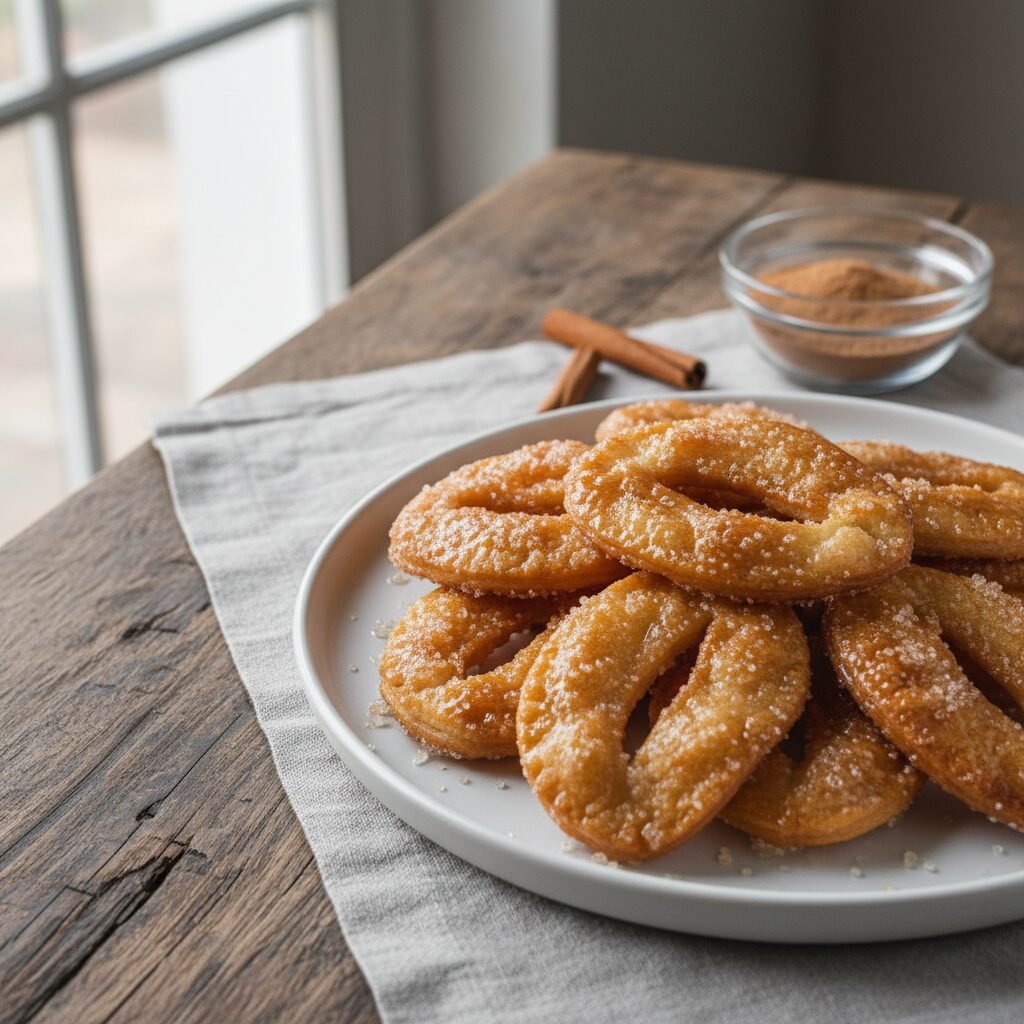
Flaky, Buttery Cinnamon Sugar Orejas (Easy Palmiers!)
Orejas Recipe
Get ready to fall in love with the simplest, most elegant cookie you’ll ever make! These Cinnamon Sugar Orejas, also known as Palmiers or elephant ears, are a bakery classic you can easily recreate at home. With just four ingredients, you can transform a sheet of puff pastry into a batch of irresistibly flaky, buttery, and caramelized treats that will disappear in minutes.
10 minutes
15 minutes
25 minutes
Makes about 18 cookies
Dessert
Baking
Mexican / French
N/A
Why You’ll Love This Recipe
- Made with just 4 simple ingredients!
- Incredibly flaky with a caramelized crunch
- Bakery-quality treats in under 30 minutes
- Perfectly sweet and spiced with cinnamon
Equipment You’ll Need
- 2 Large Baking Sheets
- Parchment Paper
- Rolling Pin
- Pastry Brush
- Sharp Knife or Bench Scraper
- Small Mixing Bowl
Ingredients
- 1/2 cup granulated sugar, plus more for sprinkling
- 1 teaspoon ground cinnamon
- 1 sheet (approx. 10 oz) frozen all-butter puff pastry, thawed according to package directions
- 2 tablespoons unsalted butter, melted
Instructions
- Preheat your oven to 400°F (200°C) and line two baking sheets with parchment paper. This is non-negotiable, as the sugar will caramelize and become very sticky!
- In a small bowl, whisk together the 1/2 cup of granulated sugar and 1 teaspoon of ground cinnamon until thoroughly combined. This fragrant mixture is the heart of your orejas!
- Generously sprinkle about a quarter of your cinnamon-sugar mixture onto a clean, dry work surface. Carefully unfold your thawed puff pastry sheet and lay it over the sugar.
- Sprinkle another quarter of the cinnamon-sugar mixture evenly over the top of the pastry. Gently use a rolling pin to press the sugar into the pastry, rolling it into a rectangle roughly 11×13 inches.
- Using a pastry brush, lightly paint the entire surface of the pastry with the melted butter. Sprinkle the remaining cinnamon-sugar mixture over the buttered surface, reserving about 1 tablespoon for the final step. Pat it down gently so it adheres.
- Now for the signature fold! Mentally divide the pastry into quarters horizontally. Fold the two long outer edges in to meet at the center line. It should look like an open book.
- Gently press the folds down. Then, fold the entire thing in half again, like closing the book. You should now have a long, layered log with 4 layers on each side.
- Wrap the log in plastic wrap and chill in the refrigerator for 15-20 minutes (or the freezer for 10). This step is crucial for getting clean cuts and helping the cookies keep their shape.
- Remove the chilled log from the fridge. Using a very sharp knife, slice the log into cookies about 1/2-inch thick. If the log squishes, it needs more chilling time.
- Arrange the slices cut-side up on your prepared baking sheets, leaving at least 2 inches of space between each one. They will expand and spread significantly as they bake.
- Sprinkle the tops of the cookies with the reserved tablespoon of cinnamon sugar for an extra sparkly, crunchy finish.
- Bake for 10-15 minutes, or until the bottoms are a deep golden brown and the sugar is bubbly and caramelized. Keep a close eye on them during the last few minutes, as the sugar can go from perfect to burnt very quickly.
- Remove from the oven and let the orejas cool on the baking sheet for 2-3 minutes to allow the caramel to set slightly. Then, using a spatula, carefully transfer them to a wire rack to cool completely. They will crisp up as they cool.
Expert Cooking Tips
- Keep it Cold: The secret to flaky puff pastry is keeping it cold. If at any point the dough becomes soft or sticky, pop it back in the fridge for 10 minutes before continuing. This prevents the butter layers from melting, which is what creates that beautiful puff.
- Don’t Skimp on Sugar: The sugar does more than just sweeten the cookies; it creates the crackly, caramelized crust that makes orejas so addictive. Be generous when coating your work surface and the pastry itself.
- Parchment Paper is a Must: Do not try to bake these on an unlined or greased baking sheet. The melted sugar will turn into a hard candy that is nearly impossible to clean. Parchment paper makes cleanup a breeze.
- Watch for the Color: The visual cue for doneness is a deep, amber-colored caramel on the bottom of the cookies. If they are pale, they won’t be crispy. If the caramel gets too dark, it will taste bitter, so watch them closely.
Substitutions and Variations
While the classic cinnamon-sugar combination is divine, feel free to get creative! You can swap the cinnamon for other warm spices like cardamom, nutmeg, or pumpkin pie spice. For a richer flavor, use brown sugar or demerara sugar instead of granulated. Add a pinch of sea salt to the sugar mix to balance the sweetness. For a nutty twist, sprinkle finely chopped pecans or walnuts over the buttered pastry before folding. To make these vegan, simply use a vegan-certified puff pastry (many store-bought brands are accidentally vegan) and substitute the butter with melted vegan butter or coconut oil.
Common Mistakes to Avoid
The most common mistake is letting the puff pastry get too warm. When the butter in the pastry melts before it hits the oven, you lose the layers and end up with dense, greasy cookies instead of light, flaky ones. Always work quickly and chill the dough if it becomes soft. Another frequent issue is underbaking. It’s tempting to pull them out when they look lightly golden, but you need to wait for the sugar on the bottom to fully caramelize to a deep amber color. This is what creates the signature crunch. Slicing the cookies too thick will result in a doughy center, while slicing too thin can cause them to burn easily, so aim for that sweet spot of about 1/2-inch thickness.
Serving Suggestions
These elegant cookies are perfect on their own, served alongside a hot cup of coffee, tea, or a rich hot chocolate. They make a beautiful addition to a dessert platter or cookie box. For an extra decadent treat, dip one half of each cooled oreja in melted dark chocolate and let it set. You can also crumble them over a bowl of vanilla bean ice cream or yogurt for a delightful textural contrast.
Storage and Reheating Tips
Orejas are at their absolute best the day they are made, when they are at peak crispness. However, you can store them in an airtight container at room temperature for up to 3 days. Be aware that they may lose some of their crispness over time as they absorb moisture from the air. Do not refrigerate them, as this will make them soft. If they do become a bit soft, you can refresh them in a 350°F oven for 3-5 minutes to crisp them up again.
Nutrition Facts (Estimated)
| Serving Size | 1 cookie |
| Calories | 95 kcal |
| Fat | 6 g |
| Saturated Fat | 3 g |
| Unsaturated Fat | 3 g |
| Trans Fat | 0 g |
| Cholesterol | 5 mg |
| Sodium | 45 mg |
| Carbohydrates | 9 g |
| Fiber | 0.5 g |
| Sugar | 6 g |
| Protein | 1 g |
Frequently Asked Questions
Can I use homemade puff pastry?
Absolutely! If you have a trusted recipe for homemade puff pastry, it will make these orejas even more spectacular. The process remains the same, just be sure your homemade dough is well-chilled before you begin rolling and folding.
Why did my orejas unravel in the oven?
This usually happens for two reasons. First, the dough might not have been chilled enough before slicing and baking, causing it to spread too much. Second, they might have been sliced too thin. A solid 1/2-inch thickness helps the layers stick together as they puff up.
Can I prepare the log of dough ahead of time?
Yes, this is a great time-saver! You can prepare the folded and wrapped log of dough and refrigerate it for up to 2 days or freeze it for up to a month. When you’re ready to bake, just thaw the frozen log in the refrigerator for about an hour, then slice and bake as directed.
My sugar burned on the baking sheet. What went wrong?
This is a common issue and usually means the oven temperature was too high or the cookies were baked for too long. Every oven is different, so it’s best to start checking them a few minutes before the recipe suggests. A dark-colored baking sheet can also cause bottoms to burn faster, so using a light-colored one can help.
Conclusion
And there you have it—gorgeous, crispy, and utterly delicious orejas that taste like they came straight from a French or Mexican bakery. It’s amazing how a few simple ingredients can create something so special. I hope you and your family love this recipe as much as I do. If you make them, please snap a photo and share it with me on Pinterest or Instagram—I love seeing your beautiful creations!