Silky Burnt-Top Mexican Custard (Easy Jericalla Recipe)
Jericalla Recipe
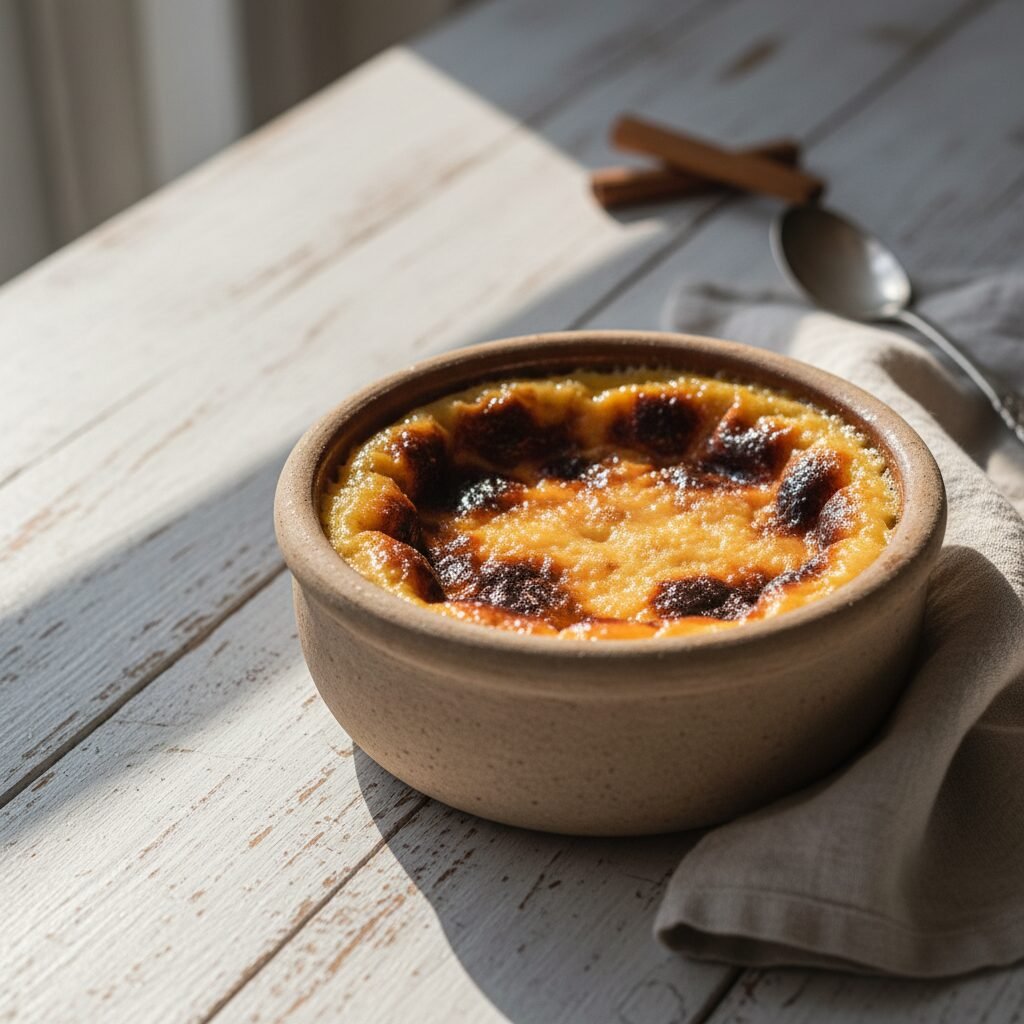
Get ready to fall in love with Jericalla, Guadalajara’s best-kept secret! This dreamy dessert is like a beautiful cross between crème brûlée and flan, but so much simpler to make. With its velvety, cinnamon-kissed custard base and signature scorched top, it’s a rustic yet elegant treat that will transport you straight to the heart of Mexico.
15 minutes
45 minutes
3 hours (includes 2 hours chilling time)
6 servings
Dessert
Baking
Mexican
Gluten-Free
Why You’ll Love This Recipe
- Made with just 5 simple, everyday ingredients!
- Achieves an incredibly silky, melt-in-your-mouth texture.
- Features a perfectly scorched, rustic top—no blow torch required!
- An authentic taste of Guadalajara that’s surprisingly easy to master.
Equipment You’ll Need
- 6 (4-6 ounce) oven-safe ramekins or custard cups
- 9×13 inch baking dish (or one large enough to hold the ramekins)
- Medium saucepan
- Mixing bowl
- Whisk
- Fine-mesh sieve
- Ladle
Ingredients
- 3 cups whole milk
- 1 cup heavy cream
- 1 Mexican cinnamon stick (or regular Cassia cinnamon stick)
- 3/4 cup granulated sugar, divided
- 1 teaspoon pure vanilla extract
- 4 large eggs
- 1 large egg yolk
Instructions
- Preheat your oven to 350°F (175°C). Arrange 6 ramekins inside a large baking dish.
- In a medium saucepan, combine the whole milk, heavy cream, cinnamon stick, and 1/2 cup of the granulated sugar. Heat over medium heat, stirring occasionally, until the sugar dissolves and the mixture is steaming and small bubbles form around the edge. Do not let it boil.
- Once steaming, remove the saucepan from the heat, cover it, and let the cinnamon stick infuse its flavor into the milk for about 15 minutes.
- While the milk infuses, whisk together the 4 whole eggs, 1 egg yolk, and the remaining 1/4 cup of sugar in a separate large bowl until pale and slightly frothy.
- Remove the cinnamon stick from the milk mixture and stir in the vanilla extract.
- Now for the most important step: tempering the eggs. While whisking the egg mixture constantly with one hand, use a ladle to slowly drizzle in about a cup of the warm milk mixture with the other hand. Continue adding the milk, one ladleful at a time, until it’s all incorporated. This slow process prevents the eggs from scrambling.
- Pour the custard mixture through a fine-mesh sieve into a large measuring cup or pitcher. This step is crucial for ensuring a silky-smooth texture.
- Carefully pour the strained custard mixture evenly among the 6 ramekins in the baking dish.
- Place the baking dish on the oven rack. Carefully pour hot water into the baking dish until it comes halfway up the sides of the ramekins. This water bath (bain-marie) ensures the custards cook gently and evenly.
- Bake for 40-50 minutes. The custards are done when the edges are set, but the centers still have a slight jiggle when you gently shake the pan. They will continue to set as they cool.
- Carefully remove the baking dish from the oven. Let the ramekins cool in the water bath for about 15 minutes before transferring them to a wire rack to cool completely.
- For the signature burnt top, turn your oven’s broiler on high. Place the cooled custards on a baking sheet and broil them for 1-3 minutes, watching them like a hawk. You want dark, scorched spots to form on top. The moment they look right, pull them out—they can burn in seconds!
- Refrigerate the Jericallas for at least 2 hours, or until fully chilled, before serving.
Expert Cooking Tips
- Don’t skip the straining step! Pouring the custard base through a fine-mesh sieve is the secret to an impeccably smooth, restaurant-quality texture. It catches any potential bits of chalazae from the eggs or tiny milk solids.
- Be patient when tempering the eggs. Adding the hot milk too quickly will cook the eggs and result in a grainy texture. A slow, steady stream while whisking continuously is key.
- When broiling, every oven is different. Stay right by the oven door and watch carefully. The tops can go from perfectly scorched to completely burnt in a matter of seconds.
- For a richer flavor, you can use a split vanilla bean instead of extract. Add it to the milk along with the cinnamon stick and scrape the seeds into the mixture before straining.
Substitutions and Variations
For a slightly lighter version, you can use all whole milk and omit the heavy cream, though the result will be less rich. To make this dairy-free, substitute the milk and cream with full-fat canned coconut milk for a creamy texture with a tropical twist. You can also experiment with other spices; a star anise or a few cardamom pods added to the milk during the infusion step can provide a wonderful aromatic variation.
Common Mistakes to Avoid
The most common mistake is over-baking the custards, which leads to a rubbery or curdled texture. Remember to pull them from the oven when the center is still slightly wobbly; they will firm up as they cool. Another pitfall is not watching the broiler closely enough. The high, direct heat can burn the tops very quickly, so do not walk away during this step. Finally, rushing the tempering process will scramble your eggs, so take your time and add the hot milk very slowly at first.
Serving Suggestions
Jericalla is divine served chilled, straight from the ramekin, allowing the silky custard and caramelized top to shine. For a touch of freshness, serve alongside a few tart raspberries or thinly sliced strawberries, which provide a beautiful contrast to the sweet, creamy custard. It also pairs wonderfully with a cup of strong, dark roast coffee or a shot of espresso for an elegant after-dinner treat.
Storage and Reheating Tips
Store leftover Jericallas in the refrigerator for up to 3 days. To prevent a skin from forming and to keep them from absorbing other fridge odors, cover each ramekin tightly with plastic wrap. They are best enjoyed cold and should not be reheated.
Nutrition Facts (Estimated)
| Serving Size | 1 (4 oz) ramekin |
| Calories | 210 kcal |
| Fat | 10 g |
| Saturated Fat | 5 g |
| Unsaturated Fat | 4 g |
| Trans Fat | 0 g |
| Cholesterol | 145 mg |
| Sodium | 95 mg |
| Carbohydrates | 23 g |
| Fiber | 0 g |
| Sugar | 22 g |
| Protein | 7 g |
Frequently Asked Questions
What is the difference between Jericalla, Flan, and Crème Brûlée?
They are all delicious custard cousins! Flan is typically denser, baked in a caramel-lined pan, and inverted for serving. Crème brûlée has a rich, heavy cream base and is famous for its hard, crackly top made by torching sugar. Jericalla is lighter than both, made with more milk, infused with cinnamon, and gets its signature scorched spots from the oven’s broiler, resulting in a softer, more rustic topping.
Why did my custard turn out watery and not set properly?
This usually happens for two reasons: under-baking or an incorrect ratio of liquid to eggs. Make sure you bake until the edges are set and only the very center has a slight jiggle. Also, double-check your measurements. Using medium eggs instead of large, for example, can throw off the balance needed for the custard to set.
Can I make Jericalla ahead of time?
Absolutely! Jericalla is a fantastic make-ahead dessert. You can prepare and bake them a day or two in advance. Keep them covered in the refrigerator and do the final broiling step just before you plan to serve them for the best texture and presentation.
Conclusion
There’s a special kind of magic in creating a dessert that’s so simple yet so incredibly elegant and satisfying. This Jericalla recipe brings the authentic, comforting flavors of a Guadalajara kitchen right into your home. It’s perfect for ending a dinner party on a high note or for just treating yourself to something special. If you try this recipe, I would be thrilled to see it! Please share a photo on Pinterest or Instagram and tag me so I can see your beautiful burnt-top creations!