Golden Piloncillo & Peanut Brittle (Easy Palanqueta Recipe)
Palanqueta Recipe
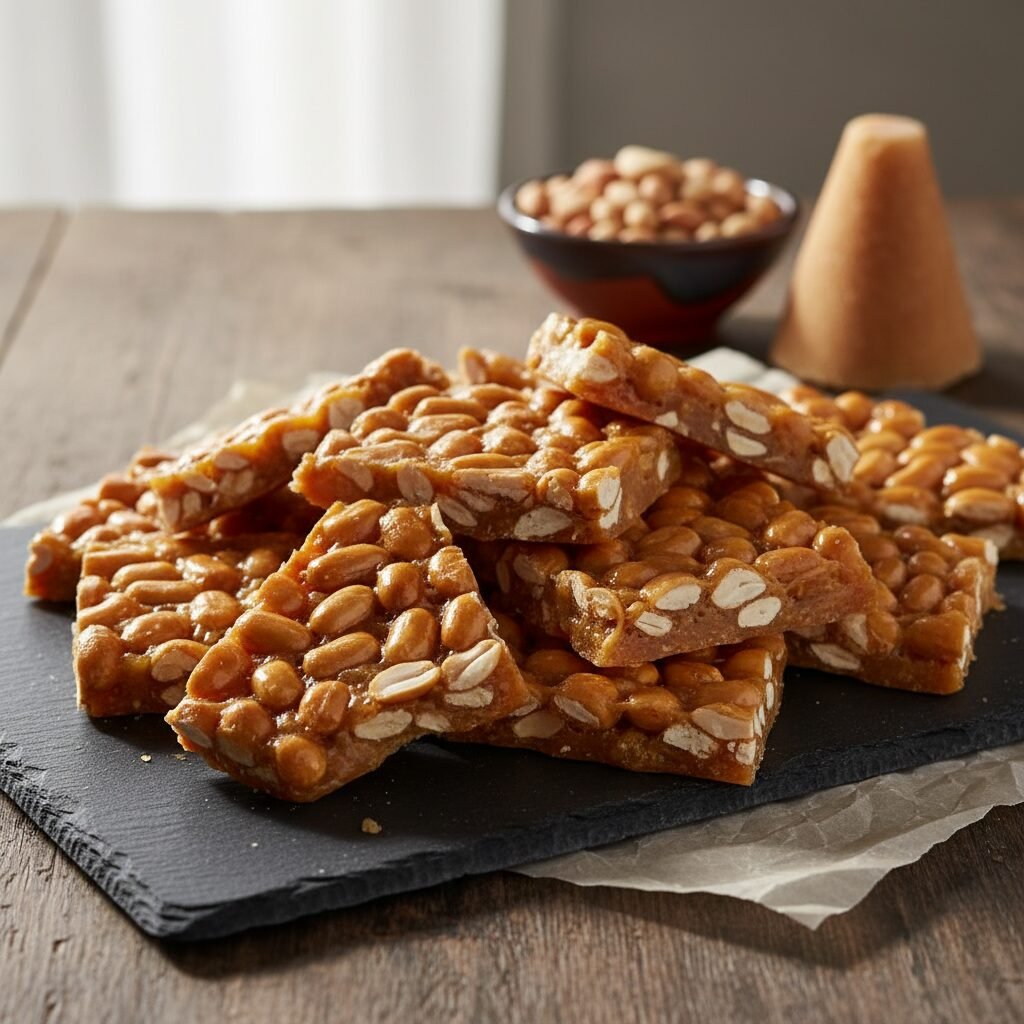
Get ready to fall in love with the irresistible crunch of Palanqueta, a traditional Mexican peanut brittle that’s a symphony of sweet, salty, and nutty flavors. This recipe uses authentic piloncillo for a deep, molasses-like sweetness, creating a golden, glassy candy that shatters with every bite. It’s surprisingly simple to make at home and perfect for gifting or satisfying a serious sweet tooth!
10 minutes
15-20 minutes
25-30 minutes (plus cooling time)
Makes about 1.5 lbs (24 squares)
Dessert
Stovetop
Mexican
Gluten-Free
Why You’ll Love This Recipe
- Insanely crunchy texture with a satisfying snap
- Rich, authentic flavor from traditional piloncillo sugar
- Ready in under 30 minutes with just a few pantry staples
- Naturally gluten-free and perfect for holiday gifting
Equipment You’ll Need
- Heavy-bottomed 3-quart saucepan
- Candy thermometer
- Large rimmed baking sheet (13×18 inch)
- Parchment paper
- Heat-resistant silicone spatula or wooden spoon
Ingredients
- 2 cups raw, unsalted peanuts
- 8 ounces piloncillo, finely chopped (or 1 cup packed dark brown sugar)
- 1/2 cup water
- 1/4 cup light corn syrup
- 1/2 teaspoon kosher salt
- 2 tablespoons unsalted butter, softened
- 1 teaspoon pure vanilla extract
- 1 teaspoon baking soda
- Optional: 1/4 teaspoon cayenne pepper or ancho chili powder
Instructions
- Prepare your station: Line a large, rimmed baking sheet with parchment paper. Lightly grease the parchment paper with butter or non-stick spray. Have all your ingredients measured and ready next to the stove – candy making moves very quickly at the end!
- Toast the peanuts: If using raw peanuts, spread them on a dry baking sheet and toast at 350°F (175°C) for 5-7 minutes, or until fragrant and lightly golden. Set aside.
- Start the syrup: In a heavy-bottomed saucepan, combine the chopped piloncillo (or brown sugar), water, corn syrup, and salt. Stir over medium heat until the sugar is completely dissolved.
- Bring to a boil: Once the sugar has dissolved, attach a candy thermometer to the side of the pan, making sure the tip is submerged in the syrup but not touching the bottom. Bring the mixture to a boil without stirring.
- Cook to temperature: Continue to cook the syrup, swirling the pan occasionally, until it reaches 280°F (138°C), the ‘soft crack’ stage.
- Add the peanuts: Carefully stir in the toasted peanuts and the optional cayenne pepper. Continue to cook, stirring constantly to prevent the peanuts from burning, until the thermometer registers 300°F (150°C), the ‘hard crack’ stage. The mixture will be a deep amber color.
- Finish the candy: Immediately remove the pan from the heat. Working quickly, stir in the softened butter and vanilla extract until the butter is melted. The mixture will bubble up vigorously. Finally, sprinkle the baking soda over the mixture and stir until just combined. The candy will foam and lighten in color.
- Pour and spread: Instantly pour the hot candy mixture onto the prepared baking sheet. Use your greased spatula to quickly spread it into a thin, even layer. Be careful, as the mixture is extremely hot.
- Cool completely: Let the palanqueta cool at room temperature for at least 1 hour, or until it’s completely hard and set. Do not refrigerate it, as this can make it sticky.
- Break and serve: Once cooled, lift the parchment paper and break the palanqueta into rustic, snack-sized pieces. Enjoy immediately or store for later.
Expert Cooking Tips
- A candy thermometer is your best friend for this recipe. It removes all the guesswork and is the single most important tool for achieving that perfect, crunchy, non-sticky brittle.
- Prep everything in advance (mise en place). The final steps of candy making are extremely fast. Have your butter, vanilla, and baking soda measured and ready to be added the moment the syrup hits temperature.
- Don’t skip the baking soda! It’s not for flavor; it’s a chemical reaction. It creates tiny air pockets in the hot syrup, which gives the brittle a lighter, more delicate, and easier-to-bite texture.
- When spreading the hot brittle, work from the center outwards. If it starts to harden too quickly, you can use a second piece of greased parchment on top and a rolling pin to flatten it further, but you must be fast!
Substitutions and Variations
If you can’t find piloncillo, dark brown sugar is the best substitute for a similar molasses flavor. The light corn syrup is important for preventing sugar crystallization, but in a pinch, you can omit it—just be extra careful not to agitate the syrup while it boils. This recipe is incredibly versatile with nuts and seeds! Try it with pecans, slivered almonds, or even pumpkin seeds (pepitas) for a delicious variation. For a dairy-free version, use a high-quality plant-based butter.
Common Mistakes to Avoid
The most frequent issue is undercooking the sugar, resulting in a sticky, chewy candy instead of a brittle one. You must let it reach the ‘hard crack’ stage of 300-310°F (150-154°C). The second common mistake is burning the sugar or peanuts by not stirring constantly after adding the nuts. The temperature can rise very quickly in the final minutes, so stay vigilant. Lastly, avoid making candy on a humid or rainy day, as the moisture in the air can prevent the brittle from setting properly and make it sticky.
Serving Suggestions
Palanqueta is a perfect standalone treat to enjoy with a strong cup of coffee or a rich Mexican hot chocolate. For an elevated dessert, crumble large pieces over scoops of vanilla bean or cinnamon ice cream for a delightful textural contrast. It’s also a showstopper on a holiday dessert platter or a cheese board, where its sweet and salty crunch pairs beautifully with sharp cheeses like aged cheddar or manchego.
Storage and Reheating Tips
To maintain its signature crunch, store the palanqueta in a completely airtight container at room temperature. It will last for up to two weeks if stored properly. Humidity is the enemy of brittle, so avoid storing it in the refrigerator, as condensation will make it soft and sticky. If you’re stacking pieces, place a layer of wax or parchment paper between them to prevent them from sticking together.
Nutrition Facts (Estimated)
| Serving Size | 1 square (approx 1 oz) |
| Calories | 145 kcal |
| Fat | 9 g |
| Saturated Fat | 1.5 g |
| Unsaturated Fat | 7.5 g |
| Trans Fat | 0 g |
| Cholesterol | 5 mg |
| Sodium | 60 mg |
| Carbohydrates | 13 g |
| Fiber | 1 g |
| Sugar | 11 g |
| Protein | 4 g |
Frequently Asked Questions
Why did my palanqueta turn out chewy instead of crunchy?
This is almost always a temperature issue. The sugar syrup must reach the ‘hard crack’ stage, which is between 300°F and 310°F (150°C and 154°C). Anything lower will result in a softer, chewier candy. Using a calibrated candy thermometer is the best way to ensure you hit the magic number for that perfect snap.
Can I make this recipe without a candy thermometer?
While it’s much more challenging, you can use the cold water test. Periodically drop a tiny bit of the syrup into a bowl of ice water. For the hard crack stage, it should solidify instantly into hard, brittle threads that snap easily when bent. It takes some practice, so a thermometer is highly recommended for foolproof results.
My sugar syrup turned grainy and crystallized. What did I do wrong?
Crystallization occurs when sugar crystals form prematurely. To prevent this, ensure the sugar is fully dissolved before the syrup boils. You can also use a pastry brush dipped in water to wash down any sugar crystals from the sides of the pan. The corn syrup in the recipe is an ‘interfering agent’ specifically designed to help prevent this from happening.
Is it okay to use roasted, salted peanuts?
You can, but it will change the final product. Using raw peanuts and toasting them yourself gives you more control over the flavor and prevents them from burning in the hot syrup. If you use salted peanuts, be sure to omit the salt called for in the recipe to avoid an overly salty brittle.
Conclusion
There’s a special kind of magic in transforming simple sugar and nuts into this sheet of gleaming, golden, crunchy perfection. Making palanqueta at home is a rewarding experience that fills your kitchen with the most incredible caramel-nut aroma. Every crackle and bite is a delicious reminder of traditional Mexican sweets. If you make this recipe, I would be thrilled to see it! Please share a photo on Pinterest or tag me on social media so I can admire your beautiful brittle!