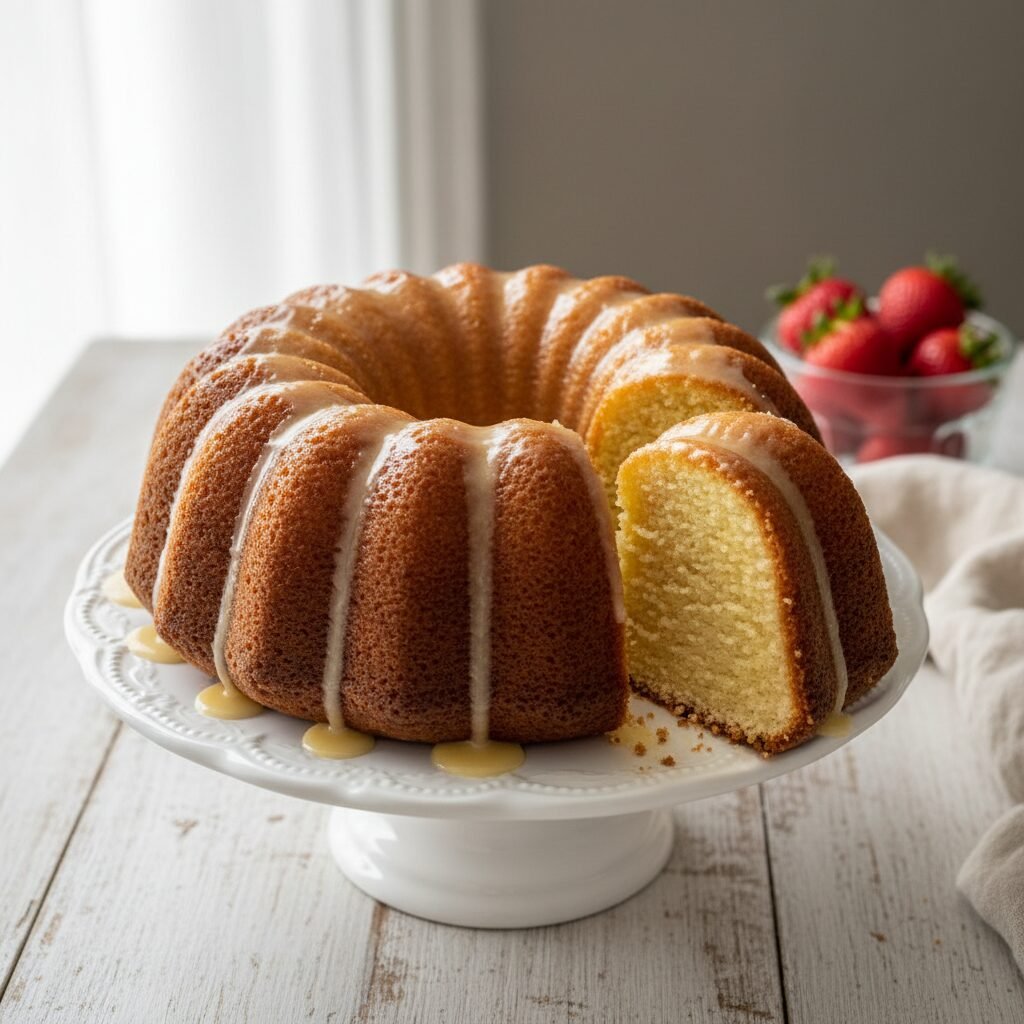
Golden Kentucky Butter Cake with a Dreamy Butter Glaze
Kentucky Butter Cake Recipe
Get ready to fall in love with the most tender, buttery pound cake you’ve ever tasted! This Kentucky Butter Cake is drenched in a sweet butter glaze that seeps into every nook and cranny, creating an unbelievably moist and decadent dessert that’s surprisingly simple to make.
20 minutes
60 minutes
1 hour 20 minutes
12-16 servings
Dessert
Baking
American (Southern)
N/A
Why You’ll Love This Recipe
- Unbelievably moist and tender crumb
- Drenched in a rich, buttery vanilla glaze
- Made with simple, pantry-staple ingredients
- Perfect for any occasion, from brunch to dessert
Equipment You’ll Need
- 10-inch Bundt pan (10-12 cup capacity)
- Electric mixer (stand or hand-held)
- Large mixing bowl
- Medium bowl for dry ingredients
- Small saucepan
- Whisk
- Silicone spatula
- Measuring cups and spoons
- Wire cooling rack
- Long wooden skewer or cake tester
Ingredients
- For the Cake:
- 3 cups all-purpose flour
- 2 cups granulated sugar
- 1 cup unsalted butter, at room temperature
- 4 large eggs, at room temperature
- 1 cup buttermilk, at room temperature
- 1 teaspoon baking powder
- 1/2 teaspoon baking soda
- 1/2 teaspoon salt
- 2 teaspoons pure vanilla extract
- For the Butter Glaze:
- 3/4 cup granulated sugar
- 1/3 cup unsalted butter
- 3 tablespoons water
- 1 teaspoon pure vanilla extract
Instructions
- Preheat your oven to 325°F (165°C). Generously grease and flour a 10-inch (12-cup) Bundt pan, making sure to get into all the crevices. Set aside.
- In a medium bowl, whisk together the all-purpose flour, baking powder, baking soda, and salt. Set this dry mixture aside.
- In the bowl of a stand mixer fitted with the paddle attachment (or in a large bowl with a hand mixer), cream the softened butter and granulated sugar together on medium-high speed until light, pale, and fluffy, about 3-5 minutes.
- Reduce the mixer speed to medium-low and add the eggs one at a time, beating well after each addition and scraping down the sides of the bowl as needed.
- With the mixer on low speed, add the dry ingredients in three additions, alternating with the buttermilk in two additions. Begin and end with the dry ingredients. Mix just until combined—do not overmix.
- Stir in the vanilla extract until just incorporated.
- Pour the batter evenly into your prepared Bundt pan and smooth the top with a spatula.
- Bake for 55 to 65 minutes, or until a long wooden skewer inserted into the center of the cake comes out with a few moist crumbs attached.
- While the cake is baking, prepare the butter glaze. In a small saucepan over medium heat, combine the sugar, butter, and water. Bring to a gentle boil, stirring constantly until the sugar is completely dissolved.
- Remove the saucepan from the heat and carefully stir in the vanilla extract.
- Once the cake is done, remove it from the oven and place it on a wire cooling rack. While the cake is still hot and in the pan, use the skewer to poke holes all over the bottom (which will be the top).
- Slowly and evenly pour the warm butter glaze all over the bottom of the cake. Pour it in stages to allow the cake to absorb the glaze fully.
- Let the cake cool completely in the pan on the wire rack for at least 1-2 hours. This step is crucial for the glaze to set and for the cake to release cleanly.
- Once completely cool, carefully invert the cake onto a serving platter or cake stand. Slice and serve!
Expert Cooking Tips
- Room Temperature is Key: For the smoothest batter and most tender crumb, ensure your butter, eggs, and buttermilk are all at room temperature before you begin. This helps the ingredients emulsify properly.
- Don’t Overmix the Batter: Once you start adding the flour mixture, mix only until the ingredients are just combined. Overmixing develops gluten, which can result in a tough, dense cake.
- Master the Pan Prep: The secret to a Bundt cake that doesn’t stick is meticulous pan preparation. Use a pastry brush to apply melted shortening or a baking spray with flour into every single groove of the pan.
- The Slow Soak Method: Pour the butter glaze over the warm cake slowly and in batches. This gives the cake time to absorb all that liquid gold, making it ultra-moist without becoming soggy.
Substitutions and Variations
No buttermilk on hand? You can make a quick substitute by adding 1 tablespoon of lemon juice or white vinegar to 1 cup of whole milk and letting it sit for 5-10 minutes. For a deeper flavor, try using vanilla bean paste instead of extract in both the cake and the glaze. A splash of bourbon or dark rum in the glaze adds a wonderful, warm complexity for a more grown-up version.
Common Mistakes to Avoid
The biggest pitfall with Bundt cakes is getting them to release from the pan. Avoid this by being extremely thorough when greasing and flouring every nook and cranny. Another common error is underbaking; this is a dense cake that needs its full time in the oven. Always test for doneness with a long wooden skewer—it should emerge with moist crumbs, not wet batter.
Serving Suggestions
This cake is a showstopper all by itself, but it’s heavenly served warm with a simple dusting of powdered sugar. To elevate it further, pair a slice with fresh berries, a dollop of homemade whipped cream, or a scoop of high-quality vanilla bean ice cream to complement its rich, buttery flavor.
Storage and Reheating Tips
Store the Kentucky Butter Cake in an airtight container or under a cake dome at room temperature for up to 4 days—the glaze actually helps it stay moist! For longer storage, you can refrigerate it for up to a week (let it come to room temp before serving) or freeze individual, tightly-wrapped slices for up to 3 months.
Nutrition Facts (Estimated)
| Serving Size | 1 slice (1/16th of cake) |
| Calories | 455 kcal |
| Fat | 26 g |
| Saturated Fat | 16 g |
| Unsaturated Fat | 8 g |
| Trans Fat | 1 g |
| Cholesterol | 125 mg |
| Sodium | 310 mg |
| Carbohydrates | 54 g |
| Fiber | 1 g |
| Sugar | 42 g |
| Protein | 4 g |
Frequently Asked Questions
Why is it called a Kentucky Butter Cake?
It’s a classic American dessert with roots in the South, particularly Kentucky. It’s famous for its rich, butter-forward flavor and its signature feature: a buttery sugar glaze that’s poured over the cake while it’s still hot, allowing it to soak deep into the crumb.
Can I bake this recipe in a different pan?
Absolutely! If you don’t have a Bundt pan, you can use a 9×13 inch baking pan. The baking time will likely be shorter, around 35-45 minutes. Start checking for doneness at the 35-minute mark with a skewer.
My glaze crystallized and became grainy. What went wrong?
This usually happens if the sugar doesn’t dissolve completely. When making the glaze, ensure you bring the mixture to a gentle boil and stir continuously until you can no longer see any sugar granules. This will create a smooth, syrupy glaze.
Is this a good cake to make ahead of time?
Yes, it’s a fantastic make-ahead dessert! In fact, many people think it tastes even better on the second day after the glaze has had more time to meld with the cake, making it extra moist and flavorful.
Conclusion
There’s a special kind of comfort found in a slice of perfect pound cake, and this Kentucky Butter Cake truly takes the crown. With its incredibly tender crumb and a butter glaze that will have you dreaming about it for days, it’s a timeless recipe guaranteed to become a family favorite. I can’t wait for you to try it! If you do, please share your beautiful creation on Pinterest and let me know what you think!