That Famous Scottish Almond-Topped Fruitcake: A Classic Dundee Cake Recipe
If you’re a fan of fruitcake, but not the heavy, dense, molasses-laden kind, I’d like to introduce you to your new favorite cake. This is the Dundee Cake, a Scottish classic that’s in a league of its own.
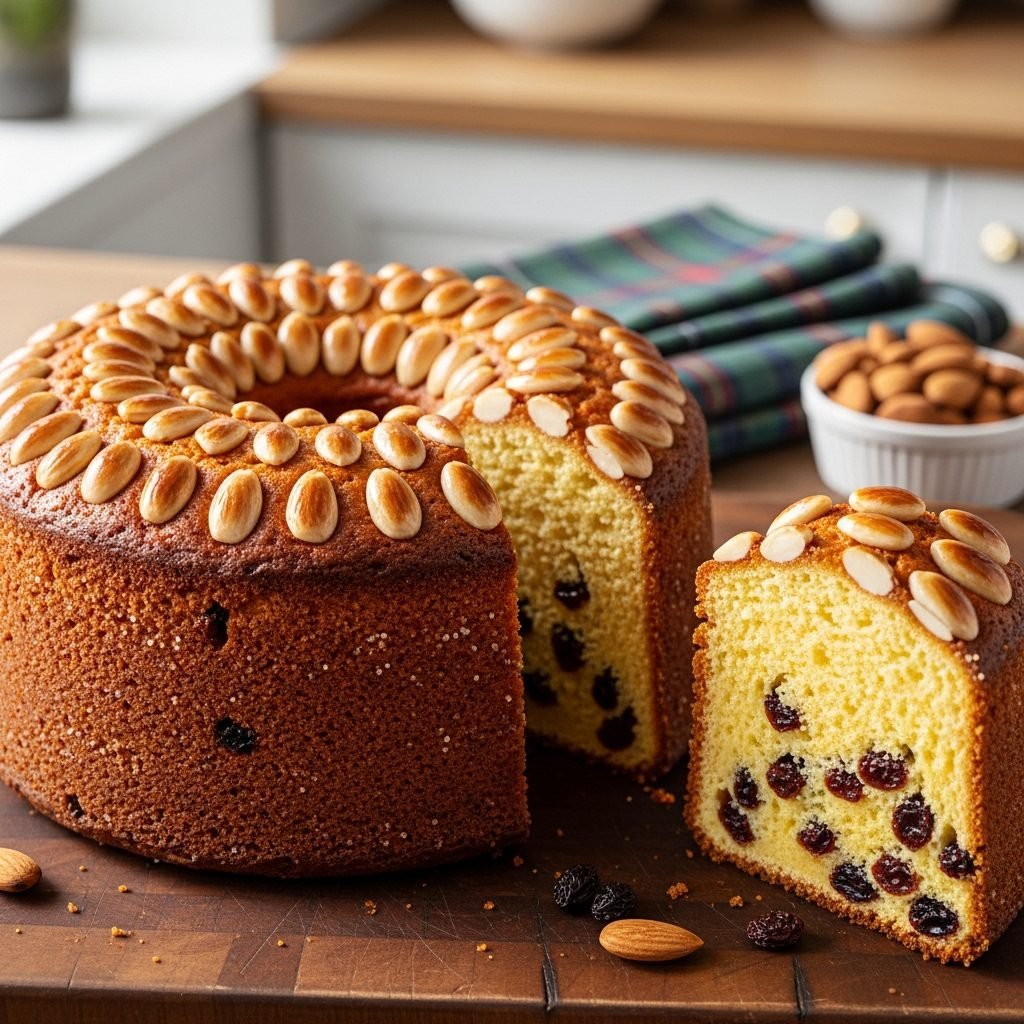
It’s a world away from its darker cousins. This is a rich, golden, buttery cake, made wonderfully tender with ground almonds and packed with bright, zesty fruits. But the real giveaway, its crowning glory, is the beautiful, patterned top of whole blanched almonds. It’s elegant, it’s rustic, and it’s so, so good.
Unlike other fruitcakes, it isn’t covered in marzipan or royal icing. It doesn’t need to be. The flavor comes from the rich butter, the bright hit of orange zest, the sweet chew of sultanas and currants, and the nutty, toasty flavor of the almonds, both inside the cake and on top.
This is a “cutting cake,” meaning it’s sturdy, slices beautifully, and is meant to be kept in a tin on the counter for when you need a little something with a cup of tea or coffee. It’s a wonderfully cozy, old-world bake that makes the whole house smell incredible.
Why This Cake is a Keeper
This is a timeless recipe that deserves a spot in your baking rotation. Here’s why you’ll fall for it:
- The Flavor: It’s a celebration of simple, good ingredients. Think rich, sweet butter, toasted nuts, bright orange zest, and sweet, plump dried fruits. If you add it, a splash of whiskey or sherry gives it a lovely, warm, complex background note.
- The Texture: This cake is substantial, but it’s not heavy. The ground almonds (almond flour) in the batter give it a “short,” tender, and beautifully moist crumb. It’s a complete contrast to the chewy, jammy bits of fruit and the slight crunch from the almonds on top.
- The Time: This is a “low and slow” bake. You’ll need about 30 minutes of active prep, especially if you soak your fruit ahead of time. The magic is in the bake itself, which is a long, slow 1.5 to 2 hours. This is what makes it so moist.
- The “Wow” Factor: This is a “confident beginner” recipe. The steps are simple (soaking, creaming, mixing), but the result looks incredibly impressive. Preparing the pan correctly and arranging the almonds is the key, and the payoff is a professional-looking cake from a home kitchen.
What You’ll Need
The ingredient list is all about building rich, complex flavor.
For the Fruit Soak:
- 1 cup sultanas (golden raisins)
- 1 cup currants
- 1/2 cup raisins
- 1/4 cup finely chopped candied orange peel
- 1/2 cup fresh orange juice (from 1 large orange)
- Zest of 1 large orange
- 3 tbsp Scotch whiskey, dark rum, or sherry (Optional, see notes for subs)
For the Cake Batter:
- 1 3/4 cups all-purpose flour
- 1 cup almond flour (ground almonds)
- 2 tsp baking powder
- 1/2 tsp salt
- 1/2 tsp ground cinnamon (or 1 tsp “mixed spice”)
- 1 cup (2 sticks) unsalted butter, very soft, at room temperature
- 1 cup light brown sugar, packed
- 4 large eggs, at room temperature
For the Topping:
- 1/2 cup whole blanched almonds
A Note on the Fruit: Don’t like currants? Not a fan of candied peel? No problem. The key is the total amount of fruit. You want about 2 3/4 cups of dried fruit, so feel free to use dried cherries, cranberries, or chopped apricots to make up the mix you love most.
How to Make a Classic Dundee Cake, Step by Step
Patience is the main ingredient here. A little prep makes all the difference.
Step 1: Soak Your Fruit (Ideally, Overnight)
In a medium, non-reactive bowl, combine all the fruit soak ingredients: sultanas, currants, raisins, candied peel, orange juice, orange zest, and the optional whiskey or sherry.
Stir it all together, cover the bowl, and let it sit for at least 1 hour, but for the best flavor, let it sit on the counter overnight. This plumps up the fruit and makes it incredibly juicy and flavorful.
Step 2: Prepare Your Pan (This is Critical!)
This is a long, slow bake, so we need to protect the cake. Preheat your oven to 325°F.
Take an 8-inch round springform pan (or a deep 8-inch round cake pan).
- Grease: Grease the bottom and sides of the pan with butter.
- Line: Cut a circle of parchment paper and place it in the bottom. Cut a long strip of parchment that is 2 inches taller than the sides of your pan and line the inside.
- Insulate (Optional but Recommended): For extra protection, you can even “double-line” it by wrapping the outside of the pan in a layer of brown paper or newspaper, tied with kitchen twine. This acts as an insulator and stops the edges from over-baking.
Step 3: Mix Your Dry Ingredients
In a medium bowl, whisk together the all-purpose flour, almond flour, baking powder, salt, and cinnamon. Set it aside.
Step 4: Cream the Butter and Sugar
In a large bowl, or the bowl of your stand mixer, add your very soft butter and the light brown sugar. Beat on medium-high speed for a good 4-5 minutes, until the mixture is very light, pale, and fluffy. This step whips air into the batter, which gives the cake its lift.
Step 5: Add the Eggs
With the mixer on low, add the room-temperature eggs, one at a time. Make sure each egg is fully incorporated before adding the next. Scrape down the sides of the bowl. Pro Tip: If the mixture starts to look curdled, add 1 tablespoon of your dry flour mixture with the last egg. This will help it come back together.
Step 6: Combine Everything
- Add Flour: Add half of your dry ingredient mixture to the butter/egg mixture. Mix on low speed until it’s just combined.
- Add Fruit: Drain any excess liquid from your soaked fruit (there shouldn’t be much). Add all the plumped-up fruit to the batter and mix on low.
- Add Rest of Flour: Add the remaining half of your dry ingredients and mix on low only until the last streaks of flour disappear. This is a very thick batter.
Step 7: Fill the Pan and Add Almonds
Spoon the thick batter into your prepared pan. It will be stiff. Use a spatula to spread it evenly into the corners and smooth the top.
Now, arrange your whole blanched almonds on top in one or two concentric circles. Press them very gently into the batter.
Step 8: The Low and Slow Bake
Bake at 325°F for 1 1/2 to 1 hour 45 minutes. It’s a long time!
The cake is done when it’s a deep, rich golden-brown and a wooden skewer (like a bamboo skewer) inserted into the very center comes out clean.
If the almonds or the top of the cake start to get too dark before the center is cooked, just lay a piece of aluminum foil loosely over the top for the last 30 minutes of baking.
Step 9: Cool Patiently
Let the cake cool completely in the pan on a wire rack. This is a very important step! It can take 2-3 hours. A fruitcake needs time to settle. Once it’s completely cool, you can run a knife around the edge (inside the parchment) and release the springform, or gently turn it out of a regular pan.
My Top Tips for a Perfect Dundee Cake
- Don’t Skimp on the Soak: This is what prevents the fruit from being dry, hard, or burnt. It also stops the fruit from stealing moisture from the cake.
- The Pan Prep is Not Optional: I know it seems fussy, but a single layer of parchment is not enough for a 1.5+ hour bake. The double-lining (or at least the tall parchment collar) is the secret to a moist cake with perfect edges, not burnt, bitter ones.
- The “Flour the Fruit” Trick: If you’re worried about your fruit sinking (though this batter is very thick), you can toss the soaked, drained fruit in 1 tablespoon of your dry flour mixture before adding it to the batter. This helps it stay suspended.
- Trust the Skewer: The top will look “done” long before the middle is. The only way to know is to poke it! A clean skewer is the only sign that matters.
Swaps and Variations
- Alcohol-Free Dundee Cake: Simply swap the whiskey or sherry for more orange juice or even apple juice. It will still be delicious.
- Nut-Free (ish): The almonds on top are iconic, but you can leave them off. However, the almond flour in the batter is key to the texture. If you have a nut allergy, you can replace the almond flour with more all-purpose flour, but the cake will be a bit denser and less tender.
- The Spices: I like a simple cinnamon, but a teaspoon of “mixed spice” (if you’re in the UK) or “pumpkin pie spice” (if you’re in the US) is a wonderful, complex alternative.
Common Pitfalls (and How to Avoid Them)
- My Edges are Burnt and My Middle is Raw! Your oven was too hot, or you didn’t insulate your pan. This cake needs that low, slow heat and a well-prepared pan.
- My Fruit Sank to the Bottom! This batter is usually thick enough to prevent this, but it can happen if your soaked fruit was too “wet.” Make sure to drain off any excess liquid before adding it. Tossing in flour (see tips) is the best prevention.
- My Cake is Dry! This almost always means it was over-baked, or your oven was too hot. Calibrate your oven (an oven thermometer is a baker’s best friend!) and trust the skewer test.
How to Serve and Store Your Dundee Cake
This is a cake that gets better with age.
- Serving: It’s meant to be served at room temperature in thin, neat slices. It needs no frosting, no cream, no dusting of sugar. It’s beautiful as-is. It is the perfect partner for a hot cup of tea or coffee, or, in the traditional Scottish way, a small glass of whiskey.
- Storage: This is the best part. Do NOT refrigerate this cake! Wrap the completely cooled cake in a layer of parchment paper, then wrap it tightly in aluminum foil. Or, store it in a truly airtight cake tin. It will keep at room temperature for weeks, and the flavor will just get better and more complex.
- To “Feed” (Optional): If you want to store it for a long time (a month or more), you can “feed” it. Once a week, unwrap it and use a pastry brush to brush a tablespoon or two of whiskey or sherry over the top. Re-wrap tightly.
Your Dundee Cake Questions, Answered
Is this the same as a Christmas fruitcake? No. It’s a type of fruitcake, but it’s much lighter. It doesn’t use dark molasses, dark brown sugar, or the same heavy, dark spices. It’s a “golden” fruitcake, and the almonds make it unique.
Do I really have to use whole blanched almonds? It’s the traditional look. You can use slivered almonds or sliced almonds if you prefer, but you’ll lose that iconic, circular pattern.
Can I freeze Dundee Cake? Absolutely! It freezes perfectly. Wrap the whole cake (or individual slices) in plastic wrap, then a layer of foil, and freeze for up to 6 months. Thaw at room temperature.
A True Taste of Scotland
This cake is such a joy to make. It’s a slow, cozy, aromatic bake that feels both humble and special. It’s a taste of history, and it’s so much simpler than its long bake time suggests.
When you slice into it and see that beautiful, jewel-like crumb, and taste that combination of bright orange, rich butter, and toasted nuts, you’ll understand why this classic has stuck around for centuries.
A Quick Summary
This classic Scottish Dundee Cake recipe creates a rich, buttery, golden fruitcake that’s tender and moist from almond flour. It’s packed with orange-and-whiskey-soaked currants and sultanas and features a beautiful, iconic topping of whole blanched almonds. It’s a “low and slow” bake that results in a wonderfully flavorful cake that keeps for weeks.
If you make this Dundee Cake, I would be so happy to see it! I especially want to see your almond pattern! Tag me on [Your Social Media Handle] or share a photo. And if you loved this taste of Scotland, please share this post on Pinterest! It helps other bakers discover this wonderful classic. Happy baking!