Sunshine & Cream: The Famous St. Tropez Tart (Tarte Tropézienne)
Hello, friends! Let’s transport ourselves, shall we?
Imagine sitting at a small, sunny café on the French Riviera, a light breeze coming off the Mediterranean. That’s the feeling this dessert gives me. It’s called the Tarte Tropézienne, or “the St. Tropez tart,” and it is pure, edible sunshine.
Legend has it, this dessert was created by a Polish baker in St. Tropez in the 1950s. It was made famous when actress Brigitte Bardot, who was filming nearby, fell in love with it and suggested its name.
But here’s the most important thing you need to know: it’s not really a tart.
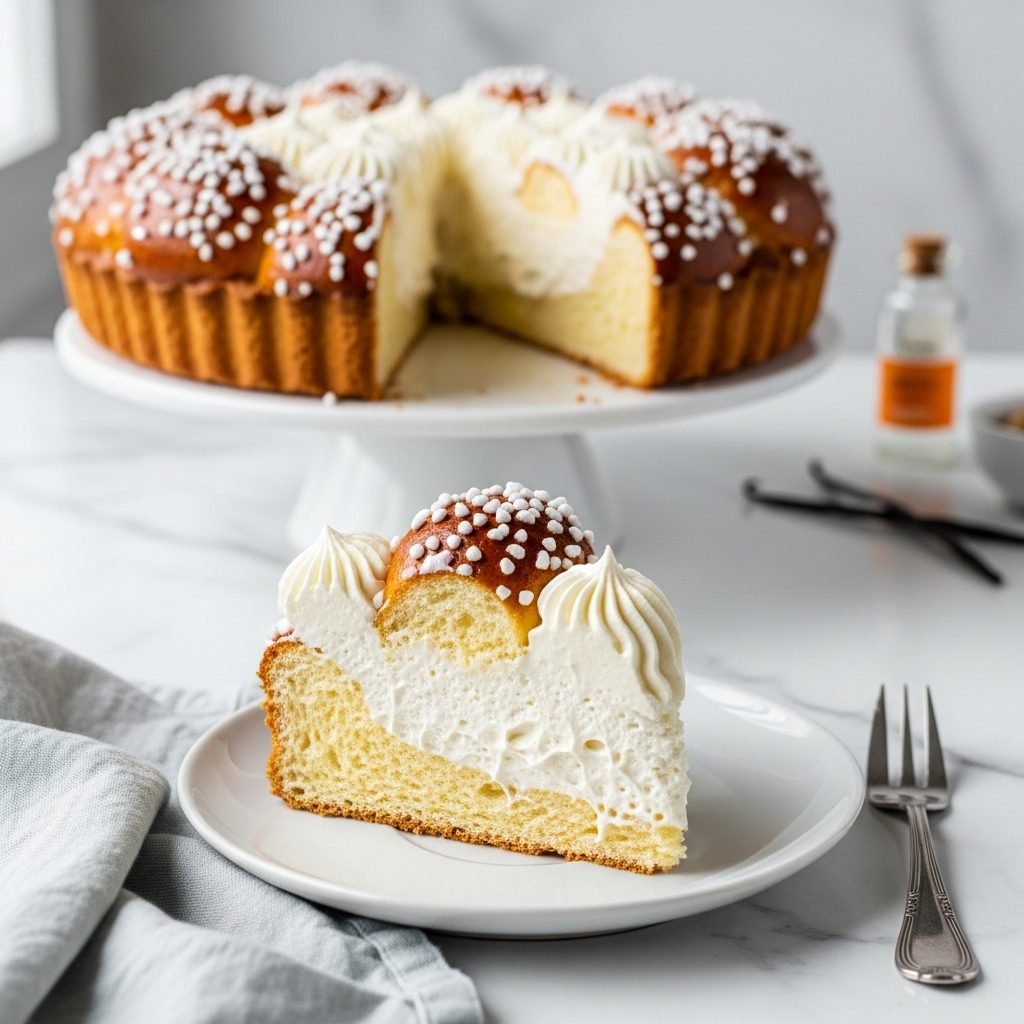
It’s something so much better. It’s a rich, buttery, pillowy-soft brioche (a yeasted cake) that’s baked into a golden-brown disc. The top is covered in crunchy, beautiful pearl sugar. Then, it’s split in half, like a giant sandwich, and filled with a cloud of the most luxurious, fragrant, and light-as-air cream.
I know, I know… “brioche” and “yeasted cake” sound a little intimidating. Many of us think of it as a “pastry-chef-only” project. But I am here to walk you through every single step. This is a “labor of love” bake, a perfect, patient weekend project. And the reward? A dessert that is so sophisticated, so delicious, and so deeply impressive. Let’s do this.
Why You’ll Fall in Love with This Recipe
- The Texture Journey: This is what makes it so special. You get the crunch of the pearl sugar, the soft, fluffy, tender crumb of the buttery brioche, and the impossibly silky, cool, light-as-air cream filling.
- The Flavor: It’s a perfect balance. The brioche is rich and buttery, not too sweet. The cream is fragrant with vanilla and (traditionally) a whisper of orange blossom water, which is just magical.
- The “Wow” Factor: This is a true showstopper. It looks like it came from the fanciest French patisserie. Slicing into it and seeing that generous layer of cream is just a joy.
- The Guide: This recipe is a roadmap. We’ll break it down into simple, manageable parts: the cream, the brioche, and the assembly. No rush, no stress.
Your Ingredient List
A showstopper like this has a few key components. We’ll make the filling in two parts: a pastry cream base, which we then lighten with whipped cream to create a “Diplomat Cream.”
For the Crème Pâtissière (Pastry Cream Base – Make this first!)
- 2 cups whole milk
- 1 vanilla bean, split, or 2 tsp vanilla extract
- 6 large egg yolks
- 3/4 cup granulated sugar
- 1/2 cup cornstarch, sifted
- 4 tbsp (1/2 stick) unsalted butter, cold, cut into small pieces
For the Brioche (The “Tart”)
- 1/2 cup whole milk, warm (about 110°F)
- 2 1/4 tsp (1 packet) active dry yeast
- 1/4 cup granulated sugar
- 3 1/2 cups all-purpose flour
- 1 tsp kosher salt
- 4 large eggs, at room temperature, lightly beaten
- 1/2 cup (1 stick) unsalted butter, softened, cut into small pieces
For the Diplomat Cream (The Final Filling)
- 1 1/2 cups heavy whipping cream, very cold
- 1/4 cup powdered sugar
- 1 tsp orange blossom water (optional, but so traditional)
For the Topping & Assembly
- 1 large egg, beaten (for egg wash)
- 1/2 cup pearl sugar (this is key – see my tips)
- Powdered sugar, for dusting
Step-by-Step: Your Guide to the Tarte Tropézienne
This is a two-day bake, which makes it so much more relaxing. Day 1, we make the pastry cream and the brioche. Day 2, we assemble.
Part 1: The Crème Pâtissière (Make This First!)
The pastry cream must be completely cold, so we make it at least 4 hours (or a day) ahead.
- Infuse the Milk: Pour the 2 cups of milk into a medium saucepan. If using a vanilla bean, scrape the seeds into the milk and add the pod. If using extract, add it now. Heat over medium-low heat until it’s just simmering (little bubbles at the edge). Don’t let it boil.
- Whisk the Yolks: While the milk warms, in a large, heat-proof bowl, whisk the 6 egg yolks, 3/4 cup sugar, and 1/2 cup sifted cornstarch. Whisk vigorously until the mixture is pale yellow, thick, and smooth.
- Temper the Eggs: This is a crucial step to prevent scrambling. Once the milk is simmering, remove it from the heat. Very slowly, pour about 1/2 cup of the hot milk into the egg yolk mixture, whisking constantly.
- Cook the Custard: Pour the tempered egg mixture back into the saucepan with the rest of the milk. Return to medium heat. Whisk constantly and vigorously, making sure to get the corners of the pan. The mixture will start to thicken. Once it gets lumpy, keep whisking! It will all come together into a thick, smooth custard. Let it bubble for 1 full minute (still whisking!) to cook out the cornstarch taste.
- Finish & Chill: Remove from the heat. Discard the vanilla pod. Add the 4 tbsp of cold butter and whisk until it’s completely melted and incorporated.
- Chill Completely: Pour the custard into a shallow dish (like a 9×13 pan). Press a piece of plastic wrap directly onto the surface of the cream. This is the secret to preventing a “skin” from forming. Refrigerate for at least 4 hours, or overnight, until it is completely cold and very thick.
Part 2: The Brioche (The “Tart”)
- Activate the Yeast: In the bowl of a stand mixer (or a large bowl), add the 1/2 cup of warm milk. Sprinkle the yeast and 1 tsp of the sugar over the top. Give it a gentle swirl. Let it sit for 5-10 minutes. It should get foamy or “bloom.” If it doesn’t, your yeast is old, and you’ll need to start again.
- Combine Dry Ingredients: To the yeast mixture, add the 3 1/2 cups flour, the remaining sugar, and the 1 tsp salt. Fit the stand mixer with the dough hook attachment.
- Add Eggs: Turn the mixer on low and slowly add the beaten eggs. Let it mix until a shaggy, sticky dough forms.
- Knead: Turn the speed up to medium-low and let it knead for 5 minutes. The dough will be sticky.
- Add the Butter (The Magic Step): This is the secret to brioche. With the mixer on low, add the softened butter, one piece at a time. Wait until each piece is almost incorporated before adding the next. The dough will look like it’s separating and falling apart. It will look like a horrible, greasy mess. TRUST THE PROCESS. It will come back together.
- The Long Knead: Once all the butter is in, turn the speed up to medium and let it knead for 10-15 minutes. This is not a typo! The dough will transform from a sticky mess into a smooth, elastic, and glossy dough that pulls away from the sides of the bowl.
- First Rise: Scrape the dough into a large, lightly greased bowl. Cover it with plastic wrap. Let it rise in a warm, draft-free spot for 1.5 – 2 hours, or until it has doubled in size.
- Shape the “Tart”: Gently deflate the risen dough. Lightly grease a 9-inch round cake pan and line the bottom with parchment. Pat the dough into an even 9-inch disc and place it in the pan. (You can also do this free-form on a parchment-lined baking sheet, but the pan gives it a nice, clean shape).
- Second Rise: Cover the pan loosely with plastic wrap. Let it rise in a warm spot for another 45-60 minutes, or until it’s puffy and has risen by about half.
- Bake: Preheat your oven to 375°F (190°C). Brush the top of the brioche gently with the beaten egg wash. Sprinkle generously with the pearl sugar.
- Bake for 20-25 minutes, or until it’s a deep, beautiful golden-brown and a skewer inserted into the center comes out clean.
- Cool Completely: Let it cool in the pan for 10 minutes, then transfer it to a wire rack to cool completely. This is essential. A warm brioche will melt your cream.
Part 3: Assemble Your Masterpiece!
This is the fun part. Do this when you’re ready to serve (or a few hours before).
- Make the Diplomat Cream: Your pastry cream should be cold and thick. Scrape it into a large bowl and whisk it to loosen it up. If using, whisk in the 1 tsp of orange blossom water.
- In a separate, cold bowl, use an electric mixer to whip the 1 1/2 cups of cold heavy cream and 1/4 cup powdered sugar until it holds stiff peaks.
- Fold: Gently fold about 1/3 of the whipped cream into the pastry cream to lighten it. Then, fold in the remaining whipped cream until it’s all one color and no streaks remain. You’ve just made Diplomat Cream!
- Slice the Brioche: Use a long, serrated bread knife. Carefully slice the cooled brioche in half horizontally, like you’re slicing a giant bagel.
- Fill: Transfer your Diplomat Cream to a piping bag fitted with a large star tip (this gives it that professional look). Pipe generous, beautiful swirls of cream all over the bottom half of the brioche.
- Top & Serve: Gently place the pearl-sugar-topped brioche half on top of the cream. Lightly dust with powdered sugar. Stand back and admire your work!
My Favorite Tips for a Flawless Tropézienne
- Patience is an Ingredient: This is not a dessert to be rushed. Let your dough rise fully. Let your cream chill completely. Rushing is the number one enemy of a good Tarte Tropézienne.
- The Stand Mixer is Your Best Friend: You can make brioche by hand, but it is a sticky, long, and messy (but rewarding!) arm workout. A stand mixer with a dough hook does all the heavy lifting.
- What is Pearl Sugar? It’s a special, large-crystal sugar that does not melt in the oven. It’s what gives the tart its signature crunchy top. You can find it in specialty baking stores or online. It’s worth seeking out!
- Cold, Cold, Cold: Your heavy cream and your mixing bowl should be very cold for whipping. It helps the cream whip up tall and stable.
Ingredient Substitutions & Options
- No Orange Blossom Water? No problem. It’s a traditional, floral flavor that I love, but you can just use 1 extra teaspoon of good vanilla extract in your Diplomat Cream instead.
- No Pearl Sugar? This is a tough one. You can use a coarse sanding sugar, but it may melt a bit. Your best bet might be to bake the brioche plain and just dust heavily with powdered sugar.
- Gluten-Free or Dairy-Free? This is a very challenging recipe to adapt. It relies heavily on gluten for the brioche structure and dairy for the cream and butter. I would recommend seeking out a dedicated GF brioche recipe and using a coconut-cream-based pastry cream, but the results will be quite different.
Common Mistakes to Avoid
- My Dough Didn’t Rise: Your yeast was expired, or your warm milk was too hot (it should be like a warm bath, not hot-tub hot).
- My Brioche is Dense, Not Fluffy: You probably didn’t knead it long enough (that 10-15 minute knead after the butter is in is essential), or you were impatient with your rises.
- My Pastry Cream is Lumpy: You didn’t whisk constantly, and the eggs scrambled. Or, you didn’t sift your cornstarch.
- My Filling is Runny: This is the most common one! It happens when your pastry cream isn’t 100% cold before you fold in the whipped cream. It must be thick and cold. It can also happen if you over-fold the whipped cream, deflating it.
- The Brioche is Soggy: You filled it too far in advance. This dessert is best served the day it’s made.
How to Serve This Beauty
This tart must be served chilled. The contrast between the soft, room-temperature brioche and the cool, light cream is everything.
- Use a serrated knife for the cleanest slices.
- It’s a complete showstopper on its own. It needs nothing else.
- Serve it with a cup of strong coffee or a glass of crisp, sparkling rosé.
Storing Your Tarte Tropézienne
- In the Fridge: Because of the cream filling, this tart must be stored in the refrigerator. Cover it loosely (a cake dome is perfect) and store it for up to 2 days.
- Heads up: After Day 1, the brioche will start to absorb moisture from the cream and won’t be as fluffy, but it will still be delicious!
- Freezing: I do not recommend freezing the assembled tart. The cream’s texture will be ruined. However, you can freeze the unfilled, baked brioche! Wrap it tightly in plastic wrap and foil. Let it thaw at room temp, and then fill it for a “quick” showstopper.
Your Tarte Tropézienne Questions
What’s the difference between this and a cream puff? A Tarte Tropézienne is made with a soft, yeasted brioche, like a sweet bread. A cream puff is made with “pâte à choux,” which is a non-yeasted, eggy pastry that gets hollow.
Can I really make this in one day? You can, but you have to be very strategic. You’d start by making the pastry cream and getting it into the fridge immediately. Then, make the brioche and get it rising. While it’s rising/baking, you’d pray your cream is cold enough. It’s stressful. The two-day plan is so much more fun.
Is it supposed to be this much cream? Yes! It should be a very generous, almost 1:1 ratio of brioche to cream. Go big!
A Final, Sweet Thought
I know this was a long recipe, but this is a special dessert. It’s a project, a bit of an adventure. When you slice into that golden, crunchy top and see that cloud of beautiful cream, you’ll feel so, so proud. It’s a taste of the French Riviera, and it’s a joy to share.
Quick Recipe Summary
This Tarte Tropézienne recipe creates the classic French dessert. It features a soft, buttery, yeasted brioche cake, which is baked with a crunchy pearl sugar topping. This brioche is then split and filled with a generous layer of Diplomat Cream—a light-as-air filling made by folding rich, vanilla-bean pastry cream and fresh whipped cream together. It’s a showstopping dessert best made over two days and served chilled.