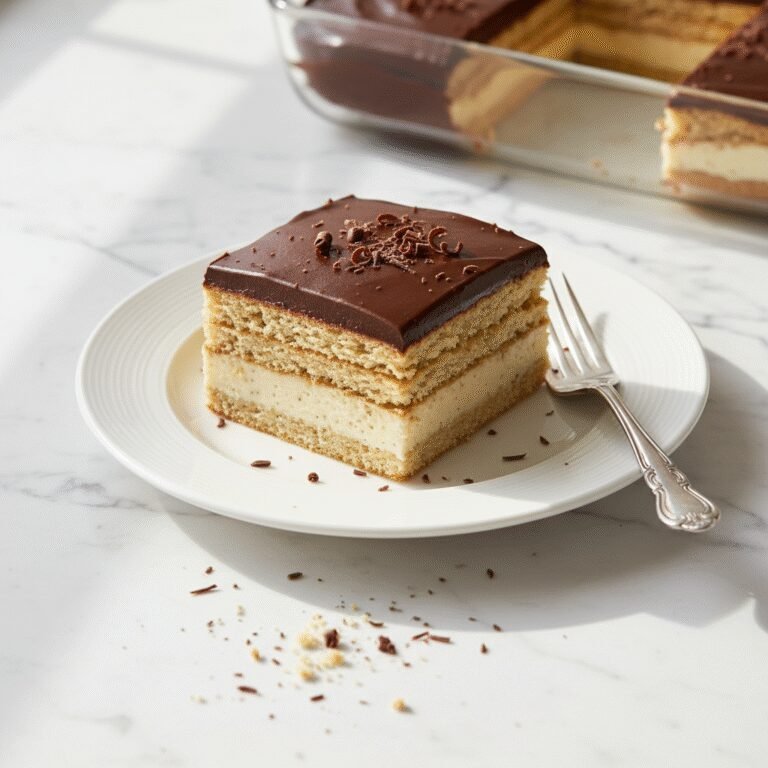
A Buttery, Golden-Crusted Cake with a Hidden Creamy Center (Gateau Basque)
Hello, friends! I want to introduce you to a dessert that is truly special. It’s one of those bakes that feels like a quiet, well-kept secret, but once you’re in on it, you’ll be hooked for life. We’re making Gateau Basque (pronounced gah-TOH bask).
This is not a light-as-air, fluffy cake. It’s not a flaky, delicate pie. It’s something magical in between.
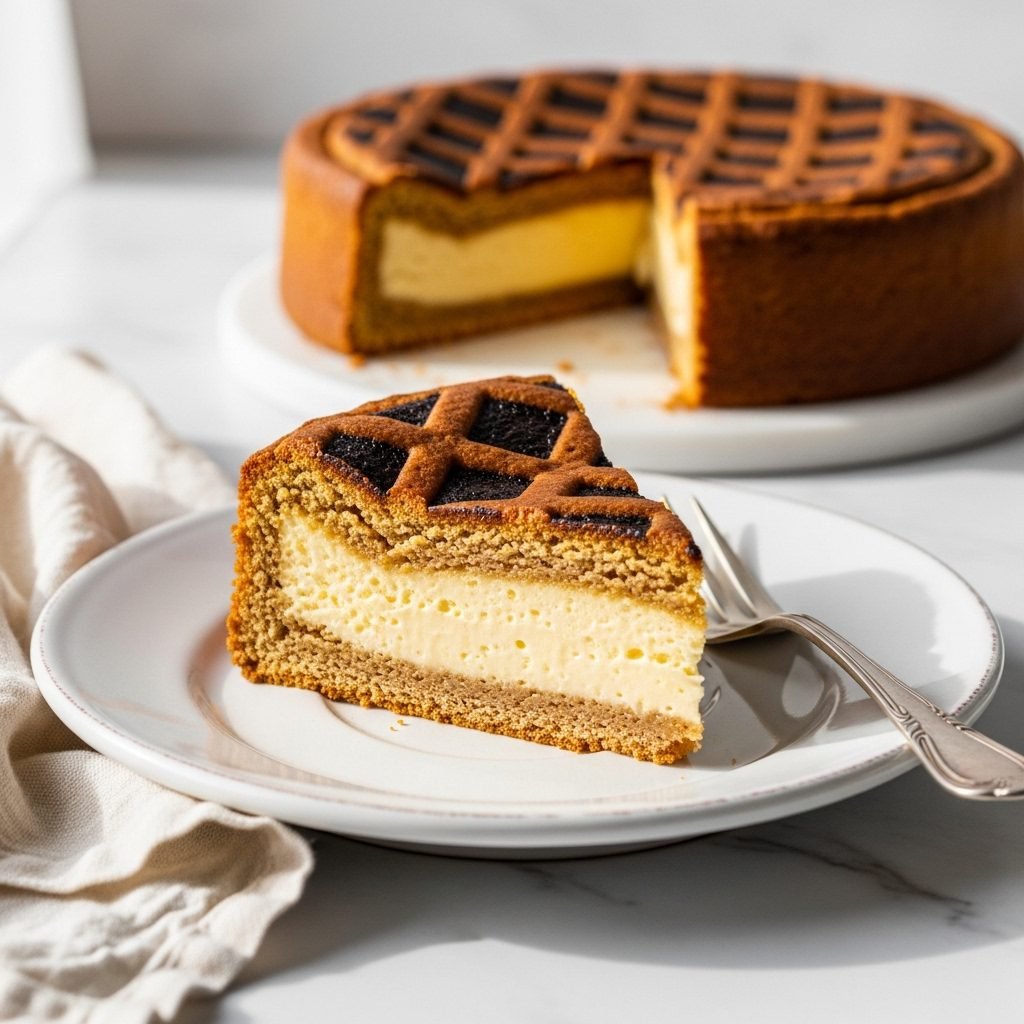
Hailing from the Basque Country, a beautiful region that straddles the border of France and Spain, this dessert is rustic, humble, and completely stunning. Imagine a buttery, tender, almost cookie-like crust, scented with almonds and lemon, that’s wrapped around a thick, rich, velvety smooth vanilla pastry cream. The top is baked to a deep, golden brown and, traditionally, scored with a beautiful crosshatch pattern.
This is a “project bake,” but in the best way possible. It’s the perfect, patient, rewarding recipe for a Sunday afternoon. It has a few components, but I’m going to walk you through every single step. And the final result? A dessert that feels so, so special, with a texture and flavor that is just incredible.
Why You’re Going to Love This Bake
- The Texture: This is the real star. The crust is a unique “pâte,” a soft, rich, buttery dough that’s more like a tender, slightly-cakey shortbread cookie than a pie crust. This pairs with the thick, cool, impossibly creamy custard filling.
- The Flavor: It’s a perfect harmony. The crust is rich with butter, a hint of almond, and bright lemon zest. The filling is a pure, rich vanilla-bean custard. It’s sweet, but not too sweet.
- The “Wow” Factor: This dessert is so elegant. When you slice into it, you see that gorgeous, thick layer of pale-yellow cream held inside the golden crust. It’s a showstopper.
- The Plan: This recipe is built for success. We make the components ahead of time, let them chill, and then assemble. It’s a low-stress way to make something that looks and tastes like it came from a high-end French patisserie.
Your Ingredient List
A Gateau Basque is made of two main parts: the creamy filling and the cookie-like crust. It’s important to make the filling first, as it needs several hours to get fully cold.
For the Crème Pâtissière (Pastry Cream Filling – Make This First!)
- 2 cups whole milk
- 1 vanilla bean, split and scraped (or 1 tbsp high-quality vanilla paste)
- 1/2 cup granulated sugar
- 1/4 cup cornstarch, sifted
- 1/4 tsp kosher salt
- 4 large egg yolks
- 2 tbsp unsalted butter, at room temperature
For the Pâte (The Buttery Crust)
- 2 1/2 cups (300g) all-purpose flour
- 1/2 cup (50g) almond flour (finely ground)
- 3/4 tsp baking powder
- 1/2 tsp kosher salt
- 3/4 cup (1 1/2 sticks) unsalted butter, softened to room temperature
- 1 cup granulated sugar
- 1 large egg, at room temperature
- 1 large egg yolk, at room temperature
- 1 tsp vanilla extract
- 1 tsp finely grated lemon zest (optional, but so lovely)
For the Egg Wash
- 1 large egg yolk, beaten with 1 tsp of water
Step-by-Step: How to Build Your Gateau Basque
This is a wonderful bake to spread over two days. On Day 1, make your cream and your dough, and let them chill overnight. On Day 2, assemble, bake, and cool.
Part 1: The Crème Pâtissière (Do This First!)
- Infuse the Milk: In a medium saucepan, combine the whole milk and the vanilla bean (both the scraped seeds and the pod). Bring to a gentle simmer over medium-low heat, then turn off the heat. Let it sit for 15 minutes to infuse.
- Whisk the Base: In a medium, heat-proof bowl, whisk together the sugar, sifted cornstarch, and salt. Add the 4 egg yolks and whisk vigorously until the mixture is pale yellow, thick, and smooth (this is called “ribboning”).
- Temper the Eggs: Remove the vanilla pod from the milk. Very slowly, pour about 1/2 cup of the warm milk into the egg yolk mixture, whisking constantly. This is called “tempering” and it stops the eggs from scrambling.
- Cook the Custard: Pour the tempered egg mixture back into the saucepan with the rest of the milk. Return to medium heat. Whisk constantly and vigorously, making sure to get the corners of the pan. The mixture will get lumpy, then all at once, it will thicken into a smooth, thick custard. Once it’s bubbling, let it bubble for 1 full minute (still whisking!) to cook out the cornstarch taste.
- Finish & Chill: Remove from the heat. Add the 2 tbsp of room-temperature butter and whisk until it’s completely melted and incorporated.
- Chill Completely: Pour the custard into a shallow dish (like a 9×9-inch pan). Press a piece of plastic wrap directly onto the surface of the cream. This is the secret to preventing a “skin” from forming. Refrigerate for at least 4 hours, or preferably overnight, until it is completely cold and very thick.
Part 2: The Pâte (The Buttery Crust)
- Mix Dry Ingredients: In a medium bowl, whisk together the all-purpose flour, almond flour, baking powder, and salt.
- Cream Butter & Sugar: In the bowl of a stand mixer (or a large bowl with a hand mixer), beat the softened butter and sugar on medium speed until light and fluffy (about 3-4 minutes).
- Add Eggs & Flavor: Add the 1 large egg, 1 egg yolk, vanilla extract, and lemon zest. Mix on low speed until just combined. Scrape down the sides of the bowl.
- Combine: With the mixer on its lowest speed, slowly add the dry ingredients. Mix just until the flour disappears and a soft, slightly sticky dough forms. Do not overmix!
- Chill the Dough: Turn the dough out onto a piece of plastic wrap. It will be soft. Pat it into two flat discs—one slightly larger than the other (about 2/3 of the dough for the bottom, 1/3 for the top). Wrap both discs tightly in plastic wrap.
- Chill Completely: Refrigerate the dough discs for at least 2 hours, or preferably overnight. This step is not optional! The dough is unworkable when warm.
Part 3: Assemble Your Gateau!
- Prep Your Pan: Preheat your oven to 350°F (175°C). Generously butter and flour a 9-inch round springform pan (or a 9-inch round cake pan with a 2-inch-high side).
- The Bottom Crust: Take your larger dough disc from the fridge. On a lightly floured surface, roll it out into a 12-inch circle. (It’s a soft dough, so be gentle and use flour as needed).
- Line the Pan: Carefully transfer the dough to your prepared pan. Gently press it into the bottom and up the sides, aiming for a 1.5 to 2-inch “wall.” Don’t worry if it’s not perfect or if it tears; this dough is very forgiving. Just patch it with your fingers.
- The Filling: Your pastry cream should be cold and very thick. Scrape it into the dough-lined pan and spread it into an even, level layer.
- The Top Crust: Take your smaller dough disc from the fridge. Roll it out on a floured surface into a 9-inch circle.
- Seal the Gateau: Carefully lay the top crust over the filling. Press the edges of the top crust and the bottom crust together to seal the cake. You can trim any excess dough from the rim with a small knife.
- The Signature Top: Brush the top of the cake gently with your beaten egg yolk wash. Then, use the tines of a fork to “score” a traditional crosshatch (diamond) pattern on the top. Be gentle—you just want to mark the top, not cut through the dough.
Part 4: Bake to Golden Perfection
- Bake at 350°F for 45-55 minutes.
- It’s done when the top is a deep, beautiful, burnished golden-brown, and the edges are pulling away from the sides of the pan.
- Cool Completely: This is the second non-negotiable step! Let the Gateau Basque cool completely in the pan on a wire rack (at least 2-3 hours). The custard will set up fully as it cools. If you cut into it warm, it will be a runny, delicious mess.
My Top Tips for Gateau Basque Success
- Cold is Key! Your pastry cream must be cold before it goes in. Your dough must be cold before you roll it. This is the #1 secret to a clean assembly and a perfect bake.
- The “Other” Filling: The other traditional filling for Gateau Basque is a thick, black cherry jam (from the Itxassou region). You can find this in specialty stores. You can even spread a thin layer of jam under the pastry cream for a two-flavor surprise.
- Don’t Overwork the Dough: Mix the flour in just until it’s combined. This is a tender, shortbread-like crust, not a chewy bread.
- Be Patient: This cake is so much better after it has had time to cool, set, and “settle.” I love it best after it has chilled in the fridge and then been allowed to sit at room temperature for 30 minutes before serving.
Ingredient Substitutions & Options
- No Almond Flour? You can substitute it with all-purpose flour, but I’d recommend adding 1/2 tsp of almond extract to the dough to get that classic flavor.
- No Vanilla Bean? Use 1 tablespoon of vanilla paste or 2 tsp of pure vanilla extract. The flavor is the star, so use the good stuff!
- Want to use Cherry Jam? Make sure it is a very thick, high-quality black cherry jam or preserve, not a watery “pie filling.”
- Want to add Rum? A splash (about 1 tbsp) of dark rum is a very traditional and delicious addition to the pastry cream. Whisk it in after you add the butter (Step 5 of the cream).
Common Mistakes to Avoid
- My Filling was Runny: You did one of three things: 1) You didn’t cook the pastry cream long enough (it has to bubble for 1 minute!). 2. You didn’t chill it completely cold. 3) You cut the cake while it was still warm.
- My Dough was a Sticky, Horrible Mess: You didn’t chill it. This dough is too soft to work with at room temperature. A few hours in the fridge is a must.
- My Bottom Crust is Soggy: The pastry cream was not cold, and it “melted” the bottom crust before it could bake.
- My Crust is Tough: You over-mixed the dough after adding the flour.
How to Serve Your Masterpiece
This dessert is rustic and elegant all at once.
- It must be served at room temperature or slightly chilled.
- Use a sharp, thin knife (dipped in hot water and wiped dry) to get clean slices.
- It needs nothing. No whipped cream, no ice cream. Just a fork.
- It is the perfect companion to a strong cup of coffee or a small glass of dessert wine.
Storing Your Gateau Basque
- In the Fridge: Because of the egg-and-milk custard, this cake must be stored in the refrigerator.
- Storage: Keep it in an airtight container (or well-wrapped in the pan) for up to 4 days.
- Serving Leftovers: The crust will be firm when cold. I highly recommend taking a slice out of the fridge and letting it sit on the counter for 20-30 minutes to come to room temperature. This is when the flavor and texture are at their best.
- Freezing: I do not recommend freezing a Gateau Basque. The pastry cream’s texture can change and become watery upon thawing.
Your Gateau Basque Questions
What’s the difference between this and a custard pie? The crust! A custard pie has a flaky, savory-style pie crust. A Gateau Basque has a thick, sweet, buttery, soft-cookie-cake crust. The crust is a major part of the flavor, not just a vessel.
Why is my dough so soft, even when chilled? This is a rich dough with a lot of butter and eggs. It’s supposed to be soft. Just keep your work surface and rolling pin well-floured, and work confidently and quickly. Patch any tears with your fingers!
Can I make this in a pie plate? You can, but it’s not ideal. A 9-inch cake pan or a springform pan with a straight, 2-inch-high side is much better for building the “wall” of crust and getting those clean, vertical sides.
A Final, Sweet Thought
This is one of those bakes that will make you feel so accomplished. It’s a “slow food” dessert, one that can’t be rushed. But the reward for your patience is just incredible. That first bite—of the buttery, almond-scented crust and the cool, rich vanilla cream—is a truly special moment.
I hope you’ll set aside an afternoon and give this a try. It’s a taste of a beautiful corner of the world, and it’s a joy to have in your baking repertoire.
Quick Recipe Summary
This Gateau Basque recipe features a unique, thick, buttery, and tender “cookie-cake” crust (pâte). This crust is pressed into a pan to create a shell that is filled with a thick, rich, vanilla-bean pastry cream (crème pâtissière). It’s sealed with a top crust, glazed with egg yolk, and scored with a traditional crosshatch pattern before being baked to a deep golden brown. The cake must be cooled completely to set.