Golden Rajbhog: A Luxurious Bengali Sweet That Feels Like Pure Celebration
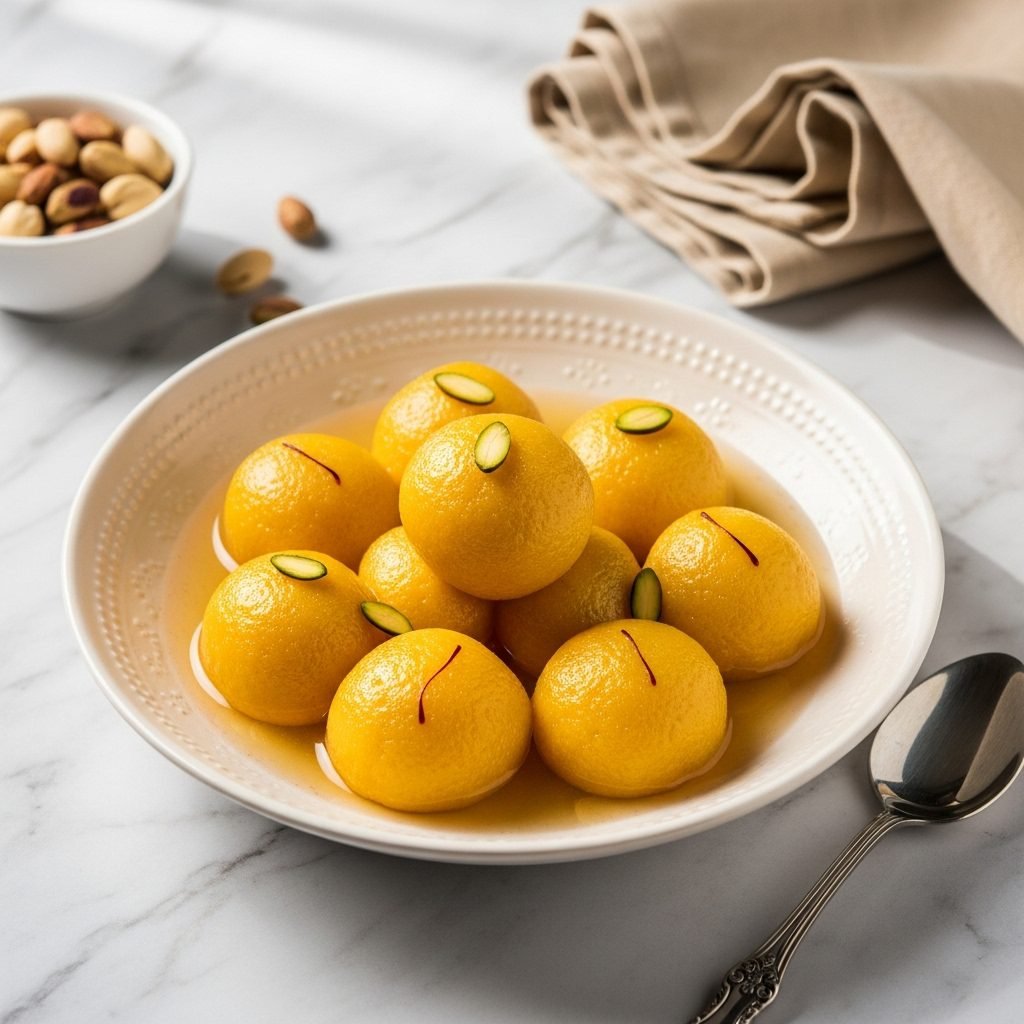
Rajbhog has a way of stealing the spotlight the moment it appears on the table. These soft, airy cheese dumplings — infused with saffron, stuffed with nuts, and soaked in fragrant cardamom syrup — feel comforting yet festive, cozy yet regal. One bite and the sweetness gently floods your senses while the delicate saffron aroma lingers.
If you enjoy Rasgulla but crave something a little richer and more aromatic, Rajbhog is your dessert. It’s warm, nostalgic, and surprisingly doable at home, even if you’re new to making chenna-based sweets.
Why You’ll Love Making Rajbhog
Rajbhog brings together everything you love about traditional Indian desserts: soft texture, floral sweetness, and that signature saffron glow. The stuffed center adds a fun surprise, and the whole process feels meditative — from kneading the warm chenna to shaping each ball.
Homemade Rajbhog has a freshness store-bought versions simply can’t match. The texture stays extra tender, and the flavor is deeper because you control every step.
Highlights at a Glance
- Taste: Sweet, floral, and gently aromatic with saffron and cardamom.
- Texture: Soft, spongy, airy chenna balls with a nutty center.
- Time: About 1 hour, plus cooling time.
- Difficulty: Beginner-friendly with thoughtful guidance.
- What Makes It Special: A richer, more festive version of Rasgulla.
Ingredients
For the Chenna
- 4 cups whole milk
- 2 tbsp lemon juice (mixed with 2 tbsp water)
- 1/2 tsp fine semolina (optional, helps binding)
- A pinch of saffron soaked in 1 tbsp warm milk
For the Stuffing
- 1 tbsp finely chopped pistachios
- 1 tbsp finely chopped almonds
- 1 tbsp crumbled khoya (optional)
- A pinch of cardamom
For the Sugar Syrup
- 2 cups sugar
- 5 cups water
- 4–5 green cardamom pods
- A few strands of saffron
Step-by-Step Instructions
- Prepare the chenna: Heat the milk in a pot until it gently boils. Lower the heat and add diluted lemon juice. Stir softly until the milk curdles. Once the whey fully separates, turn off the heat.
- Strain the curds: Pour the mixture into a cheesecloth-lined strainer. Rinse under cold water to remove the lemon flavor. Squeeze out excess water and hang for 20 minutes.
- Knead the chenna: Transfer the chenna onto a clean surface. Knead gently for 8–10 minutes until smooth. Add semolina and saffron milk, mixing until a soft dough forms.
- Prepare the stuffing: Combine pistachios, almonds, khoya, and cardamom in a small bowl.
- Shape the Rajbhog: Divide the dough into equal portions (8–10 pieces). Flatten each piece slightly, place a small amount of stuffing in the center, and seal carefully. Roll into smooth balls without cracks.
- Prepare the syrup: In a large pot, bring water, sugar, cardamom, and saffron to a boil.
- Cook the Rajbhog: Gently add the balls to the boiling syrup. Cover with a lid and cook for 12–15 minutes on medium heat. They will expand and turn a beautiful golden yellow.
- Cool in the syrup: Turn off the heat and let them rest in the syrup until they reach room temperature.
- Chill before serving: Refrigerate for at least 1–2 hours for the best flavor.
Helpful Cooking Tips
- A smooth, crack-free dough gives the softest Rajbhog.
- Use a large pot — the balls need room to expand without sticking.
- Maintain medium heat; too high and they may toughen.
- Stuff lightly to prevent the balls from breaking.
- Soaking in syrup for a few hours enhances both color and texture.
Ingredient Substitutions & Dietary Options
- Whole Milk: 2% milk works but won’t be as soft.
- Semolina: Optional — skip if you prefer a lighter texture.
- Khoya: Replace with ricotta for stuffing or omit entirely.
- Sugar: Adjust to personal taste; Rajbhog is naturally sweet.
- Saffron: If unavailable, use a pinch of turmeric for color (flavor will differ).
Common Mistakes to Avoid
- Overkneading: Makes the chenna rubbery.
- Underkneading: Causes cracks and breakage.
- Overcrowding the syrup: Rajbhog needs space to expand.
- Boiling too aggressively: Can cause the balls to collapse.
- Too much stuffing: Leads to splitting during cooking.
Serving Suggestions
- Serve chilled with extra saffron strands on top.
- Add a sprinkle of chopped pistachios for color.
- Pair with Gajar Halwa or Kheer for a festive dessert platter.
- Present in small bowls with warm syrup for cozy dinner parties.
Storage & Reheating Tips
- Store Rajbhog in syrup in an airtight container for up to 3 days.
- Keep refrigerated for the best texture.
- Do not freeze — the airy texture won’t survive.
- No reheating needed; Rajbhog is best chilled.
Frequently Asked Questions
Why did my Rajbhog turn dense?
Usually from overkneading or cooking on too high heat.
Why didn’t my Rajbhog expand in the syrup?
Not kneading enough or using a pot that’s too small can prevent expansion.
Can I skip the stuffing?
Yes — they’ll taste similar to Rasgulla but with saffron.
Can I color the Rajbhog?
A drop or two of yellow food color can enhance the classic golden look.
Final Thoughts
Rajbhog is one of those desserts that makes any day feel a little more special. The soft texture, the gentle floral notes, and that gorgeous golden color all come together in a way that feels like home and celebration at the same time.
Once you make it from scratch, the process becomes almost comforting — and the result is fresher, softer, and more flavorful than anything you could buy.
Short Summary
Soft saffron-infused cheese dumplings with a nutty center, simmered in fragrant cardamom syrup — a festive and comforting Bengali sweet.
If you enjoyed this recipe, feel free to share it on Pinterest or your favorite social platform!