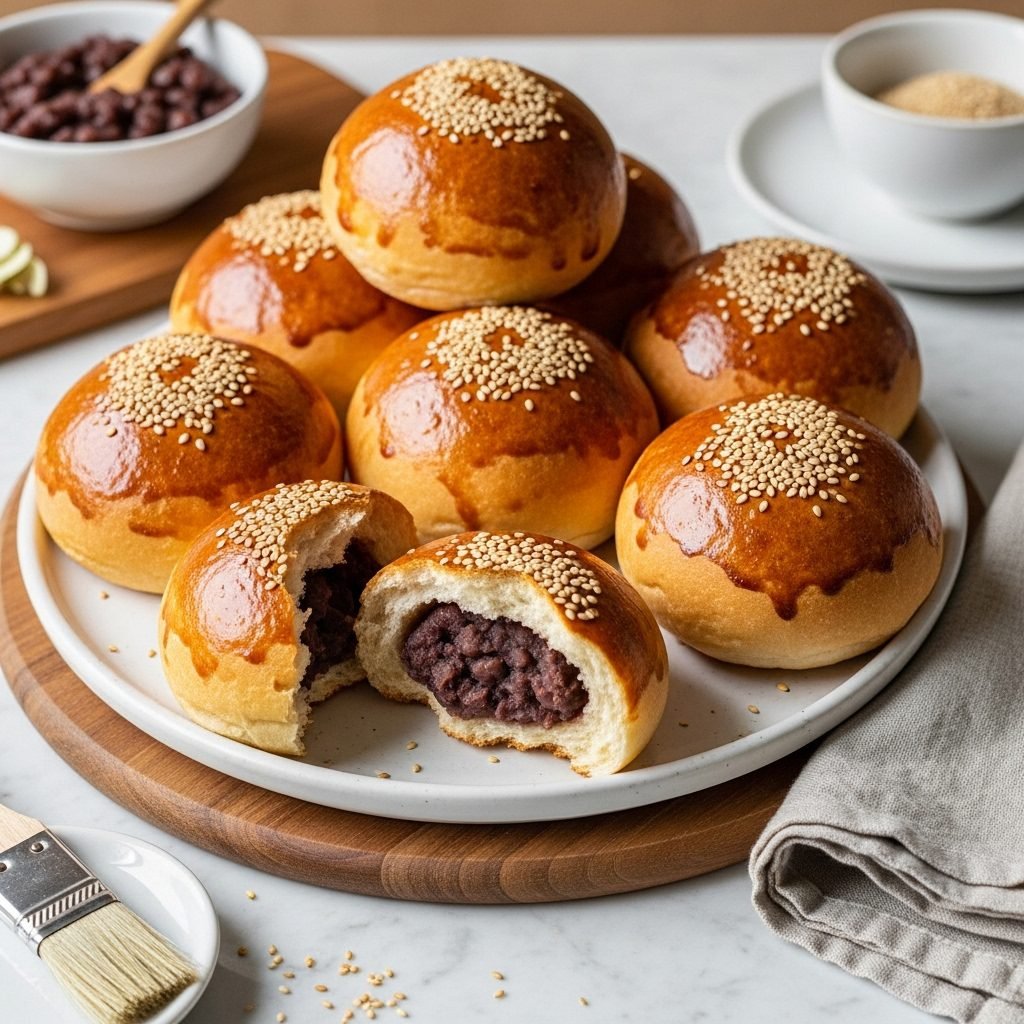
Soft & Comforting Anpan You Can Bake at Home
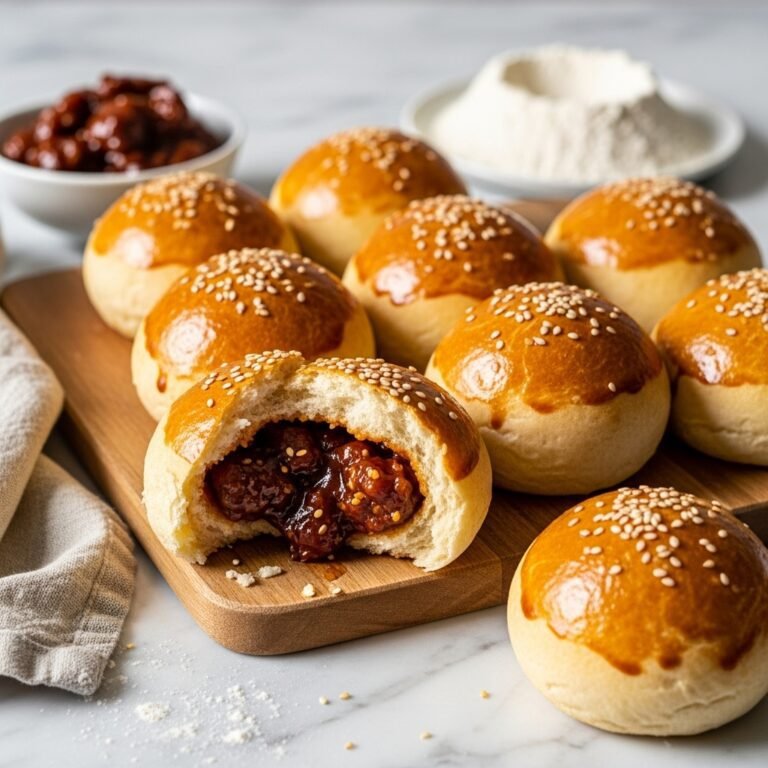
There’s something endlessly warm and nostalgic about anpan. Soft milk bread wrapped around sweet red bean paste, baked until golden and fragrant—it’s the kind of treat that feels like a small hug the moment you break it open. If you’ve ever wandered through a Japanese bakery and spotted those shiny, round buns topped with sesame seeds, this recipe will bring that cozy moment right into your kitchen.
Why You’ll Love This Anpan Recipe
Anpan has a tender, fluffy crumb and a mellow sweetness that never feels heavy. The smooth anko filling melts slightly as it bakes, creating a soft, almost custard-like center. Whether you’re already familiar with Japanese milk bread or completely new to it, anpan is approachable, comforting, and incredibly rewarding to make.
Quick Highlights
- Taste: Gently sweet bread with a creamy red bean center
- Texture: Soft, airy interior with a light, glossy crust
- Time: About 2 1/2 hours including rising
- Difficulty: Beginner-friendly
- What Makes It Special: Beautiful bakery-style buns made with simple ingredients
Ingredients
For the bread dough:
- 2 1/4 cups all-purpose flour
- 3 tbsp sugar
- 1/2 tsp salt
- 1 tsp active dry yeast
- 3/4 cup warm milk (about 110°F)
- 2 tbsp unsalted butter, softened
- 1 large egg
For the filling:
- 1 cup sweet red bean paste (anko)
For the topping:
- 1 tbsp milk (for brushing)
- 1 tsp sesame seeds (white or black)
Step-by-Step Instructions
- Make the dough. In a mixing bowl, whisk together the flour, sugar, salt, and yeast. Add the warm milk and egg, stirring until a shaggy dough forms.
- Add the butter. Knead in the softened butter until the dough becomes smooth, elastic, and slightly springy—about 8–10 minutes by hand.
- First rise. Place the dough in a lightly greased bowl, cover, and let rise for 1 hour or until doubled in size.
- Prepare the filling. Divide the anko into 8 equal balls. Chill them for 10–15 minutes to make shaping easier.
- Divide the dough. Punch down the risen dough and divide into 8 smooth balls.
- Shape the buns. Flatten one dough ball into a circle. Place an anko ball in the center and wrap the dough around it, pinching seams tightly.
- Smooth the tops. Place each bun seam-side down and gently shape into a round.
- Second rise. Arrange buns on a lined baking sheet, cover lightly, and let rise for 20–30 minutes.
- Brush and top. Brush each bun with a thin layer of milk and sprinkle a few sesame seeds in the center.
- Bake. Preheat the oven to 350°F. Bake for 14–16 minutes or until lightly golden.
- Cool slightly. Let the buns rest for 10 minutes—the filling will be warm and delightfully soft.
Helpful Cooking Tips
- If the dough feels sticky, give it time during kneading—it becomes smoother as gluten develops.
- Chilling the anko helps it keep shape during wrapping.
- Make sure seams are fully sealed to avoid filling leaks.
- Brushing with milk creates a soft sheen without darkening too much.
- Handle the dough gently after rising to keep the texture airy.
Ingredient Substitutions & Dietary Options
- Milk: Substitute with oat or almond milk.
- Butter: Plant-based butter works well for a dairy-free version.
- Flour: Swap half the all-purpose flour with bread flour for extra chew.
- Filling variations: Try white bean paste, chestnut paste, chocolate, or sweet potato.
- Sugar: Light brown sugar adds mild caramel warmth.
Common Mistakes to Avoid
- Using hot milk: It can kill the yeast—keep it around 110°F.
- Overfilling the buns: Too much anko can burst during baking.
- Skipping chill time for anko: Warm filling is harder to wrap.
- Under-kneading: Leads to dense buns—knead until elastic.
Serving Suggestions
- Enjoy warm with tea, coffee, or milk.
- Serve as a breakfast pastry or afternoon snack.
- Add a light dusting of powdered sugar for a café-style presentation.
- Pair with fresh fruit for a simple brunch addition.
Storage & Reheating Tips
- Room temperature: Store in an airtight container for up to 2 days.
- Freezing: Freeze individually wrapped buns for up to 1 month.
- Reheating: Warm in microwave for 10–15 seconds to soften.
- Do not refrigerate: It dries out the bread quickly.
FAQ
Does anpan have to be filled with red bean? No—anko is traditional, but many variations exist.
Can I make the dough ahead of time? Yes, refrigerate overnight after the first rise. Let warm before shaping.
Why are my buns too pale? Brush with milk evenly and bake until golden at the edges.
Can I use canned anko? Absolutely—it works beautifully.
Final Thoughts
Baking anpan feels like making something warm and meaningful. From the soft dough to the sweet bean center, each step is slow, simple, and satisfying. It’s a treat that brings a little calm into your kitchen and fills it with the smell of fresh, comforting bread.
Quick Summary
Fluffy Japanese sweet buns filled with smooth red bean paste and topped with sesame seeds. Cozy, soft, and perfect for an everyday baked treat.
If you enjoyed this recipe, share it on Pinterest or tag your anpan creations on social media—I’d love to see what you bake!