Dreamy Coconut Pandan Jelly Iced Dessert (Cendol)
Cendol Recipe
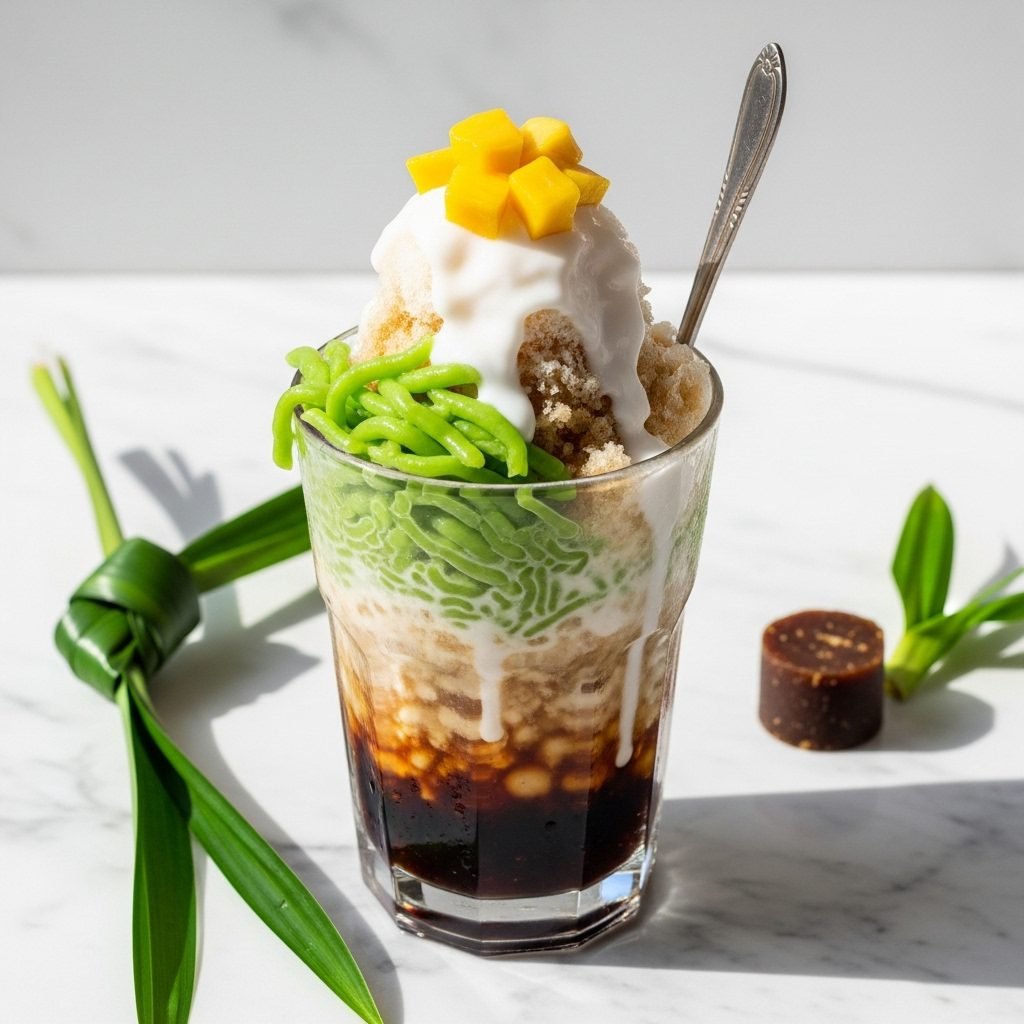
Escape to a tropical paradise with this incredibly refreshing Cendol recipe! This beloved Southeast Asian dessert features chewy, fragrant pandan jellies swimming in creamy coconut milk and a smoky, rich palm sugar syrup. It’s the perfect sweet, icy treat to cool you down on a hot day.
30 minutes
20 minutes
50 minutes, plus chilling
4-6 servings
Dessert
Stovetop
Southeast Asian
Gluten-Free, Vegan
Why You’ll Love This Recipe
- Authentic Southeast Asian street food classic
- Chewy, fragrant pandan jellies made from scratch
- Perfectly sweet, creamy, and cooling
- Naturally gluten-free and vegan-friendly
Equipment You’ll Need
- 2 medium saucepans
- Whisk
- Cendol press (or potato ricer with large holes)
- Large bowl
- Measuring cups and spoons
- Fine-mesh sieve
- Tall serving glasses
Ingredients
- For the Pandan Jellies:
- 1/2 cup rice flour
- 1/4 cup mung bean starch (or tapioca starch)
- 1/4 cup granulated sugar
- 1/4 teaspoon salt
- 2 cups water
- 1 teaspoon pandan extract
- 2-3 drops green food coloring (optional, for vibrant color)
- For the Palm Sugar Syrup (Gula Melaka):
- 1 cup chopped palm sugar (gula melaka)
- 1/2 cup water
- 1 pandan leaf, tied in a knot (optional)
- For the Coconut Milk Mixture:
- 2 cups full-fat canned coconut milk, chilled
- 1/2 teaspoon salt
- For Assembling:
- 4 cups shaved or crushed ice
- 1/2 cup canned sweetened red beans (optional)
- 1/2 cup canned sweet jackfruit, drained and diced (optional)
Instructions
- First, prepare the palm sugar syrup. In a small saucepan, combine the chopped palm sugar, water, and knotted pandan leaf (if using). Bring to a simmer over medium heat, stirring until the sugar is completely dissolved.
- Let the syrup simmer gently for 5-7 minutes, until it has slightly thickened. Remove from heat, discard the pandan leaf, and let it cool completely. The syrup will thicken more as it cools.
- Next, make the pandan jellies. Prepare a large bowl with ice and cold water. Set it aside.
- In a medium saucepan (off the heat), whisk together the rice flour, mung bean starch, sugar, and salt until well combined.
- Gradually whisk in the water and pandan extract until the mixture is smooth and free of lumps. Add the green food coloring, if using, and stir to combine.
- Place the saucepan over medium-low heat. Cook, whisking constantly and vigorously, to prevent lumps from forming. The mixture will start to thicken.
- Continue cooking and stirring for about 8-10 minutes. The mixture is ready when it becomes a very thick, sticky, and glossy translucent paste that pulls away from the sides of the pan.
- Working quickly while the mixture is hot, transfer it to a cendol press or a potato ricer. Hold it over the bowl of ice water and press the mixture through, creating short, worm-like jellies that fall directly into the cold water. If you don’t have a press, you can use a colander with large holes, pressing the mixture through with a spatula.
- Let the jellies sit in the ice water for at least 10 minutes to firm up completely. Once firm, drain the jellies.
- Prepare the coconut milk by whisking the chilled coconut milk and salt together in a small bowl until smooth.
- Time to assemble! In a tall glass, add 2-3 tablespoons of the cooled palm sugar syrup to the bottom.
- Add any optional toppings like sweetened red beans or jackfruit.
- Fill the glass about three-quarters full with shaved or crushed ice.
- Spoon a generous amount of the pandan jellies over the ice.
- Pour the salted coconut milk over everything until the glass is full. Serve immediately with a long spoon and a wide straw.
Expert Cooking Tips
- Stir constantly! The jelly mixture can clump and burn on the bottom of the pan very easily. A whisk is essential for a smooth texture.
- Work fast when pressing the jelly. It begins to set as it cools, which makes it much harder to press through the mold. Have your ice bath ready to go right next to your stove.
- For the best flavor, use high-quality Gula Melaka (Malaysian palm sugar). It has a deep, smoky, caramel flavor that is the signature taste of authentic Cendol.
- Chill all your components. Cold coconut milk, cold jellies, and plenty of ice are the keys to the most refreshing Cendol experience.
Substitutions and Variations
If you can’t find a Cendol press, a potato ricer with large holes or a colander works well. For the Gula Melaka (palm sugar), you can substitute dark brown sugar or coconut sugar, but the flavor won’t be as complex or smoky. Mung bean starch provides the ideal chewy texture for the jellies, but tapioca starch can be used as a close alternative.
Common Mistakes to Avoid
The most common mistake is undercooking the jelly batter. It must be cooked until it’s a very thick, glossy, and sticky paste that pulls away from the sides of the pan. If the batter is too thin, the jellies will be soft and may dissolve. Another pitfall is not stirring the batter constantly, which will result in lumps. Lastly, don’t skip the ice bath—it’s what shocks the jellies into setting instantly, giving them their signature firm, chewy bite.
Serving Suggestions
Serve Cendol in tall, clear glasses to showcase the gorgeous layers of dark syrup, vibrant green jellies, and creamy white coconut milk. Provide a long spoon for stirring everything together and a wide straw for sipping up the jellies. For a fun, interactive dessert, set up a ‘Cendol Bar’ with bowls of toppings like sweetened red beans, creamed corn, and diced jackfruit, allowing guests to build their own perfect bowl.
Storage and Reheating Tips
Cendol is best enjoyed fresh, but components can be stored separately. Keep the pandan jellies submerged in cool water in an airtight container in the fridge for up to 3 days. The palm sugar syrup can be stored in a sealed jar in the fridge for up to 2 weeks. Assemble just before serving to ensure the best texture and the iciest, most refreshing experience.
Nutrition Facts (Estimated)
| Serving Size | 1 serving (approx. 1.5 cups) |
| Calories | 385 kcal |
| Fat | 18 g |
| Saturated Fat | 15 g |
| Unsaturated Fat | 1 g |
| Trans Fat | 0 g |
| Cholesterol | 0 mg |
| Sodium | 155 mg |
| Carbohydrates | 56 g |
| Fiber | 2 g |
| Sugar | 36 g |
| Protein | 3 g |
Frequently Asked Questions
What is pandan and what does it taste like?
Pandan is a tropical plant with long, fragrant green leaves used widely in Southeast Asian cooking. Its flavor is unique and hard to describe—it’s grassy, nutty, and slightly floral, often compared to a complex blend of vanilla, almond, and coconut.
My jellies turned out soft and mushy. What went wrong?
This almost always means the jelly mixture was not cooked long enough or at a high enough temperature. You need to cook it, stirring constantly, until it transforms from a liquid batter into a very thick, sticky, and translucent paste. It should be thick enough to hold its shape on a spoon.
Where can I find ingredients like Gula Melaka and mung bean starch?
You can find these specialty ingredients at most well-stocked Asian grocery stores or purchase them online. For the most authentic flavor, look for Gula Melaka (palm sugar) that comes in dark, cylindrical blocks.
Can I use low-fat coconut milk?
You can, but for the classic rich and creamy taste and texture of Cendol, full-fat canned coconut milk is highly recommended. The higher fat content provides a luxurious mouthfeel that balances the sweetness of the syrup.
Conclusion
There is truly nothing more satisfying than a tall, icy glass of homemade Cendol on a warm afternoon. This recipe brings the authentic, vibrant flavors of a bustling Southeast Asian market right into your kitchen. I hope you fall in love with the wonderfully chewy pandan jellies and the divine combination of creamy coconut and smoky palm sugar! If you try this recipe, I would be thrilled to see your creation – please tag me on Pinterest and Instagram!