Soft & Fluffy Filipino Pianono: The Classic Sweet Buttercream Roll Cake
Pianono Recipe
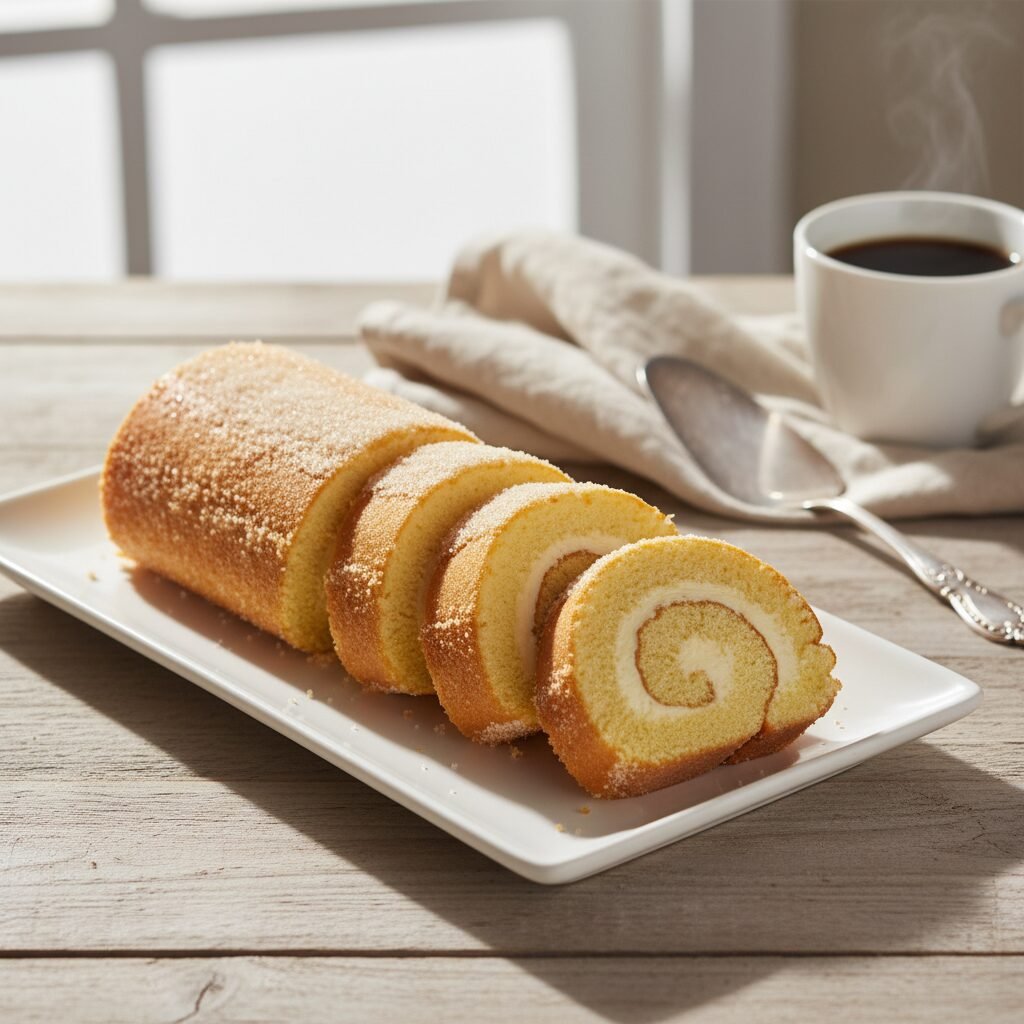
Get ready to fall in love with this classic Filipino treat! Our Pianono recipe guides you through creating the softest, most delicate sponge cake, rolled up with a dreamy, sweet buttercream filling. It’s the perfect light and airy dessert for an afternoon snack (merienda) with a cup of coffee, and it’s surprisingly simple to make right in your own kitchen.
25 minutes
12 minutes
1 hour (includes cooling)
8-10 slices
Dessert
Baking
Filipino
N/A
Why You’ll Love This Recipe
- Pillow-soft and incredibly light sponge cake
- Sweet, creamy, melt-in-your-mouth buttercream filling
- A classic Filipino bakery favorite you can make at home
- Ready in about an hour!
Equipment You’ll Need
- Stand mixer or electric hand mixer
- 10×15 inch jelly roll pan (rimmed baking sheet)
- Parchment paper
- Clean kitchen towel or tea towel
- Spatula (offset and regular)
- Mixing bowls
- Whisk
- Sifter or fine-mesh sieve
Ingredients
- For the Sponge Cake:
- 5 large eggs, separated, at room temperature
- 1/2 cup granulated sugar, divided
- 1 teaspoon vanilla extract
- 1/4 cup whole milk, at room temperature
- 1 cup cake flour, sifted
- 1 1/2 teaspoons baking powder
- 1/4 teaspoon salt
- 1/4 teaspoon cream of tartar
- For the Buttercream Filling:
- 1/2 cup unsalted butter, softened
- 1 1/2 cups powdered sugar, sifted
- 1 teaspoon vanilla extract
- 1 tablespoon milk or heavy cream
- For Dusting:
- 1/4 cup granulated sugar or powdered sugar
Instructions
- Preheat your oven to 375°F (190°C). Grease a 10×15-inch jelly roll pan, line it with parchment paper, and then grease the parchment paper as well. This double-greasing ensures your delicate cake won’t stick.
- Prepare the dusting surface: Lay a clean kitchen towel flat on your work surface. Generously and evenly sprinkle it with 1/4 cup of granulated sugar. This is where you’ll roll the warm cake, and the sugar prevents it from sticking to the towel.
- Make the meringue: In the clean, dry bowl of a stand mixer fitted with the whisk attachment (or using a hand mixer), beat the 5 egg whites and cream of tartar on medium speed until foamy. Gradually add 1/4 cup of the granulated sugar, one tablespoon at a time. Increase the speed to high and beat until stiff, glossy peaks form. This means when you lift the whisk, the peak holds its shape and doesn’t flop over. Transfer the meringue to a separate large bowl and set aside.
- Prepare the yolk batter: In the same mixer bowl (no need to wash it), combine the 5 egg yolks and the remaining 1/4 cup of granulated sugar. Beat on high speed for about 3-5 minutes, until the mixture is thick, pale yellow, and falls from the whisk in a thick ribbon.
- Add the wet ingredients: With the mixer on low, beat the vanilla extract and milk into the egg yolk mixture until just combined.
- Combine the dry ingredients: In a separate medium bowl, whisk together the sifted cake flour, baking powder, and salt. Sifting is crucial for a light and airy cake!
- Mix the batter: Add the dry ingredients to the egg yolk mixture in two batches, mixing on low speed until just incorporated. Be careful not to overmix; stop as soon as you no longer see dry flour streaks.
- Fold in the meringue: Gently fold about one-third of the stiffly beaten egg whites into the batter using a spatula. This lightens the batter. Then, gently fold in the remaining egg whites in two more additions until just combined. The key is to be gentle to keep all the air you whipped into the whites. You should have a light, airy batter with no white streaks.
- Bake the cake: Pour the batter into your prepared jelly roll pan. Use an offset spatula to spread it evenly into all the corners. Bake for 10-12 minutes, or until the cake is light golden brown and springs back when you gently touch the center.
- Roll the cake: Immediately run a knife around the edges of the pan to loosen the cake. While it’s still hot, carefully and quickly invert the pan onto the sugar-dusted kitchen towel. Peel off the parchment paper. Starting from one of the shorter ends, gently and tightly roll the cake up with the towel inside. Let it cool completely on a wire rack, seam-side down, for at least 30-45 minutes. This step ‘trains’ the cake to hold its rolled shape and prevents cracking.
- Make the buttercream: While the cake cools, prepare the filling. In a medium bowl, beat the softened butter with a mixer on medium speed until creamy and smooth. Gradually add the sifted powdered sugar and beat until well combined. Add the vanilla and 1 tablespoon of milk or cream, then beat on high speed for 2-3 minutes until the buttercream is light, fluffy, and spreadable.
- Fill and re-roll: Once the cake is completely cool, gently unroll it. Spread the buttercream filling evenly over the surface, leaving about a 1/2-inch border along the edges. Tightly re-roll the cake, this time without the towel. Wrap the pianono tightly in plastic wrap and refrigerate for at least 30 minutes to help it set.
- Serve: Once chilled and firm, unwrap the pianono. You can trim the ends for a cleaner look if desired. Slice into 1-inch thick pieces and serve immediately. Enjoy your homemade Filipino delight!
Expert Cooking Tips
- Room temperature ingredients are key! Make sure your eggs and milk are at room temperature. This helps them incorporate better into the batter, creating a smoother, more uniform texture.
- Don’t overbake the cake. An overbaked sponge cake will be dry and much more likely to crack when you roll it. Keep a close eye on it; it’s done when it just springs back to the touch.
- Be gentle when folding. The air you whip into the egg whites is what makes the cake light and spongy. Use a large spatula and a gentle ‘scoop from the bottom and fold over the top’ motion to incorporate the meringue without deflating it.
- Roll it while it’s hot! This is the most crucial step for a crack-free roll. The steam from the hot cake makes it pliable. If you wait for it to cool, it will become brittle and break.
Substitutions and Variations
The classic filling is a simple buttercream, but feel free to get creative! You can easily substitute the buttercream with your favorite fruit jam (guava or strawberry jam are popular choices), a rich dulce de leche, or even a tangy lemon curd for a different flavor profile. For a richer filling, try a chocolate ganache or a cream cheese frosting.
Common Mistakes to Avoid
The most common mistake is the cake cracking when rolled. This is almost always caused by either overbaking the cake, which makes it dry, or not rolling it up immediately while it’s still hot and pliable. Another mistake is over-mixing the batter after adding the flour or the egg whites, which develops gluten and deflates the air, resulting in a tough, dense cake instead of a light, airy sponge.
Serving Suggestions
Pianono is the quintessential Filipino merienda (afternoon snack). Serve slices with a hot cup of strong black coffee, traditional kapeng barako, or a comforting cup of tea. It’s also a wonderful light dessert after a meal and a welcome addition to any party dessert table or potluck.
Storage and Reheating Tips
Store leftover pianono tightly wrapped in plastic wrap or in an airtight container in the refrigerator for up to 4 days. The buttercream helps keep it moist. It’s best served slightly chilled or brought to room temperature for about 15 minutes before serving for the softest texture.
Nutrition Facts (Estimated)
| Serving Size | 1 slice |
| Calories | 280 kcal |
| Fat | 14 g |
| Saturated Fat | 8 g |
| Unsaturated Fat | 6 g |
| Trans Fat | 0 g |
| Cholesterol | 110 mg |
| Sodium | 150 mg |
| Carbohydrates | 32 g |
| Fiber | 1 g |
| Sugar | 22 g |
| Protein | 5 g |
Frequently Asked Questions
Why did my pianono crack?
Cracking usually happens for a few reasons: the cake was overbaked, making it dry and brittle; it wasn’t rolled immediately while hot; or it was rolled too loosely the first time. To avoid this, bake just until the cake springs back, and have your sugared towel ready to roll it up the second it comes out of the oven.
Can I use all-purpose flour instead of cake flour?
You can, but the texture will be slightly different. Cake flour has a lower protein content, which results in a more tender, delicate crumb, ideal for sponge cakes like pianono. If you must use all-purpose flour, for every 1 cup, remove 2 tablespoons of flour and replace it with 2 tablespoons of cornstarch, then sift it together a few times. This will mimic the properties of cake flour.
My buttercream is too sweet/too thick. How can I fix it?
If your buttercream is too sweet, add a tiny pinch of salt to balance the flavor. If it’s too thick or stiff, add more milk or cream, one teaspoon at a time, and beat until it reaches a smooth, spreadable consistency. If it’s too thin, add more sifted powdered sugar until it thickens up.
Conclusion
There’s something so satisfying about unrolling a perfectly soft sponge cake, spreading it with sweet buttercream, and rolling it back into a beautiful swirl. This Pianono recipe brings the nostalgic flavors of a Filipino bakery right to your home, and it’s a joy to make and share. Give it a try, and don’t forget to snap a picture of your beautiful roll cake and share it on Pinterest and Instagram—we can’t wait to see it!