Golden, Rum-Soaked & Fabulous: A Baba au Rhum Recipe
Hello, friends! Let’s talk about those show-stopping, old-school desserts that just feel like magic. For me, right at the top of that list, is Baba au Rhum.
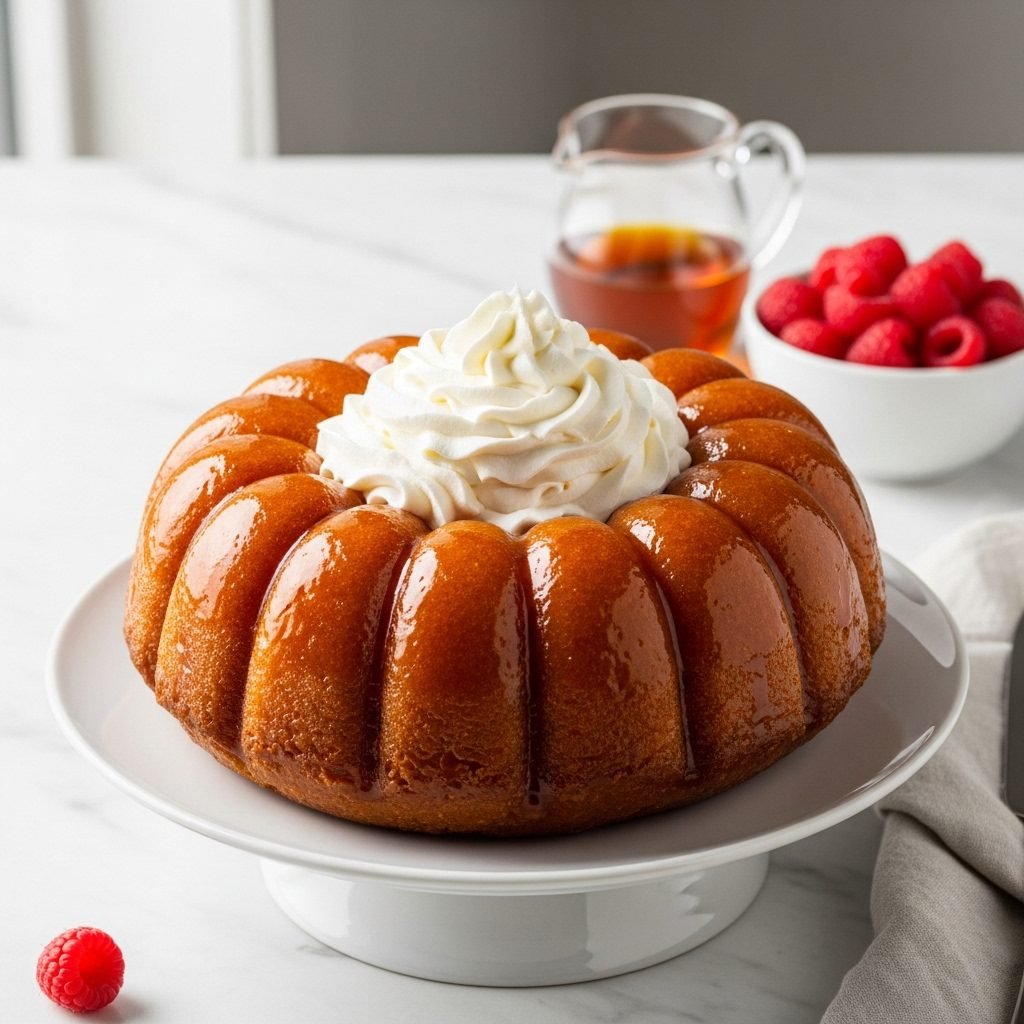
You’ve probably seen it in a high-end bakery or on a fancy restaurant menu: that glorious, golden-brown cake, often in a ring shape, glistening with glaze, and maybe even swimming in a little pool of its own delicious, boozy syrup.
It looks (and sounds) incredibly fancy. A yeasted cake? A hot syrup soak? It all seems… complicated.
I’m here to demystify it for you. Because at its heart, a baba is just a simple, buttery, brioche-like cake. The real transformation happens after it’s baked, when it’s given a luxurious, fragrant bath in a warm, rum-spiked syrup.
The process is a true joy to watch. The light, airy cake acts like a sponge, drinking up all that fragrant liquid, plumping up and becoming this incredibly tender, moist, and flavorful creation. Topped with a bit of shiny apricot glaze and a cloud of cool, light whipped cream, it’s a dessert that hits every note: warm, buttery, fragrant, a gentle spike of rum, and a creamy, cooling finish.
This is a “project” bake, in the best way possible. It’s not a 30-minute recipe, but every step is simple and so rewarding. Let’s make this classic.
Why You’ll Fall in Love With This Recipe
- The Flavor: This is a dessert with real depth. It’s not just sugary. You get the rich, buttery, yeasted flavor of the cake, the warm, caramel-and-vanilla notes from the dark rum, a bright hint of citrus, and a fruity touch from the apricot glaze.
- The Texture: This is the best part. The cake starts out light and airy, almost like a challah or brioche. Then, the syrup transforms it into something pudding-like, impossibly tender, and saturated with moisture, all while holding its shape.
- The “Wow” Factor: This is a true showstopper for a dinner party. It’s a classic for a reason and looks so impressive on a platter, especially with that mountain of whipped cream in the center.
- The Guide: This recipe is a no-fear approach to a yeasted cake. I’ll walk you through every step, from activating the yeast to soaking the cake, so you’ll feel confident.
What You’ll Need
This recipe has three main parts: the cake (baba), the syrup, and the toppings. A stand mixer is highly recommended for the cake, as the dough is very soft and sticky.
For the Baba (The Yeasted Cake)
- 1 tsp active dry yeast
- 2 tbsp warm whole milk (about 110°F)
- 1 1/2 cups all-purpose flour
- 2 tsp granulated sugar
- 1/2 tsp kosher salt
- 3 large eggs, at room temperature
- 6 tbsp unsalted butter, at room temperature, cut into small pieces
For the Rum Syrup (The Soak)
- 2 cups water
- 1 1/4 cups granulated sugar
- 1 wide strip of orange peel
- 1 vanilla bean, split, or 1 tsp vanilla extract
- 3/4 cup good-quality dark rum
For the Glaze & Topping
- 1/2 cup apricot jam
- 1 tbsp water
- 1 1/2 cups heavy whipping cream, cold
- 3 tbsp powdered sugar
- 1 tsp vanilla extract
Step-by-Step: How to Make Baba au Rhum
Let’s break this down into a few manageable parts. Don’t be intimidated by the yeast!
Part 1: Make the Baba Dough (This is a soft, sticky dough)
- Activate the Yeast: In a small bowl (or the bowl of your stand mixer), stir together the 2 tbsp of warm milk, the 1 tsp of yeast, and a tiny pinch of the sugar. Let it sit for 5-10 minutes. You’ll know it’s ready when it gets foamy and smells, well, yeasty.
- Combine: Fit your stand mixer with the dough hook attachment. To the bowl with the foamy yeast, add the all-purpose flour, the rest of the sugar, and the salt. Turn the mixer on low and add the 3 room-temperature eggs, one at a time, letting each one incorporate before adding the next.
- Work the Dough: Let the mixer run on low-medium speed for about 5 minutes. The dough will be very sticky, more like a thick batter. This is correct.
- Add the Butter: With the mixer still on low, add the softened butter, one small piece at a time. Wait until each piece is mostly incorporated before adding the next. This will take a few minutes.
- Knead: Once all the butter is in, turn the speed up to medium and let the mixer knead the dough for 8-10 minutes. The dough will (and should!) remain soft and sticky, but it will become very elastic and shiny. It will start to pull away from the sides of the bowl.
- First Rise: Scrape the dough into a lightly greased bowl. Cover the bowl with plastic wrap or a clean kitchen towel. Let it rise in a warm, draft-free spot for 1-2 hours, or until it has doubled in size.
Part 2: Shape and Bake the Baba
- Prep the Pan: This is important. Generously butter a 6-cup Bundt pan, kugelhopf mold, or a 9-inch ring mold. Get into every single nook and cranny. Dust it with flour and tap out the excess.
- Shape: Gently deflate the risen dough by punching it down. Scrape the sticky dough onto a lightly floured surface. Gently shape it into a ring and place it in your prepared pan.
- Second Rise: Cover the pan loosely with plastic wrap. Let it rise again in a warm spot for 45-60 minutes, or until the dough has risen to about 1 inch below the rim of the pan.
- Bake: While it’s rising, preheat your oven to 375°F (190°C). Bake the baba for 20-25 minutes, or until it’s a deep, beautiful golden-brown and a skewer inserted into the center comes out clean.
- Cool: Let the baba cool in the pan on a wire rack for 10 minutes. Then, carefully invert it onto the wire rack to cool completely.
Part 3: Make the Syrup and Soak the Baba
- Make the Syrup: While the baba is cooling, make the syrup. In a medium saucepan, combine the 2 cups of water, 1 1/4 cups sugar, the strip of orange peel, and the split vanilla bean (if using). Bring to a simmer, stirring until the sugar is dissolved. Let it simmer gently for 5 minutes.
- Add the Rum: Remove the saucepan from the heat. Let it cool for about 10 minutes—it should be warm, not boiling. Remove the orange peel and vanilla bean. Stir in the 3/4 cup of dark rum and the vanilla extract (if using).
- The Soak (The Fun Part):
- Place your completely cool baba in a deep-sided dish, bowl, or even a large baking dish (something that will catch the syrup).
- Slowly pour the warm (not hot) rum syrup all over the cake.
- Let it sit for 20 minutes. The cake will begin to absorb the liquid. Gently spoon the syrup from the bottom of the dish back over the top of the cake.
- Carefully flip the cake over. Let it sit for another 20 minutes, basting it occasionally with the syrup. It should absorb almost all of it and will feel very heavy and plump.
Part 4: Glaze and Serve
- Make the Glaze: In a small saucepan, heat the 1/2 cup of apricot jam and 1 tbsp of water over low heat until it’s melted and bubbling. Strain it through a fine-mesh sieve to remove any lumps, so you’re left with a clear, smooth glaze.
- Glaze the Baba: Very carefully (the soaked cake is delicate!), transfer the baba from its soaking dish to its final serving platter or a cake stand. A large offset spatula is your best friend here. Brush the shiny apricot glaze all over the top and sides of the baba.
- Make the Whipped Cream: Just before serving, make the whipped cream (Crème Chantilly). In a cold bowl, combine the cold heavy cream, powdered sugar, and vanilla extract. Beat with an electric mixer until it holds soft, cloud-like peaks.
- Serve: Fill the center of the baba ring with a generous mountain of the whipped cream. Serve immediately, with any extra whipped cream on the side.
My Favorite Tips for Baba Success
- Yeast is Your Friend: Don’t be afraid of it. Just make sure your milk is warm, not hot (around 110°F is great). Hot milk will kill the yeast. Also, check the expiration date on your yeast packet!
- Room Temp is Key: Having your eggs and butter at room temperature is crucial for the dough. It allows the butter to emulsify into the dough, creating that rich, tender crumb.
- The Stale Cake Secret: If you have time, bake the baba a day ahead! A slightly drier, day-old cake is even thirstier and will soak up the rum syrup beautifully without falling apart.
- Good Rum, Good Baba: This is not the time for the cheapest rum on the shelf. The rum is a primary flavor! Use a good-quality dark or amber rum that you would actually enjoy drinking—something with notes of vanilla and caramel.
- Patience with the Soak: Don’t rush the soaking process. The baba needs time to drink. Basting and flipping are key to making sure it’s saturated all the way through, not just soggy on the bottom.
Substitutions and Variations
- Alcohol-Free Baba: If you want to skip the rum, you can! Make a “Baba au Sirop.” Replace the rum with an equal amount of fresh orange juice (warmed with the syrup) or a non-alcoholic spirit. You can also make a spiced syrup by simmering the water and sugar with a cinnamon stick and a few cloves.
- Gluten-Free: This is a tricky one, as the recipe relies on gluten for its structure. You could try a 1-to-1 gluten-free baking flour blend that contains xanthan gum, but be aware the texture will be different and potentially more crumbly.
- Dairy-Free: This is doable! Use a high-quality vegan butter stick (in place of butter) and a rich, unsweetened almond or oat milk (in place of whole milk). For the topping, use the chilled, solid cream from a can of full-fat coconut milk, whipped with powdered sugar.
- Individual Babas: This is a lovely way to serve them! Generously butter and flour a 12-cup standard muffin tin. Divide the dough among the cups and let them do their second rise there. Bake time will be shorter, around 15-20 minutes.
Common Mistakes to Avoid
- My Dough Didn’t Rise: Your yeast might have been old, your milk was too hot and killed it, or your room was too cold. Find a cozy, warm spot for your dough (like in an oven with just the light on).
- “This Dough is Too Sticky!”: It’s supposed to be! This is not a firm bread dough; it’s a very soft, enriched, sticky dough. Trust the process and your stand mixer.
- My Baba Fell Apart When Soaking: This is the classic bummer. It usually happens for two reasons: 1) You soaked a hot or warm cake, or 2) Your syrup was boiling hot. The cake must be cool and the syrup warm. This contrast is what lets it soak in without disintegrating.
- A Dry, Sad Baba: You were too shy with the syrup! It will seem like a lot of syrup, but the baba is thirsty. Let it soak and baste it until it has absorbed almost all of it.
How to Serve Your Masterpiece
This dessert is a show.
- Serve it on a platter with a slight rim (to catch any extra syrup).
- Fill the center with that cloud of whipped cream.
- A few fresh berries (like raspberries or strawberries) are a beautiful addition, as their tartness cuts through the rich, sweet cake.
- It’s also wonderful with a scoop of vanilla bean ice cream or a dollop of crème fraîche.
- Serve it with a strong cup of espresso on the side.
Storing Your Baba au Rhum
- In the Fridge: Because of the whipped cream, this dessert must be stored in the refrigerator. The soaked baba itself (without cream) should also be chilled. Store in an airtight container for up to 3 days.
- The Day-After: Honestly, Baba au Rhum is often even better on day two, after the flavors have had a full 24 hours to meld.
- Freezing: You can freeze the plain, un-soaked baba. Bake it, cool it, and wrap it tightly in plastic wrap and then foil. It will keep for up to 3 months. When you’re ready, thaw it at room temperature and proceed with the warm syrup. I do not recommend freezing the soaked baba.
Your Baba au Rhum Questions
What’s the best rum to use? A good-quality dark or amber rum is best. You want something with flavor. Myers’s, Mount Gay, Gosling’s, or any decent-aged rum is a great choice.
Why is it called “Baba”? The legend says it was invented (or at least popularized) by the 18th-century Polish king, Stanisław Leszczyński. He supposedly found a kugelhopf (a similar cake) too dry and decided to soak it in rum. He named it after Ali Baba, a hero from One Thousand and One Nights.
My baba is… well, it’s really boozy. It’s definitely a dessert for adults! If you’re sensitive to the alcohol, you can boil the syrup for a minute after adding the rum to cook off some of the alcohol (you’ll lose some flavor, too). Or, simply reduce the amount of rum and replace it with water or orange juice.
A Final, Sweet Thought
Whew! That was a journey, but I hope you’re feeling excited, not scared. Making a Baba au Rhum is one of those deeply satisfying baking projects that connects you to a long history of pastry. When you spoon that warm syrup over the cake and watch it drink it all in, it feels like a little bit of magic.
It’s a true classic, a celebration on a plate, and a wonderful way to bring a little “wow” to your table.
Quick Recipe Summary
This classic Baba au Rhum recipe guides you through making a light, buttery, yeasted cake (baba) in a ring mold. Once baked and cooled, the baba is drenched in a warm, fragrant syrup made with dark rum, sugar, vanilla, and orange peel. It’s finished with a shiny apricot glaze and served with a generous pile of fresh whipped cream (Crème Chantilly) in the center.