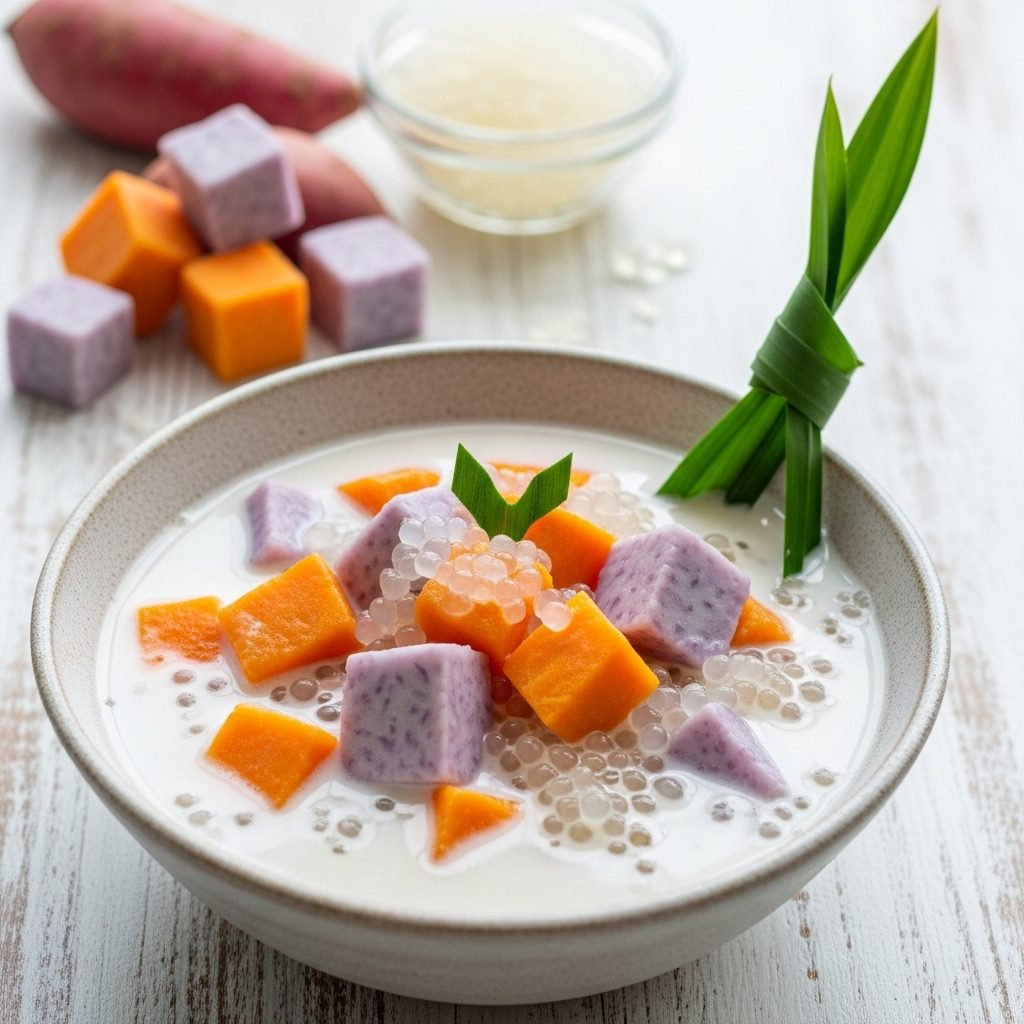
Creamy Coconut & Sweet Potato Soup (Bubur Cha Cha)
Bubur Cha Cha Recipe
Get ready to fall in love with the most vibrant, comforting, and delicious dessert soup you’ve ever tasted! This Bubur Cha Cha recipe features a rainbow of tender sweet potatoes and taro swimming in a rich, fragrant coconut milk broth. It’s a stunningly beautiful Malaysian treat that’s surprisingly easy to make and perfect for any occasion.
20 minutes
25 minutes
45 minutes
6-8 servings
Dessert
Stovetop
Malaysian
Vegan, Gluten-Free
Why You’ll Love This Recipe
- Vibrantly colorful and visually stunning
- Rich, creamy, and fragrant coconut flavor
- Naturally vegan and gluten-free
- Ready in under an hour
Equipment You’ll Need
- Large pot or Dutch oven
- Small saucepan
- Chef’s knife
- Cutting board
- Vegetable peeler
- Fine-mesh sieve or colander
- Ladle
Ingredients
- 1 lb mixed sweet potatoes (about 2 medium, use both orange and purple for color)
- 1 lb taro root
- 1/2 cup small sago or tapioca pearls
- 2 cans (13.5 oz each) full-fat coconut milk
- 2 cups water
- 3/4 cup palm sugar (gula melaka), chopped, or substitute with brown sugar
- 3 pandan leaves, tied into a knot
- 1/2 teaspoon salt
Instructions
- First, prepare the sago pearls. Bring 4 cups of water to a rolling boil in a small saucepan. Add the sago pearls and cook for about 10-15 minutes, stirring occasionally to prevent sticking, until they are mostly translucent. Turn off the heat, cover the pot, and let it sit for another 10 minutes until they are fully translucent. Drain the pearls through a fine-mesh sieve and rinse under cold water to remove excess starch. Set aside.
- While the sago is cooking, prepare your root vegetables. Peel the sweet potatoes and taro root. Cut them into uniform 3/4-inch cubes. Keeping the size consistent is key for even cooking.
- In a large pot or Dutch oven, combine the cubed taro with enough water to cover it. Bring to a boil and cook for about 5-7 minutes. Taro takes slightly longer to cook than sweet potatoes, so giving it a head start ensures everything is perfectly tender at the end.
- Add the cubed sweet potatoes to the pot with the taro. Continue to cook for another 10-12 minutes, or until both the taro and sweet potatoes are fork-tender but not mushy. Be careful not to overcook them. Once tender, drain the vegetables in a colander and set them aside.
- Wipe the large pot clean. Add the 2 cans of coconut milk, 2 cups of water, chopped palm sugar, knotted pandan leaves, and salt. Heat over medium heat, stirring constantly until the palm sugar is completely dissolved. Do not let the mixture come to a rolling boil, as this can cause the coconut milk to curdle. A gentle simmer is all you need.
- Once the sugar is dissolved and the coconut broth is fragrant and gently simmering, carefully add the cooked sweet potatoes and taro back into the pot.
- Stir in the prepared sago pearls. Let everything simmer together gently for another 2-3 minutes, allowing the flavors to meld together. The broth should be creamy and beautifully aromatic.
- Remove the pot from the heat. Discard the pandan knot. Give it one last gentle stir and serve immediately while warm.
Expert Cooking Tips
- For the most vibrant color, use a mix of orange sweet potatoes and purple sweet potatoes or yams.
- To release more fragrance from the pandan leaves, you can lightly bruise them by twisting them before tying them into a knot.
- Cooking the sago pearls separately is a crucial step. If you cook them directly in the coconut broth, they will release a lot of starch and make the soup thick and gummy.
- Stir the coconut milk mixture constantly and heat it gently. Boiling full-fat coconut milk can cause it to separate and become grainy. A low, gentle simmer is perfect.
Substitutions and Variations
If you can’t find taro, you can use all sweet potatoes or substitute with purple yam (ube) for a beautiful color. No pandan leaves? Use 1/2 teaspoon of pandan extract, but add it at the very end of cooking for the best flavor. Palm sugar (gula melaka) offers a unique caramel-like depth, but light brown sugar or coconut sugar are excellent substitutes. You can also add other ingredients like cooked black-eyed peas or colorful tapioca jellies for more texture and fun.
Common Mistakes to Avoid
The most common mistake is over-boiling the coconut milk, which causes it to curdle and separate, ruining the creamy texture. Always use gentle, medium-low heat. Another pitfall is overcooking the root vegetables until they turn to mush; cook them just until they are fork-tender so they hold their shape. Finally, don’t skip the step of cooking and rinsing the sago pearls separately, as this is key to achieving a clean, smooth broth rather than a starchy, goopy one.
Serving Suggestions
Bubur Cha Cha is incredibly versatile and can be served warm on a cool day as a comforting dessert or snack. It’s also delicious served chilled or at room temperature, making it a refreshing treat in warmer weather. Ladle it into individual bowls and enjoy its creamy, colorful goodness on its own.
Storage and Reheating Tips
Store any leftovers in an airtight container in the refrigerator for up to 3 days. The sago pearls will continue to absorb liquid and the soup will thicken over time. To reheat, gently warm it on the stovetop over low heat, adding a splash of water or coconut milk to thin it back to your desired consistency. Avoid using a microwave, as it can heat unevenly and cause the coconut milk to separate.
Nutrition Facts (Estimated)
| Serving Size | 1 bowl (approx. 1.5 cups) |
| Calories | 410 kcal |
| Fat | 24 g |
| Saturated Fat | 21 g |
| Unsaturated Fat | 1.5 g |
| Trans Fat | 0 g |
| Cholesterol | 0 mg |
| Sodium | 250 mg |
| Carbohydrates | 48 g |
| Fiber | 6 g |
| Sugar | 22 g |
| Protein | 4 g |
Frequently Asked Questions
What is Bubur Cha Cha?
Bubur Cha Cha is a popular Malaysian Nyonya dessert. It’s a sweet soup made from a base of coconut milk, sugar, and pandan leaves, filled with colorful root vegetables like sweet potatoes and taro, along with sago or tapioca pearls.
Where can I find pandan leaves and palm sugar?
You can typically find pandan leaves (fresh or frozen) and palm sugar (gula melaka) at most Asian grocery stores. If you can’t find fresh leaves, frozen ones work just as well, and pandan extract can be used in a pinch.
Can I make this dessert ahead of time?
Yes, you can. However, the sago pearls can get softer and the soup will thicken as it sits. For the best texture, you can prepare the coconut broth and cooked vegetables ahead of time and store them separately from the cooked sago pearls. Combine and reheat gently just before serving.
Is this recipe healthy?
While it’s a dessert, Bubur Cha Cha contains wholesome ingredients like sweet potatoes and taro, which are great sources of fiber and vitamins. The coconut milk provides healthy fats. It does contain sugar, so it’s best enjoyed in moderation as a special treat.
Conclusion
This Bubur Cha Cha is more than just a dessert; it’s a bowl of pure comfort and joy. The combination of creamy coconut, tender vegetables, and chewy sago is an unforgettable experience. I hope you love making this beautiful and delicious treat as much as I do! If you try it, don’t forget to snap a photo and share it on Pinterest or Instagram—I’d love to see your colorful creations!