Pillowy Soft Filipino Ensaymada with Whipped Buttercream
Ensaymada Recipe
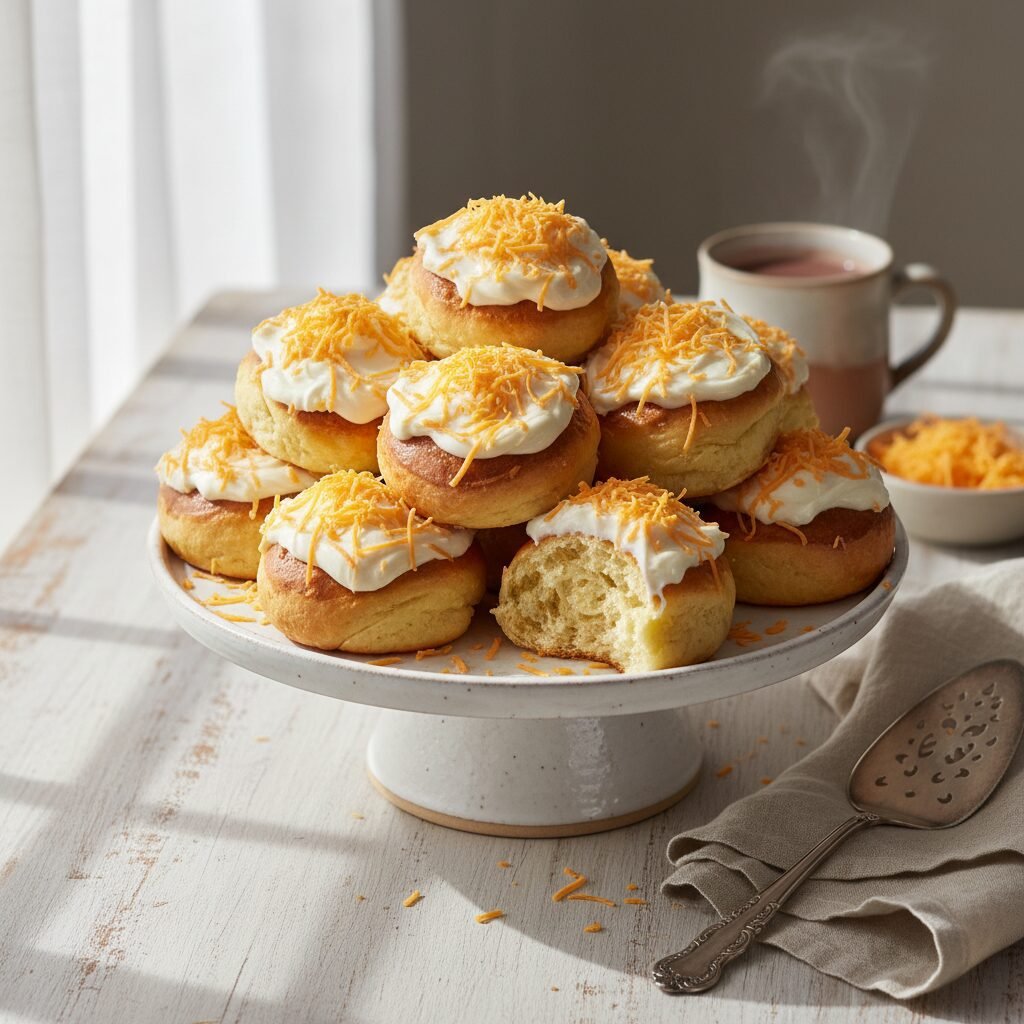
Get ready to bake the softest, most buttery brioche rolls you’ve ever tasted! This Filipino Ensaymada recipe yields incredibly pillowy buns, slathered in a rich buttercream frosting and topped with a generous shower of salty-sweet cheese. It’s pure comfort in every bite and a guaranteed family favorite.
40 minutes
25 minutes
3 hours 30 minutes (includes proofing)
12 large rolls
Pastry
Baking
Filipino
N/A
Why You’ll Love This Recipe
- Incredibly soft, pillowy texture from a special starter dough (tangzhong)
- Perfect balance of sweet and savory flavors
- A show-stopping treat for breakfast, snacks, or special occasions
- Step-by-step guide for foolproof, bakery-quality results
Equipment You’ll Need
- Stand mixer with dough hook attachment
- Large mixing bowl
- Small saucepan
- Whisk
- Bench scraper or knife
- Rolling pin
- Two large baking sheets
- Parchment paper
- Pastry brush
- Hand mixer or stand mixer with paddle attachment (for frosting)
Ingredients
- For the Tangzhong (Starter):
- 1/4 cup bread flour
- 1/2 cup water
- 1/2 cup whole milk
- For the Dough:
- 3 1/2 cups bread flour, plus more for dusting
- 1/2 cup granulated sugar
- 2 1/4 teaspoons (1 packet) active dry yeast
- 1 teaspoon salt
- 1/2 cup lukewarm evaporated milk (around 110°F)
- 3 large egg yolks
- 1 large egg
- 1/2 cup unsalted butter, softened to room temperature, cubed
- For the Buttercream Topping:
- 1 cup unsalted butter, softened to room temperature
- 1 1/2 cups powdered sugar, sifted
- 1/4 cup evaporated milk or heavy cream
- 1 teaspoon vanilla extract
- Pinch of salt
- For Assembly:
- 1/4 cup unsalted butter, very soft
- 1 cup finely grated Queso de Bola (Edam) or sharp cheddar cheese
Instructions
- First, make the tangzhong. In a small saucepan, whisk together the 1/4 cup bread flour, water, and whole milk until no lumps remain. Cook over medium-low heat, whisking constantly, until the mixture thickens into a paste-like consistency, about 3-5 minutes. Remove from heat, transfer to a small bowl, cover with plastic wrap pressed directly onto the surface, and let it cool to room temperature.
- In the bowl of your stand mixer, combine the lukewarm evaporated milk and one tablespoon of the sugar. Sprinkle the yeast over the top, give it a gentle stir, and let it sit for 5-10 minutes until it becomes foamy.
- To the yeast mixture, add the remaining 3 1/2 cups bread flour, the remaining sugar, salt, egg yolks, whole egg, and the cooled tangzhong. Attach the dough hook and mix on low speed until a shaggy dough forms.
- Increase the speed to medium-low and begin adding the softened butter, one cube at a time, waiting until each is mostly incorporated before adding the next. Continue to knead for 10-15 minutes until the dough is smooth, elastic, and pulls away from the sides of the bowl. It should pass the ‘windowpane test’.
- Form the dough into a ball and place it in a lightly greased large bowl. Cover with plastic wrap or a damp towel and let it rise in a warm, draft-free place for 1.5 to 2 hours, or until doubled in size.
- Gently punch down the risen dough and transfer it to a lightly floured surface. Divide the dough into 12 equal portions (a kitchen scale is helpful here).
- Working with one portion at a time, use a rolling pin to roll the dough into a thin rectangle, about 8×4 inches. Spread a thin layer of the very soft butter over the surface.
- Tightly roll the rectangle up from the long side into a log. Then, coil the log into a snail-like shape, tucking the end underneath. Place the shaped roll onto a parchment-lined baking sheet.
- Repeat with the remaining dough, placing the rolls about 2-3 inches apart. Cover the baking sheets loosely with plastic wrap and let the rolls rise for a second time for 45-60 minutes, until puffy.
- Preheat your oven to 350°F (175°C) while the rolls are in their second proof.
- Bake for 20-25 minutes, or until the tops are a light golden brown. Let them cool on the baking sheets for a few minutes before transferring to a wire rack to cool completely.
- While the rolls cool, prepare the buttercream. In a large bowl, use a hand mixer or stand mixer to beat the softened butter until creamy and pale. Gradually add the sifted powdered sugar, beating on low speed first, then increasing to medium-high.
- Add the evaporated milk, vanilla extract, and a pinch of salt. Beat for another 3-5 minutes until the frosting is light, fluffy, and smooth.
- Once the Ensaymada rolls are completely cool, spread a generous layer of the buttercream over the top of each roll. Immediately sprinkle with a lavish amount of grated cheese. Serve and enjoy!
Expert Cooking Tips
- For the softest texture, ensure your butter and eggs are at room temperature before you start. This helps them incorporate smoothly into the dough for a better crumb.
- The ‘windowpane test’ is key for a perfect brioche dough. To check, take a small piece of dough and gently stretch it between your fingers. If you can stretch it thin enough to see light through it without it tearing, it’s ready. If not, knead for a few more minutes.
- Don’t rush the proofing process. Allowing the dough to fully double in size is crucial for the light, airy texture that makes Ensaymada so special.
- For an extra rich flavor, you can brush the tops of the rolls with an egg wash (1 egg beaten with 1 tablespoon of milk) before baking. This will give them a beautiful, shiny golden finish.
Substitutions and Variations
Traditional Ensaymada uses Queso de Bola (Edam cheese), but a good quality sharp cheddar provides a wonderful salty contrast and is easier to find. You can use all-purpose flour instead of bread flour, but the rolls will be slightly less chewy. For a non-dairy milk option in the dough, unsweetened almond or soy milk can work, but the flavor will be slightly different.
Common Mistakes to Avoid
The most common mistake is under-kneading the dough, which results in dense rolls. Use the windowpane test to ensure proper gluten development. Another issue is adding the butter too quickly or when it’s too cold; it should be at room temperature and added gradually. Finally, avoid overbaking. The rolls should be just light golden brown to ensure they stay soft and moist inside.
Serving Suggestions
Ensaymada is heavenly when served slightly warm with a cup of rich, dark coffee or a traditional Filipino hot chocolate (tsokolate). It’s a perfect centerpiece for a brunch spread, a delightful afternoon snack, or a special treat to share with family during holidays.
Storage and Reheating Tips
Store the finished Ensaymada in a single layer in an airtight container at room temperature for up to 3 days. To freeze, place the unfrosted, baked rolls in a freezer-safe bag for up to 2 months. Thaw at room temperature, warm gently in a 300°F oven for 5-7 minutes, then cool before frosting and serving.
Nutrition Facts (Estimated)
| Serving Size | 1 roll |
| Calories | 465 kcal |
| Fat | 23 g |
| Saturated Fat | 14 g |
| Unsaturated Fat | 7 g |
| Trans Fat | 0 g |
| Cholesterol | 110 mg |
| Sodium | 410 mg |
| Carbohydrates | 56 g |
| Fiber | 2 g |
| Sugar | 26 g |
| Protein | 9 g |
Frequently Asked Questions
Can I make the dough ahead of time?
Yes! After the first rise, you can cover the dough and refrigerate it overnight (8-12 hours). The cold fermentation actually develops a more complex flavor. The next day, let the dough sit at room temperature for about 30-60 minutes before proceeding with shaping.
Why is my dough so sticky?
This is an enriched dough, so it will naturally be quite sticky due to the eggs and butter. Resist the urge to add too much extra flour, as this can make the rolls dry. A stand mixer is highly recommended. If kneading by hand, use a bench scraper and light dusting of flour on your hands and surface as needed.
What is tangzhong and is it necessary?
Tangzhong is a cooked flour-and-water paste that pre-gelatinizes the starches in the flour, allowing it to absorb more moisture. While you can make Ensaymada without it, using tangzhong is the secret to an incredibly soft, moist crumb that stays fresh for days longer. It’s an extra step that is well worth the effort!
Conclusion
Baking these Pillowy Soft Filipino Ensaymada is a true labor of love, but the reward of biting into a warm, buttery, cheesy roll is absolutely worth it. This recipe brings a taste of the Philippines right into your kitchen and is sure to become a treasured favorite. If you try this recipe, I’d love to see it! Tag me on social media and share your beautiful creations on Pinterest!