A Creamy, Custardy Dream: The Easiest French “Flan-Cake” (Far Breton)
Hello, friends! Let’s have a little chat about French baking.
When you hear “French pastry,” what comes to mind? Intimidating, multi-day projects? Croissants with a thousand layers? Towers of cream puffs glued with caramel? I love those things, but let’s be honest: they can be a lot of work.
That’s why I am so excited to share one of my all-time favorite “back-pocket” desserts. This is the other side of French baking—the rustic, cozy, farmhouse side. Meet the Far Breton.
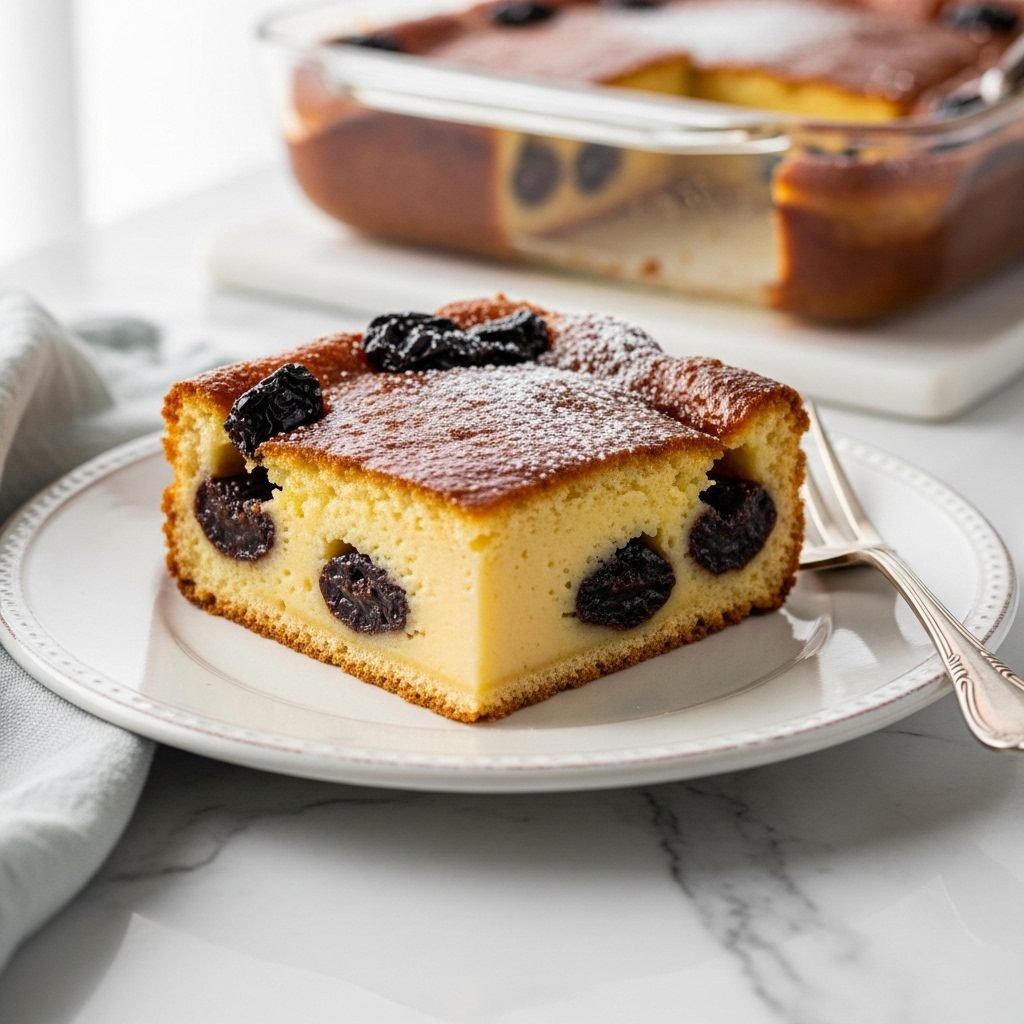
This beautiful, humble dessert comes from the Brittany region of France (the Bretagne). It’s not a fluffy, airy cake. It’s a dense, rich, and incredibly creamy custard that’s baked until it’s firm, almost like a flan or a very-set baked pudding. The batter is as simple as making pancakes, and the magic happens entirely in the oven.
The real star of the show? The prunes. Wait, don’t go! I know, I know. Prunes get a bad rap. But in this dessert, they are everything. We soak them in a little dark rum (or hot tea!), and they transform into these chewy, sweet, jammy little bursts of flavor that cut through the rich, eggy custard.
This is the dessert you make on a Sunday afternoon. It’s not fussy, it’s not complicated, and the payoff is huge. It’s warm, comforting, and just one of the most satisfying desserts I know.
Why This Recipe is Such a Charmer
- The Texture: This is the best part. It’s a wonderful, unique cross between a dense, baked custard and a springy, flan-like cake. It’s smooth, rich, and the chewy prunes give it a perfect contrast.
- The Flavor: It’s all about simple, good things: rich whole milk, eggy custard, sweet vanilla, and those rum-kissed prunes. It’s not overly sugary, just deeply comforting.
- The Simplicity: This is a one-bowl (or blender!) batter. If you can make crepes, you can make this. There’s no folding, no special techniques, just mix, pour, and bake.
- It’s a “Make-Ahead” Wonder: It’s actually better after it has had a few hours to cool and set. It’s a low-stress dessert for a dinner party.
What You’ll Need
This recipe uses simple, pantry-staple ingredients. The only “special” item is the prunes, and they are so worth it.
- 1 1/2 cups (about 8 oz) pitted prunes, roughly chopped
- 1/4 cup dark rum (or Armagnac, or 1/2 cup hot black tea for a no-alcohol version)
- 4 tbsp (1/2 stick) unsalted butter, melted, plus more for the pan
- 2 1/4 cups whole milk (don’t skimp, you need the fat!)
- 4 large eggs, at room temperature
- 3/4 cup granulated sugar
- 1 tsp vanilla extract
- 1/2 tsp kosher salt
- 1 cup all-purpose flour
Step-by-Step: How to Make Your Far Breton
This is a simple process, but two small “waiting” steps are the secret to the best texture.
Part 1: Soak the Prunes (The Flavor Step)
- Place your chopped prunes in a small, heat-safe bowl.
- Pour the rum (or tea) over them. If you’re short on time, you can microwave the bowl for 45-60 seconds, then let it sit for 30 minutes.
- For the best flavor, let them soak for at least 2 hours, or even overnight at room temperature. They’ll get all plump and happy.
Part 2: The Batter (The Easy Part)
- Prep Your Pan: Preheat your oven to 375°F (190°C). Generously, and I mean generously, butter a 9×9-inch square baking dish (or a similar 2-quart ceramic dish). A glass or ceramic dish works much better than metal here.
- The Blender Method (My Favorite): This is the secret to a perfectly smooth, lump-free batter. Add the whole milk, 4 eggs, sugar, vanilla, salt, and the 4 tbsp of melted butter to a blender. Blend on low for 10 seconds. Add the 1 cup of flour and blend again, starting on low and increasing to medium, for about 30 seconds, or until it’s perfectly smooth.
- The Bowl Method: If you don’t have a blender, no problem! In a large bowl, whisk the eggs, sugar, vanilla, salt, and melted butter. Whisk in the flour until no lumps remain. Slowly whisk in the milk until it’s all combined. The batter will be very thin, like heavy cream or crepe batter. This is correct.
- REST THE BATTER (The Secret Step): This is so important! Let the batter rest at room temperature for 30 minutes. This allows the flour to hydrate and swell, which is what gives the Far Breton its signature, almost-springy, custard-cake texture. Don’t skip this!
Part 3: Assemble and Bake
- Drain the Prunes: After they’ve soaked, drain any excess liquid from the prunes.
- Assemble: Pour the rested batter into your generously buttered baking dish.
- Add the Prunes: Evenly scatter the soaked, drained prunes over the batter. They will most likely sink. This is normal and 100% fine! They are little hidden treasures.
- Bake: Bake at 375°F for 45-55 minutes.
- Check for Doneness: The Far Breton will puff up dramatically in the oven (it will look amazing!), and the top will be a beautiful, deep golden-brown, with some darker, almost-caramelized spots. It will deflate as it cools. A knife inserted into the center should come out mostly clean. It’s a custard, so it shouldn’t be “cake-dry.”
Part 4: Cool (The Hardest Part)
- Let the Far Breton cool in its pan on a wire rack for at least 30 minutes.
- This dessert is traditionally served warm or at room temperature. It needs time to set. If you cut into it piping hot, it will be a runny, custardy mess. Patience!
My Top Tips for a Flawless Far Breton
- Seriously, Butter That Pan: Be so generous with the butter in your baking dish. Get every corner. This is what creates those delicious, slightly-caramelized brown edges and prevents sticking.
- Use Whole Milk: This is a custard, and fat is your friend. Whole milk gives you the richest, creamiest, and most stable result.
- Don’t Fear the Sink: The Far Breton will puff up like a Dutch Baby in the oven and then will deflate and “set” as it cools. This is its signature move. You did not do anything wrong.
- It’s a Custard, Not a Cake: Remember this when you’re checking for doneness. You’re not looking for a dry crumb. You’re looking for it to be “set” in the middle, like a baked cheesecake or a flan.
Ingredient Substitutions & Variations
- The Prunes: A Far Breton without prunes is, well, not a Far Breton! But, if you are absolutely against them, you can use other dried fruits. Dried, chopped apricots (soaked in amaretto!) or dried cranberries would be lovely.
- The Rum: As mentioned, hot black tea (like an Earl Grey) is a wonderful non-alcoholic substitute. You could also use Armagnac, Calvados (apple brandy), or even a little bourbon.
- The Spices: I love this with just vanilla, but you could add 1/4 tsp of cinnamon or cardamom to the batter for a different, warm-spice flavor.
- Gluten-Free Far Breton: This recipe is a great candidate for a 1-to-1 gluten-free flour blend! Since the structure comes mostly from the eggs, it should bake up beautifully.
Common Mistakes to Avoid
- “My Batter is Lumpy!”: You didn’t use a blender or didn’t whisk the flour in well. A blender is the foolproof solution.
- “My Far Breton is Stuck to the Pan!”: You didn’t butter the dish generously enough. Don’t be shy with the butter!
- “It’s Runny in the Middle!”: It’s under-baked. It needs to look set and golden, and a knife should come out mostly clean.
- “It’s Rubbery!”: This can happen if you over-mix the batter (especially after it’s rested) or if you over-bake it. Bake just until set.
How to Serve This Cozy Custard Cake
This dessert is rustic, so it doesn’t need much.
- Serve it in the dish you baked it in.
- Cut it into squares (or wedges, if you used a round pie plate).
- A light dusting of powdered sugar is all it needs.
- Serve it warm or at room temperature. I love it just slightly warm.
- It is delicious on its own, but it’s also wonderful with a little drizzle of heavy cream or a dollop of crème fraîche.
- It’s the perfect companion to a strong cup of coffee or tea.
Storing Your Far Breton
- In the Fridge: Because this is an egg-and-milk-based custard, any leftovers must be stored in the refrigerator. Cover the dish tightly with plastic wrap. It will last for up to 4 days.
- Serving Leftovers: This dessert is not great cold, as the texture gets a bit too firm. Take a slice out of the fridge and let it sit at room temperature for 30 minutes before eating. Or, my favorite way: pop it in the microwave for 15-20 seconds. It brings it back to life!
- Freezing: I do not recommend freezing Far Breton. The custard texture can become watery and strange upon thawing.
Your Far Breton Questions
What’s the difference between a Far Breton and a Clafoutis? They are cousins! A clafoutis is from the Limousin region, is traditionally made with fresh cherries, and has a lighter, more delicate, pancake-like batter. A Far Breton is from Brittany, is made with dried prunes, and has a much denser, richer, more flan-like texture.
Do I have to use prunes? You can make it without them… but then it’s not a Far Breton, it’s just a “Far.” The prunes are what make it special, providing a sweet, chewy contrast. I’d urge you to try it with them just once!
Why did all my prunes sink to the bottom? They almost always do, and that’s totally fine! It just means you get a delicious, jammy prune layer at the bottom. If it bothers you, you can try this trick: pour half the batter in, bake for 10 minutes, then scatter the prunes, and pour the rest of the batter. But honestly? I never bother. I like the surprise.
A Final, Cozy Thought
This is one of those simple, “magic” recipes where a few humble ingredients transform into something so much more. It’s not flashy, but it’s deeply satisfying. It’s the taste of a French farmhouse, a cozy afternoon, and a dessert that asks for nothing but to be enjoyed.
I hope you’ll give this simple, charming dessert a try. It’s a wonderful, low-stress way to bring a little bit of rustic French baking into your own kitchen.
Quick Recipe Summary
This Far Breton is a classic, rustic French dessert from Brittany. It’s a simple, blender-friendly custard batter (made from flour, eggs, milk, and sugar) that’s poured over rum-soaked prunes. The “flan-cake” is baked in a buttered dish until golden and puffy, then settles into a dense, creamy, and custard-like treat. It’s best served warm or at room temperature with a dusting of powdered sugar.