Festive Honeycomb Ghevar: A Delicate Rajasthani Sweet Worth Celebrating
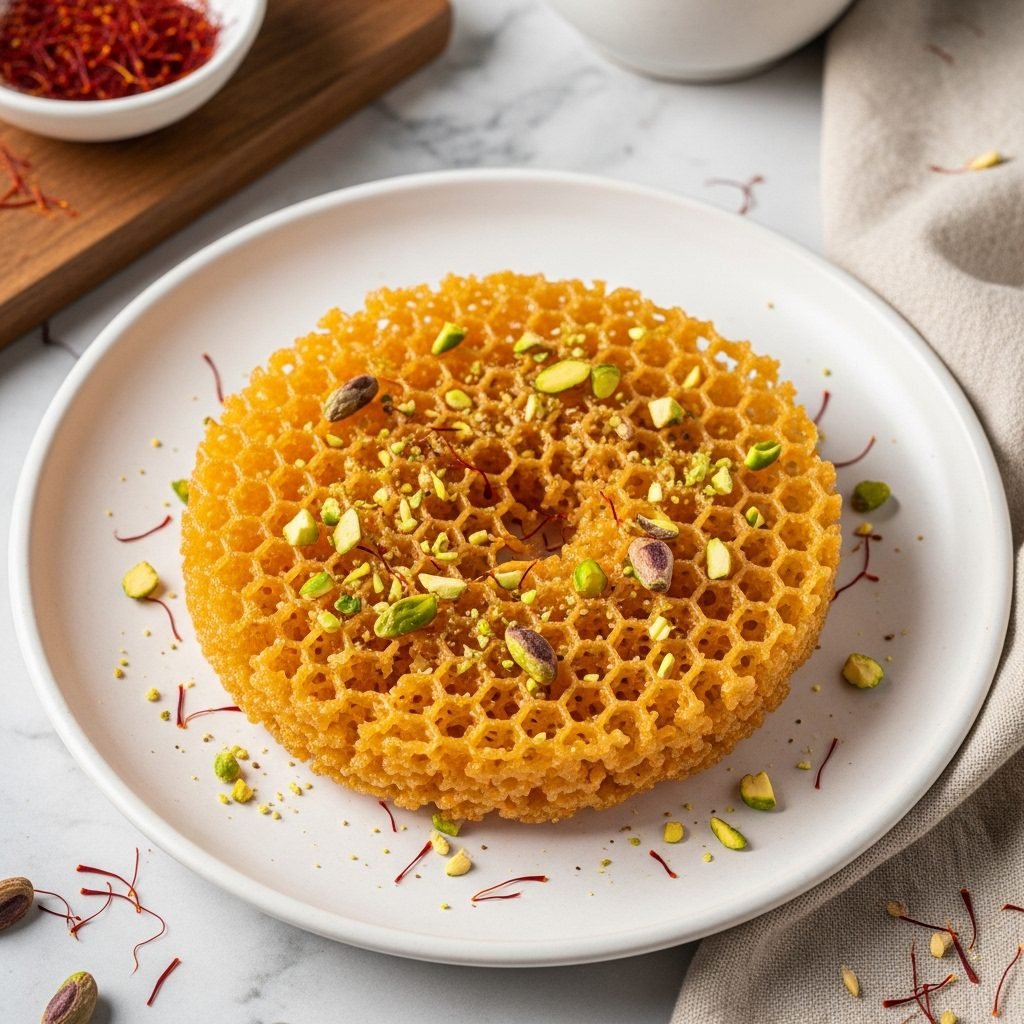
Ghevar is one of those desserts that feels like pure festivity — golden, lacy, crisp, and soaked in just the right amount of fragrant syrup. The moment you break into it, you hear that gentle crunch followed by the soft sweetness of cardamom and saffron. It’s a dessert that tastes like celebration, warmth, and tradition all at once.
Even though it looks intricate, making Ghevar at home is completely doable when you understand the flow of the batter and the rhythm of frying. And once you taste it fresh — warm, crisp, and lightly soaked — you’ll know it’s worth every step.
Why You’ll Fall in Love with This Recipe
Ghevar is loved for its delicate honeycomb texture and crisp bite. Every layer feels airy yet flavorful, and when topped with syrup or malai, it becomes even richer and more aromatic.
This homemade version is approachable, detailed, and beginner-friendly. You don’t need professional tools — just patience, a deep pan, and a smooth batter.
Highlights at a Glance
- Taste: Sweet, lightly floral, and warm with saffron.
- Texture: Crisp, airy honeycomb structure.
- Time: About 50–60 minutes.
- Difficulty: Moderate but very doable with guidance.
- What Makes It Special: A traditional festive sweet with stunning presentation.
Ingredients
For the Ghevar
- 1 cup all-purpose flour
- 1/4 cup ghee (solid)
- 1/2 cup cold water (plus extra as needed)
- 1/2 cup milk
- 1 cup additional water (for thinning)
- Ghee or oil for deep frying
For the Sugar Syrup
- 1 cup sugar
- 1/2 cup water
- 1/4 tsp cardamom powder
- A few saffron strands
Optional Garnish
- 2 tbsp chopped pistachios
- 1 tbsp slivered almonds
- Malai (thickened milk), optional
Step-by-Step Instructions
- Prepare the batter: In a bowl, beat solid ghee with a whisk until light and fluffy. Add flour and mix lightly. Slowly add cold water, whisking until the mixture turns pale and creamy.
- Add milk and water: Pour in the milk and gradually add the remaining water until the batter becomes very thin and smooth — similar to buttermilk.
- Heat the ghee for frying: Pour ghee or oil into a deep, heavy-bottomed pot. Heat on medium until hot (a drop of batter should rise immediately).
- Begin forming the Ghevar: Using a ladle, pour a thin stream of batter into the center of the hot oil. It will bubble and spread into a lace-like structure.
- Layer the batter: Once the bubbles settle, pour another ladle of batter in the center. Repeat 4–5 times until the Ghevar forms a solid, honeycomb-like disc.
- Let it crisp: Continue frying until golden and crisp around the edges.
- Remove and drain: Carefully lift the Ghevar using a skewer or tong and place it on a rack to drain excess oil.
- Make the sugar syrup: Combine sugar and water in a saucepan. Heat until slightly thick, then add saffron and cardamom.
- Soak the Ghevar: Pour warm syrup over the Ghevar or lightly dip the edges.
- Garnish: Add pistachios, almonds, or a drizzle of malai.
Helpful Cooking Tips
- The batter must be very thin — this creates the honeycomb texture.
- Fry in a deep, narrow pot to maintain shape.
- Pour batter only in the center for even spreading.
- Keep the oil consistently hot; too cool and the batter sinks.
- Drain well before adding syrup.
Ingredient Substitutions & Dietary Options
- Milk: Swap with water for a lighter version.
- Sugar Syrup: Replace with jaggery syrup for a deeper, rustic flavor.
- Ghee: Oil works, but ghee gives the best aroma.
- Nuts: Skip nuts for a nut-free version.
Common Mistakes to Avoid
- Thick batter: Prevents the signature airy texture.
- Pouring batter too fast: Causes dense pockets instead of lace.
- Low heat: Batter sinks instead of spreading.
- Over-soaking: Makes the Ghevar soggy.
- Removing too soon: Let it turn golden before lifting.
Serving Suggestions
- Serve topped with warm malai for a richer version.
- Add nuts and saffron for a festive look.
- Pair with warm milk or chai.
- Use smaller molds to make mini Ghevar for gifting.
Storage & Reheating Tips
- Store plain Ghevar (without syrup) for up to 3 days in an airtight container.
- Add syrup just before serving to maintain crispness.
- Do not refrigerate — it softens the texture.
- Reheat briefly in the oven at 275°F for 3–4 minutes if needed.
Frequently Asked Questions
Why didn’t my Ghevar get the honeycomb texture?
The batter may have been too thick or the oil not hot enough.
Can I make it without ghee?
Yes, but flavor is richer with ghee.
Why did the batter sink?
Oil was not sufficiently hot.
Can I make mini versions?
Absolutely — use smaller ladles and pour less batter.
Final Thoughts
Ghevar is one of those desserts that feels like a celebration in itself — crisp, golden, and beautifully intricate. The process might feel new at first, but once you see the batter bloom into lacey layers, it becomes almost meditative.
Homemade Ghevar tastes fresher, lighter, and more flavorful than anything boxed. And the joy of creating something so festive from scratch is truly special.
Short Summary
A crisp, lacy Rajasthani dessert made from thin batter and soaked in saffron-cardamom syrup — festive, delicate, and deeply satisfying.
If you enjoyed this recipe, feel free to share it on Pinterest or your favorite social platform!