Soft, Syrupy Gulab Jamun You’ll Want to Make Again and Again
There’s something magical about a plate of warm Gulab Jamun. The moment you bite into one, it gives way to a melt-in-your-mouth softness, soaking with fragrant syrup that tastes like comfort, celebration, and nostalgia all at once. This is the kind of dessert that brings people closer — the kind that disappears from the table faster than you expect.
Whether you’ve grown up eating Gulab Jamun at family gatherings or you’re discovering it for the first time, this recipe guides you through creating soft, golden dumplings that stay tender, juicy, and wonderfully aromatic.
Why This Recipe Will Win You Over
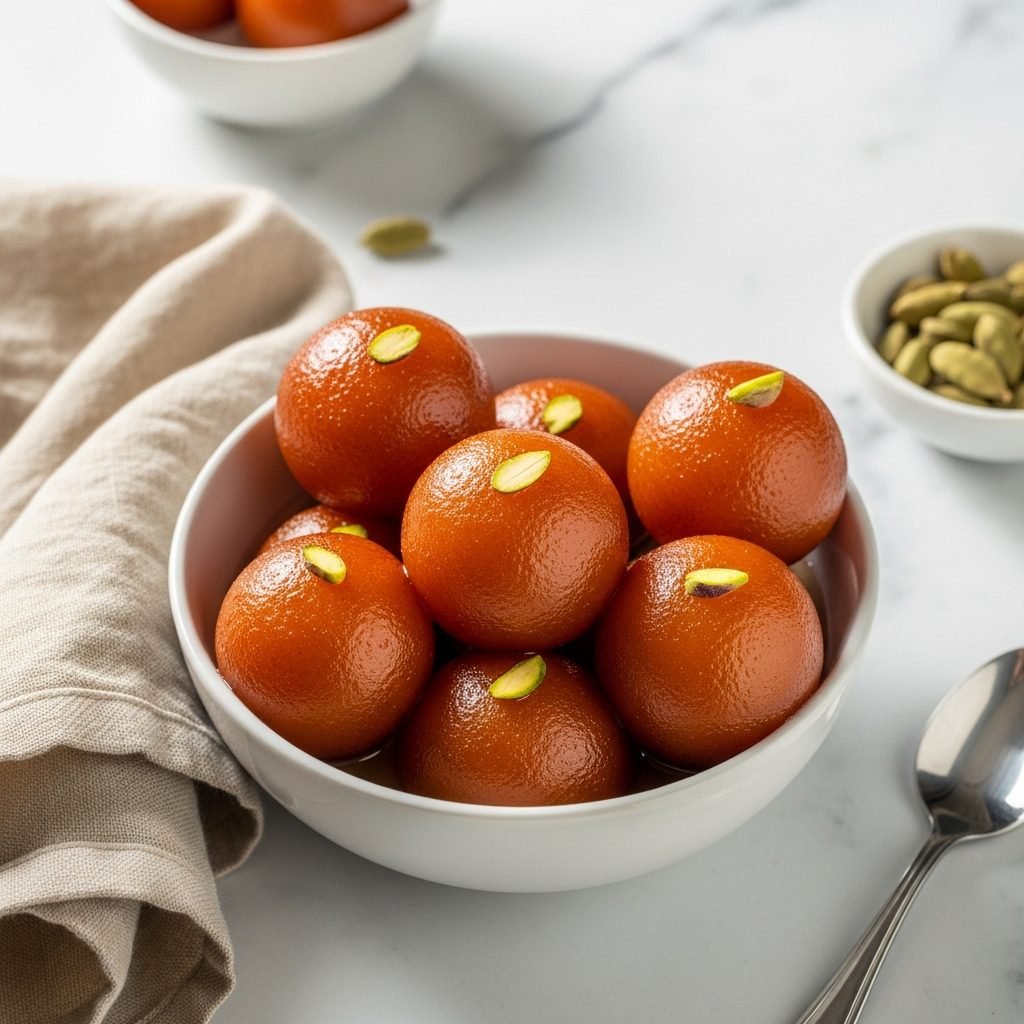
Gulab Jamun is indulgent in the best possible way — tender dough balls fried to a light golden brown, then soaked in warm cardamom-scented syrup. The smell alone feels festive. The texture is pillowy and syrupy without being soggy, and the process is surprisingly approachable for home cooks.
If you’re looking for a dessert that impresses without requiring complicated steps, this one’s for you.
Highlights at a Glance
- Taste: Sweet, fragrant, lightly floral, with warm cardamom notes.
- Texture: Soft, spongy dough balls that soak up syrup beautifully.
- Time: About 45–50 minutes from start to finish.
- Difficulty: Beginner-friendly with simple ingredients.
- What Makes It Special: A festive classic made with accessible pantry staples.
Ingredients
For the Dough
- 1 cup milk powder
- 1/2 cup all-purpose flour
- 1/4 tsp baking soda
- 2 tbsp unsalted butter, melted
- 1/3 cup whole milk (plus a little more if needed)
- Oil or ghee for frying (enough for shallow or deep frying)
For the Sugar Syrup
- 1 1/2 cups sugar
- 1 1/2 cups water
- 4–5 green cardamom pods, lightly crushed
- 1 tsp rose water (optional)
- A few saffron strands (optional)
Step-by-Step Instructions
- Make the syrup first: In a medium saucepan, combine the sugar, water, and cardamom. Bring to a gentle boil, then simmer for 5–7 minutes until slightly thickened. Add rose water and saffron if using. Keep the syrup warm — not hot — for soaking.
- Prepare the dough: In a mixing bowl, combine milk powder, flour, and baking soda. Add melted butter and gently mix. Gradually add milk, a little at a time, until a soft, slightly sticky dough forms. Do not over-knead — it should come together without turning tough.
- Shape the dough: Lightly oil your hands and form small, smooth balls about 1 inch in diameter. Make sure there are no cracks; cracks can cause the balls to break while frying.
- Heat the oil: Warm the oil or ghee on medium-low heat. The oil should be hot enough that a tiny piece of dough rises slowly to the top — not too quickly.
- Fry until golden: Add the dough balls gently, frying in batches. Stir slowly to ensure even browning. They should take on a deep golden color and puff up slightly.
- Soak the jamuns: Remove them from the oil and let them rest for a minute. Add them to the warm syrup and let them soak for at least 30 minutes. The longer they sit, the softer and juicier they become.
Helpful Cooking Tips
- Keep the heat low while frying — rushing this step can cause the outside to brown while the inside stays doughy.
- Always keep the syrup warm, not boiling hot, when soaking the jamuns.
- Smooth dough balls without cracks are key to keeping them intact during frying.
- If the dough feels too soft, add 1–2 tbsp flour; if too firm, add 1–2 tsp milk.
Ingredient Substitutions & Dietary Options
- Milk Powder: Can be replaced with khoya (mawa) for a richer, traditional flavor — use 1 cup crumbled khoya.
- Flour: Swap all-purpose flour with fine semolina for a slightly firmer bite.
- Rose Water: Orange blossom water works beautifully as a replacement.
- Ghee vs Oil: Ghee gives a richer, more aromatic taste; oil is a lighter option.
- Sugar: You can reduce sugar by up to 1/4 cup without compromising syrup consistency.
Common Mistakes to Avoid
- Over-frying: Too high heat will brown the jamuns too fast without cooking them through.
- Cold syrup: The jamuns won’t absorb syrup properly if it’s too cool.
- Kneading aggressively: This toughens the dough and leads to dense jamuns.
- Large dough balls: They expand slightly while frying — keep them small.
Serving Suggestions
- Serve warm with a drizzle of extra syrup.
- Garnish with chopped pistachios or almond slivers.
- Pair with vanilla ice cream for a delicious hot-and-cold contrast.
- Plate in a shallow bowl with a few saffron threads for a festive look.
Storage & Reheating Tips
- Store leftover Gulab Jamun (in syrup) in an airtight container in the refrigerator for up to 4 days.
- Reheat in the microwave in short intervals or warm gently on the stovetop.
- For a fresher look, warm them lightly and garnish with nuts before serving.
Frequently Asked Questions
Can I make the dough ahead of time?
You can shape the balls and refrigerate them for a few hours, but fry them just before serving.
Why did my Gulab Jamun turn hard?
Most likely from over-kneading or frying on too high heat.
Can I double the recipe?
Absolutely — just maintain syrup proportions so the jamuns have enough liquid to soak.
Why did they break in the oil?
Cracks in the dough or too much baking soda can cause them to fall apart.
Final Thoughts
There’s something wonderfully charming about homemade Gulab Jamun — the warm syrup, the tender texture, the familiar aroma of cardamom drifting through the kitchen. It’s a dessert that carries tradition, comfort, and celebration in every bite. Once you make these at home, you’ll find yourself revisiting the recipe for special nights, birthdays, holidays, or whenever you crave something sweet and soothing.
Short Summary
Soft, golden fried dumplings soaked in warm cardamom syrup — a classic, comforting dessert that’s surprisingly simple to make at home.
If you enjoyed this recipe, feel free to share it on Pinterest or your favorite social platform!