Creamy Melt-in-Your-Mouth Jamoncillo (Mexican Milk Fudge)
Jamoncillo Recipe
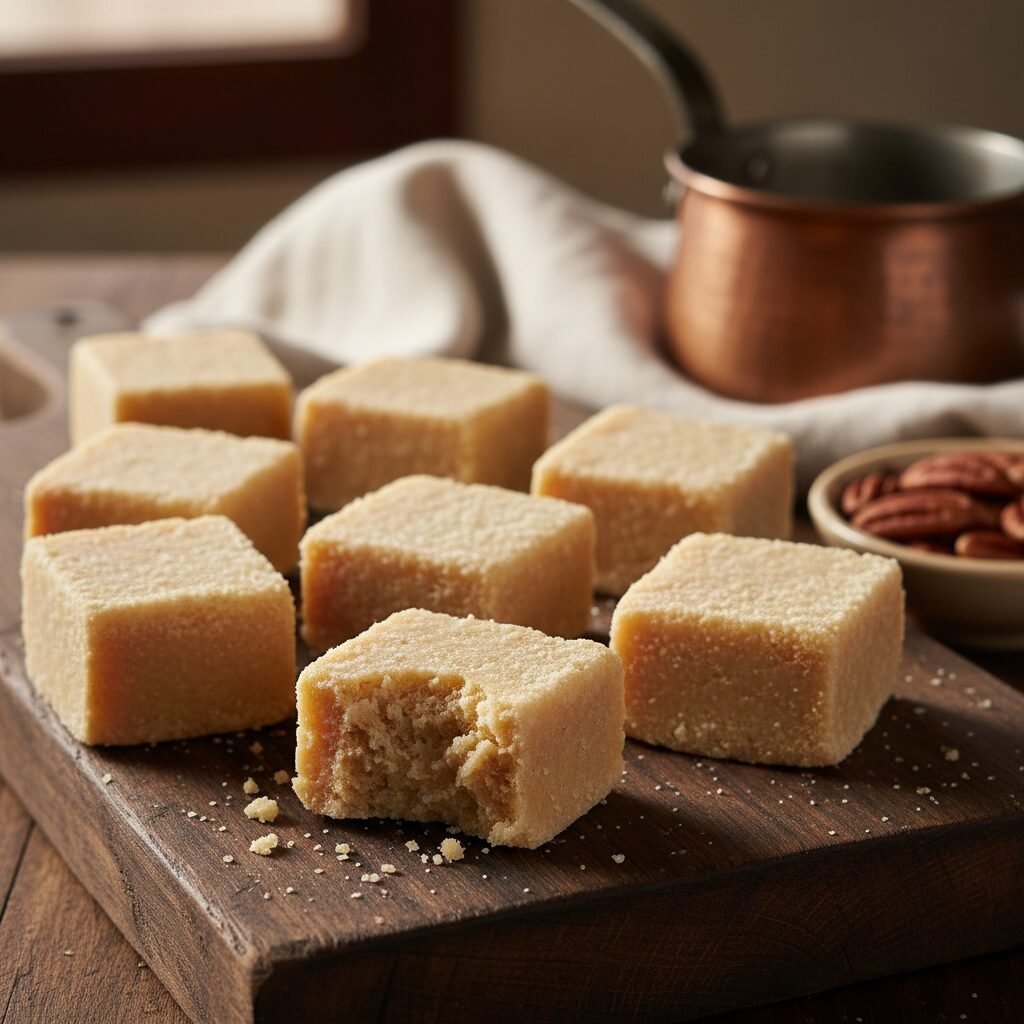
Get ready to fall in love with Jamoncillo, the most divine Mexican milk fudge you’ll ever taste! This traditional candy is unbelievably creamy, with a delicate, melt-in-your-mouth texture and a sweet, caramelized flavor that’s simply irresistible. With just four simple ingredients, you can bring this authentic sweet treat right into your own kitchen.
5 minutes
45-50 minutes
2 hours (includes cooling time)
16-20 squares
Dessert
Stovetop
Mexican
Gluten-Free
Why You’ll Love This Recipe
- Authentic Mexican candy made from scratch
- Incredibly creamy, soft, and fudge-like texture
- Made with only 4 simple pantry ingredients
- Perfect for holidays, parties, and homemade gifts
Equipment You’ll Need
- Large, heavy-bottomed saucepan or Dutch oven
- Wooden spoon or heat-resistant silicone spatula
- 8×8 inch baking dish
- Parchment paper
Ingredients
- 4 cups whole milk
- 2 cups granulated sugar
- 1/2 teaspoon baking soda
- 1 teaspoon pure vanilla extract
- 1/2 cup chopped pecans or walnuts (optional)
Instructions
- First, prepare your pan. Lightly grease an 8×8 inch baking dish and line it with parchment paper, leaving an overhang on two sides to easily lift the fudge out later.
- In a large, heavy-bottomed saucepan, combine the whole milk, granulated sugar, and baking soda. Whisk them together until the sugar is mostly dissolved.
- Place the saucepan over medium heat and bring the mixture to a gentle simmer, stirring frequently with a wooden spoon. Be watchful, as milk can boil over quickly!
- Once simmering, reduce the heat to medium-low to maintain a steady, gentle bubble. Continue to cook, stirring constantly, for about 40-50 minutes. Scrape the bottom and sides of the pot to prevent scorching.
- As it cooks, the mixture will darken in color, from a pale cream to a beautiful light caramel, and it will thicken significantly. You’ll know it’s ready when it has the consistency of a thick paste and starts to pull away from the sides of the pan as you stir.
- Immediately remove the pan from the heat. Stir in the pure vanilla extract. Be careful as it may bubble up.
- Now for the crucial step! Begin to beat the mixture vigorously with your wooden spoon right in the pot. Continue beating for 3-5 minutes. You will see the glossy mixture start to thicken, lighten slightly in color, and lose its sheen. This is what creates that signature creamy, slightly crumbly texture.
- Once the mixture is thick and has lost its gloss, quickly pour and spread it into your prepared baking dish. If using, sprinkle the chopped pecans evenly over the top and gently press them in.
- Let the jamoncillo cool completely at room temperature for at least 1-2 hours, or until it is firm to the touch.
- Once set, use the parchment paper overhangs to lift the fudge from the pan. Place it on a cutting board and slice it into small squares. Enjoy your homemade Mexican candy!
Expert Cooking Tips
- A heavy-bottomed pot is your best friend for this recipe. It distributes heat evenly and dramatically reduces the risk of scorching the milk and sugar on the bottom.
- Don’t rush the process by turning up the heat. A slow, steady cook on medium-low heat is the secret to a perfectly smooth and creamy jamoncillo without any graininess.
- Constant stirring is non-negotiable! It not only prevents burning but also stops a skin from forming on top, ensuring a homogenous, silky final product.
- The final beating step is what transforms the mixture from a simple caramel into true jamoncillo. Don’t skip it! You’re aerating the fudge and encouraging the formation of tiny sugar crystals that give it its unique texture.
Substitutions and Variations
For a more traditional flavor, you can use piloncillo (Mexican brown sugar) instead of granulated sugar, which will give the candy a deeper molasses flavor and darker color. While whole milk provides the best rich and creamy texture, 2% milk can work in a pinch, though the result will be slightly less decadent. For a nutty variation, feel free to swap pecans for walnuts or almonds.
Common Mistakes to Avoid
The biggest mistake is not giving the pot your undivided attention. The milk can boil over in a flash at the beginning and scorch just as quickly near the end. Another common issue is not cooking the mixture long enough. If it’s undercooked, it won’t set properly. Be patient and wait for that thick, paste-like consistency where you can see the bottom of the pan for a second after you drag your spoon through it.
Serving Suggestions
Jamoncillo is perfect on its own as a delightful sweet bite with a cup of strong black coffee or a rich Mexican hot chocolate to balance its sweetness. It’s also a star on a dessert board or holiday cookie platter, and it makes for a beautiful and thoughtful homemade gift when packaged in a decorative box or tin.
Storage and Reheating Tips
Store your jamoncillo squares in an airtight container at room temperature for up to a week. To prevent them from sticking, you can place a small piece of parchment paper between the layers. Avoid refrigerating, as the condensation can make the candy sticky and alter its signature creamy texture.
Nutrition Facts (Estimated)
| Serving Size | 1 square |
| Calories | 120 kcal |
| Fat | 4 g |
| Saturated Fat | 2.5 g |
| Unsaturated Fat | 1 g |
| Trans Fat | 0 g |
| Cholesterol | 10 mg |
| Sodium | 30 mg |
| Carbohydrates | 20 g |
| Fiber | 0 g |
| Sugar | 18 g |
| Protein | 2 g |
Frequently Asked Questions
Why did my jamoncillo come out grainy?
Graininess is usually caused by sugar crystallization. This can happen from cooking the mixture too fast on high heat, not stirring enough, or getting sugar crystals on the side of the pot. A steady, low heat and constant stirring are key. The final beating step is also designed to create very fine, creamy sugar crystals, so make sure not to skip it!
Can I use goat’s milk to make this?
Absolutely! Jamoncillo made with goat’s milk is known as ‘cajeta de leche’ and is a very popular and delicious variation. It will have a slightly tangier and more complex flavor profile that is truly wonderful.
My jamoncillo is soft and didn’t set. What did I do wrong?
If your jamoncillo is too soft, it almost certainly means it was undercooked. It needs to reach a thick, paste-like stage before it’s poured into the pan to set. Unfortunately, it’s difficult to fix once it has cooled, but you can try scraping it back into the pot and cooking it for several more minutes until it’s much thicker.
Conclusion
There is something so rewarding about recreating a traditional candy like jamoncillo in your own kitchen. The sweet, warm aroma that fills your home is pure comfort, and the taste is even better. I truly hope you enjoy this little piece of Mexican culinary heritage. If you make this recipe, I would be absolutely thrilled to see your creation! Please tag me on social media and don’t forget to save this recipe to your favorite Pinterest board!