Kaak Recipe: Soft, Fragrant Middle Eastern Cookies That Feel Like Home
Every family has a recipe that instantly stirs memories the moment it hits the oven. For many Middle Eastern homes, Kaak is one of those recipes. These lightly sweet, delicately spiced cookies come with a comforting aroma that fills the kitchen with warm notes of mahleb, nigella seeds, and buttery dough. They’re tender on the inside, slightly crisp on the outside, and perfect with a cup of tea or coffee.
If you’ve been looking for a nostalgic, bakery-style cookie that feels cozy and homemade—but still simple enough for a weekday bake—Kaak is a beautiful place to start.
Why You’ll Love This Kaak Recipe
Kaak brings together the softness of a classic butter cookie with the gentle chew of Middle Eastern pastries. The flavors are warm, earthy, and aromatic without being overpowering. And the dough? Surprisingly easy to work with, even if you’re new to Middle Eastern baking.
Highlights
Taste: Buttery, lightly sweet, warm spices with hints of sesame and mahleb
Prep Time: 20 minutes
Rest Time: 1 hour
Bake Time: 12–15 minutes per tray
Difficulty: Easy to moderate
What Makes It Special: The dough creates a melt-in-your-mouth texture with a soft crumb and just the right amount of fragrant spice.
Ingredients
Dry Ingredients
- 4 cups all-purpose flour
- 1 cup granulated sugar
- 1 tbsp baking powder
- 1 tbsp sesame seeds
- 1 tsp nigella seeds (optional but traditional)
- 1 tsp ground mahleb (optional but highly recommended)
- 1/4 tsp ground anise or fennel (optional)
- Pinch of salt
Wet Ingredients
- 1 cup whole milk, warm
- 1 cup unsalted butter, melted
- 2 tbsp vegetable oil
- 1 tbsp vanilla extract
For Topping
- Sesame seeds
- Light egg wash (1 egg + 1 tbsp milk, whisked)
Step-by-Step Instructions
- Mix the dry ingredients. In a large bowl, whisk together the flour, sugar, baking powder, sesame seeds, nigella seeds, mahleb, anise, and salt.
- Combine wet ingredients. In a separate bowl, mix the warm milk, melted butter, oil, and vanilla.
- Make the dough. Slowly pour the wet mixture into the dry ingredients. Stir with a wooden spoon until the dough starts to come together, then use your hands to form a soft dough. It should feel slightly sticky but workable.
- Rest the dough. Cover the bowl with a clean towel and let the dough rest at room temperature for 1 hour. This helps the flavors develop and makes shaping easier.
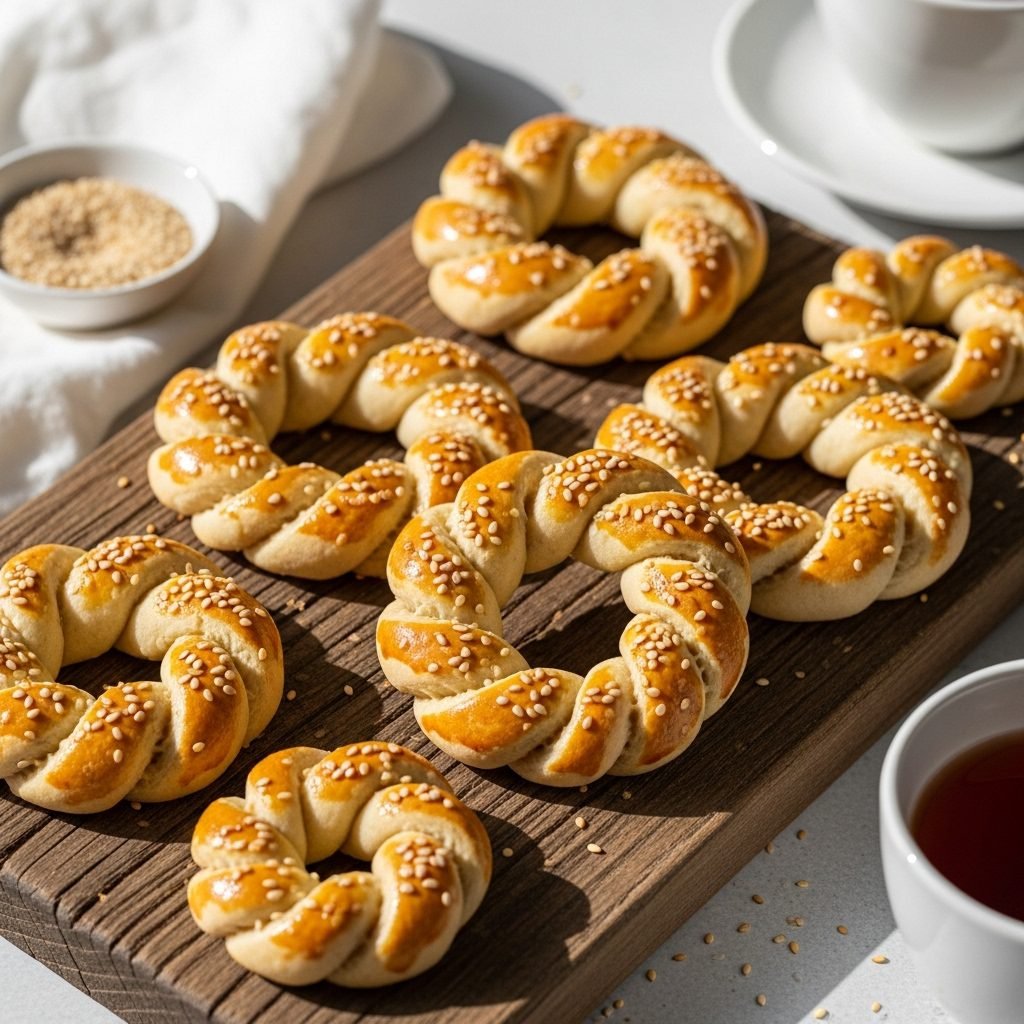
- Shape the Kaak. Preheat the oven to 350°F. Line baking sheets with parchment paper. Pinch off small pieces of dough and roll them into ropes about 5 inches long. Form rings or braids and place them on the trays.
- Add the topping. Brush each cookie lightly with egg wash and sprinkle sesame seeds on top.
- Bake. Bake for 12–15 minutes or until lightly golden around the edges. Avoid overbaking; Kaak should stay soft.
- Cool. Let the cookies cool on the tray for 5 minutes before transferring to a wire rack.
Helpful Cooking Tips
- Warm milk helps activate the baking powder, giving the cookies a tender rise.
- Mahleb adds a subtle floral-almond aroma. If you can find it, it’s worth adding.
- Keep the dough covered while shaping to prevent it from drying out.
- For a deeper flavor, lightly toast the sesame seeds before adding them to the dough.
- If the dough feels too sticky, dust your hands with a little flour—not the dough.
Ingredient Substitutions & Dietary Options
- Butter: Substitute with melted ghee for a nuttier flavor.
- Milk: Non-dairy milk like almond or oat works well for a lactose-free version.
- Egg Wash: Brush with milk or a bit of oil for an egg-free topping.
- Spices: Mahleb can be swapped with a mix of almond extract (1/2 tsp) + a pinch of cardamom.
Common Mistakes to Avoid
- Overbaking: The cookies should stay pale to lightly golden. Dark edges mean they’re too dry.
- Adding too much flour: The dough should be soft. Too much flour makes Kaak tough.
- Skipping the rest time: Resting allows the dough to relax, making shaping easier and the cookies softer.
- Melting the butter too hot: If it’s too warm, it can affect the dough texture.
Serving Suggestions
- Pair with mint tea or cardamom coffee.
- Serve on a platter with dates, nuts, and fruit.
- Dust lightly with powdered sugar for a festive touch.
- Enjoy alongside a breakfast spread—Kaak isn’t just for dessert.
Storage & Reheating Tips
- Room Temperature: Store in an airtight container for up to 7 days.
- Freezer: Freeze baked cookies for up to 3 months in a sealed bag.
- Reheat: Pop in a 275°F oven for 5 minutes to refresh the texture.
FAQ
What does Kaak taste like?
Soft, lightly sweet, buttery, with delicate aromas from the spices and sesame.
Can I make the dough ahead of time?
Yes—you can refrigerate it for up to 24 hours. Let it come to room temperature before shaping.
Can I skip the spices?
Absolutely. The dough is delicious even without them, but the spices give Kaak its traditional charm.
Do I have to shape them into rings?
Not at all. You can make braids, twists, sticks, or circles.
Final Thoughts
Kaak is more than a cookie—it’s a soft, fragrant pastry with roots that stretch across generations. Baking it at home brings warmth, comfort, and a touch of tradition to your kitchen. Whether you’re new to Middle Eastern baking or rediscovering a childhood favorite, this recipe is wonderfully approachable.
Quick Summary
- Lightly sweet, buttery cookies with warm spices
- Soft texture with subtle crisp edges
- Simple dough that’s easy to shape and customize
- Great for gifting, snacking, or afternoon tea
If you bake this recipe, share your Kaak photos on Pinterest or tag me on social media—I’d love to see your creations!