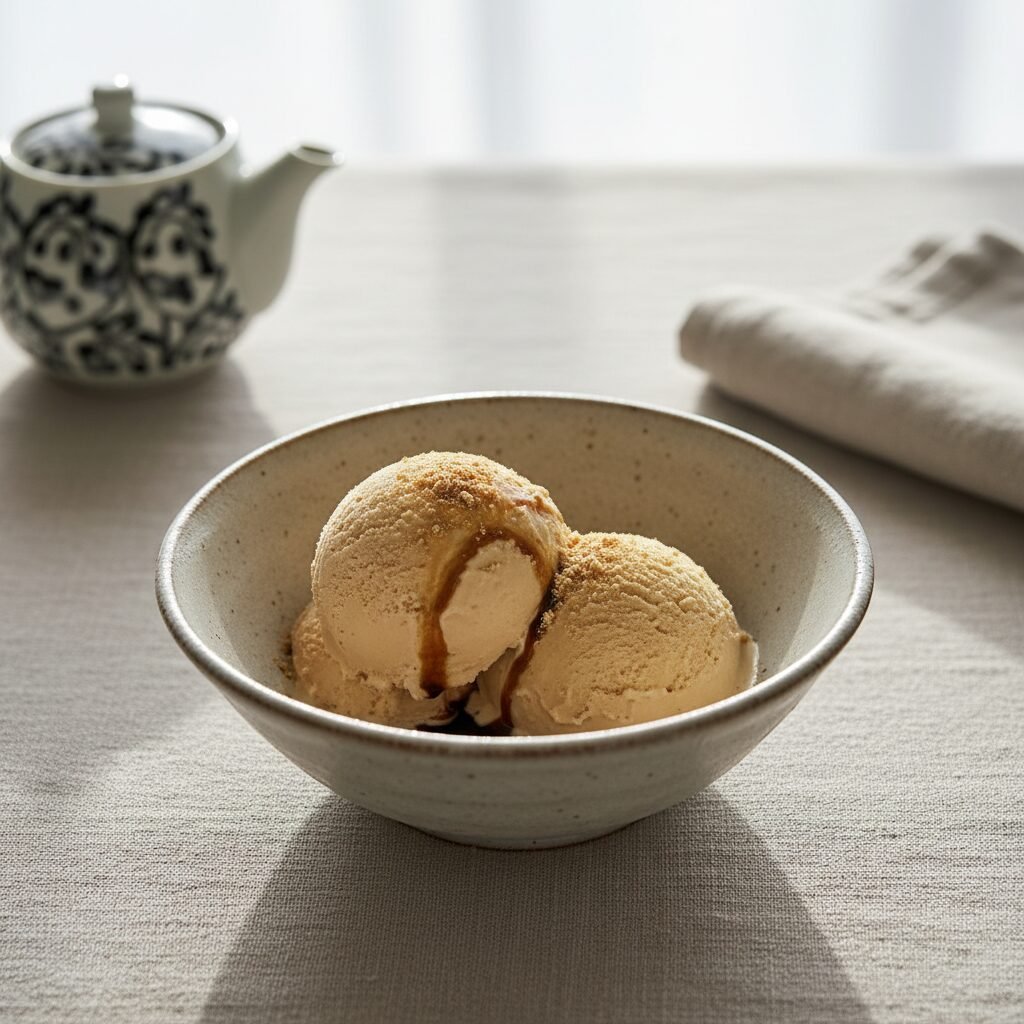
Creamy Toasted Soybean Kinako Ice Cream
Kinako Ice Cream Recipe
Get ready to fall in love with your new favorite frozen treat! This Kinako Ice Cream is a revelation, with a sophisticated, nutty flavor from roasted soybean flour that’s unlike anything you’ve had before. It’s unbelievably velvety, subtly sweet, and has a warm, toasty essence that is pure comfort in a scoop.
20 minutes
10 minutes
4 hours 30 minutes (includes chilling and churning)
Makes about 1 quart (8 servings)
Dessert
Stovetop & Ice Cream Maker
Japanese
Gluten-Free
Why You’ll Love This Recipe
- ✓Incredibly creamy, velvety texture
- ✓Unique nutty, toasty, and slightly sweet flavor
- ✓Surprisingly easy to make at home
- ✓A sophisticated dessert that will wow your guests
Equipment You’ll Need
- ✓Medium saucepan
- ✓Whisk
- ✓Fine-mesh sieve
- ✓Two mixing bowls
- ✓Ice cream maker
- ✓Airtight freezer-safe container (1.5-quart capacity)
Ingredients
- ✓1/2 cup kinako (roasted soybean flour), plus more for dusting
- ✓2 cups heavy cream
- ✓1 cup whole milk
- ✓3/4 cup granulated sugar, divided
- ✓5 large egg yolks
- ✓1/8 teaspoon fine sea salt
- ✓1 teaspoon vanilla extract
Instructions
- First, prepare the custard base. In a medium saucepan, whisk together the kinako, heavy cream, whole milk, 1/2 cup of the sugar, and the salt.
- Warm the mixture over medium-low heat, stirring occasionally, until it’s hot to the touch and small bubbles form around the edges. Do not let it boil.
- While the cream mixture is heating, place the egg yolks and the remaining 1/4 cup of sugar in a separate medium bowl. Whisk vigorously until the mixture is thick, pale yellow, and falls from the whisk in a ribbon, about 2 minutes.
- Temper the eggs: Very slowly, pour about one cup of the hot cream mixture into the egg yolk mixture while whisking constantly. This gently raises the temperature of the eggs without scrambling them.
- Pour the tempered egg mixture back into the saucepan with the remaining cream mixture. Return the saucepan to the stove over low heat.
- Cook, stirring constantly with a wooden spoon or heatproof spatula, scraping the bottom and sides of the pan. Continue cooking until the custard thickens enough to coat the back of the spoon (when you run your finger through it, the line should hold). This should take about 4-6 minutes. Do not let it simmer or boil.
- Immediately remove the custard from the heat. Pour it through a fine-mesh sieve into a clean bowl to catch any small bits of cooked egg. This ensures a perfectly smooth texture.
- Stir in the vanilla extract. Cover the bowl with plastic wrap, pressing it directly onto the surface of the custard to prevent a skin from forming.
- Chill the custard base thoroughly in the refrigerator for at least 4 hours, or preferably overnight. The base must be completely cold for it to churn properly.
- Once chilled, churn the custard in your ice cream maker according to the manufacturer’s instructions, typically for 20-25 minutes, until it reaches the consistency of soft-serve ice cream.
- Transfer the churned ice cream to an airtight, freezer-safe container. Press a piece of parchment paper or plastic wrap directly on the surface.
- Freeze for at least 2-3 hours, or until firm enough to scoop. Serve and enjoy!
Expert Cooking Tips
- ✓Toast the Kinako: Even though kinako is already roasted, gently warming it in a dry skillet over low heat for 1-2 minutes until fragrant will amplify its nutty aroma and deepen its flavor.
- ✓Don’t Scramble the Eggs: The key to a smooth custard is tempering. Pour the hot cream into the eggs very slowly and whisk constantly. If you rush, you’ll have sweet scrambled eggs!
- ✓Patience is a Virtue (Especially Chilling): For the creamiest, dreamiest texture, your custard base must be thoroughly chilled. An overnight chill is best as it allows the flavors to meld and ensures the fat is cold enough to churn properly.
- ✓Strain for Silkiness: Don’t skip the step of pouring your finished custard through a fine-mesh sieve. It’s your insurance policy for a perfectly smooth, professional-quality ice cream.
Substitutions and Variations
For a richer flavor, you can use all heavy cream, but the texture will be denser. To make this dairy-free, you could experiment with a base of full-fat canned coconut milk and coconut cream, though the flavor profile will be different. For an egg-free version, a cornstarch-slurry-thickened base can work, but you’ll lose some of the classic custard richness.
Common Mistakes to Avoid
The most common mistake is rushing the chilling process. A warm base will not churn properly in an ice cream maker, resulting in an icy, not creamy, texture. Another frequent error is overheating the custard and scrambling the eggs. Cook it gently over medium-low heat and stir constantly until it just coats the back of a spoon.
Serving Suggestions
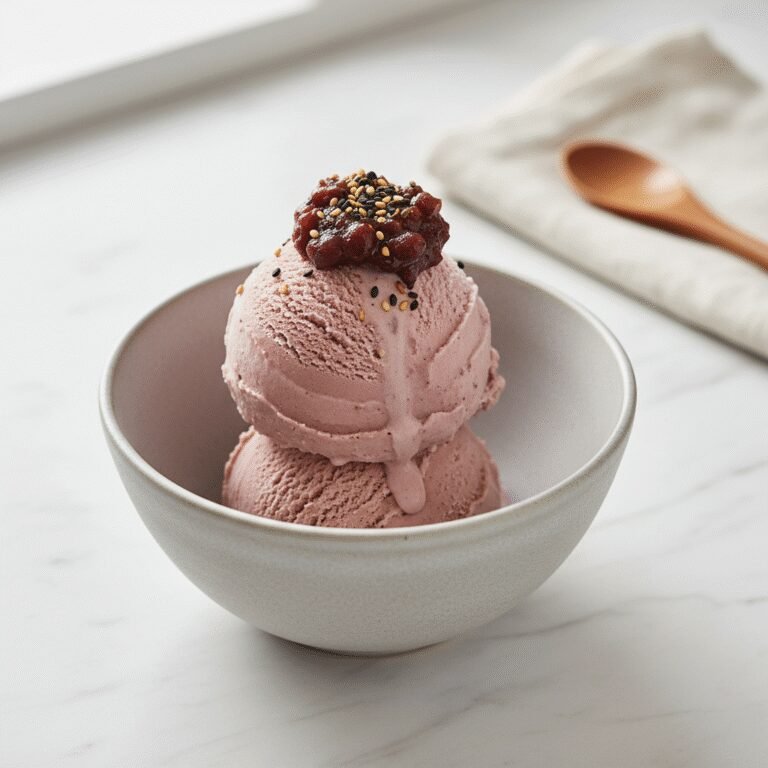
This ice cream is divine on its own, but for a truly special treat, serve it with a generous drizzle of kuromitsu (Japanese black sugar syrup) or a dark, floral honey. A final dusting of kinako on top adds a beautiful touch and an extra pop of toasty flavor. It pairs wonderfully with mochi, dango, or a simple slice of castella cake.
Storage and Reheating Tips
Store your homemade ice cream in an airtight container in the coldest part of your freezer (usually the back). To prevent ice crystals from forming, press a piece of plastic wrap or parchment paper directly onto the surface of the ice cream before sealing the lid. Enjoy within 2 weeks for the best flavor and texture.
Nutrition Facts (Estimated)
| Serving Size | 1/2 cup (approx 70g) |
| Calories | 250 kcal |
| Fat | 16 g |
| Saturated Fat | 9 g |
| Unsaturated Fat | 7 g |
| Trans Fat | 0 g |
| Cholesterol | 95 mg |
| Sodium | 80 mg |
| Carbohydrates | 22 g |
| Fiber | 1 g |
| Sugar | 20 g |
| Protein | 5 g |
Frequently Asked Questions
What is kinako and where can I find it?
Kinako is finely ground roasted soybean flour. It has a wonderfully nutty, toasty flavor that’s often compared to a less-sweet peanut butter. You can typically find it in Japanese or other Asian grocery stores, or easily order it online.
Can I make this recipe without an ice cream maker?
Absolutely! For a no-churn version, pour the completely chilled custard base into a shallow, freezer-safe dish. Freeze for 45 minutes, then remove and stir it vigorously with a whisk or fork to break up ice crystals. Repeat this process every 30-45 minutes for about 3-4 hours, until it reaches a firm, scoopable consistency.
Why did my ice cream turn out icy instead of creamy?
An icy texture is usually caused by one of two things: the custard base wasn’t cold enough before churning, or there’s too much water content. Ensure your base is chilled for at least 4 hours (overnight is best!) and use full-fat dairy as specified in the recipe. The fat is crucial for a creamy mouthfeel.
Is kinako gluten-free?
Yes, pure kinako is made from 100% soybeans and is naturally gluten-free. However, it’s always wise to check the product packaging for any potential cross-contamination warnings if you have celiac disease or a severe gluten sensitivity.
Conclusion
There you have it—a scoop of pure, nutty, toasty bliss! This Kinako Ice Cream is more than just a dessert; it’s an experience that’s both comforting and uniquely elegant. I hope you fall in love with its incredible flavor as much as I have. If you make this recipe, I would be absolutely thrilled to see it! Please tag me on Pinterest and Instagram so I can see your creamy, dreamy creations.