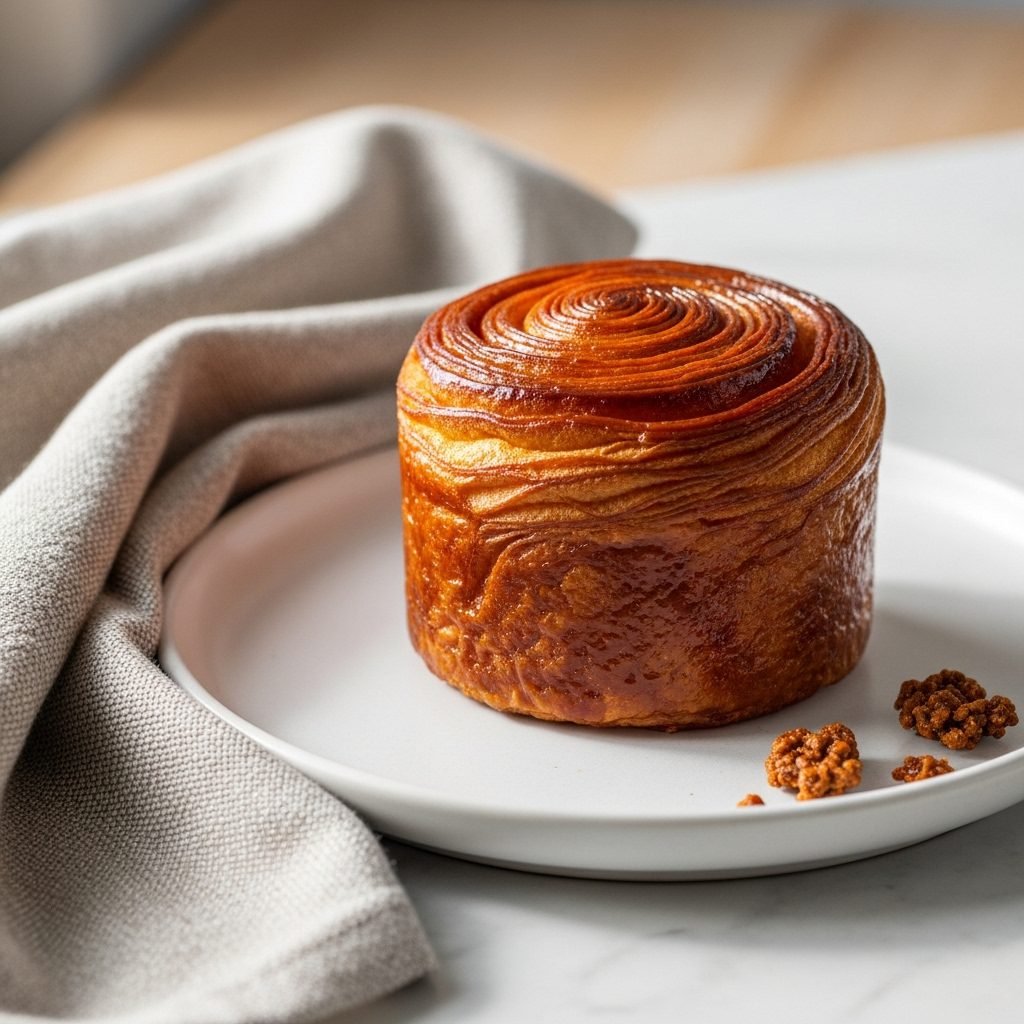
How to Make Unbelievably Good Kouign Amann (The Buttery, Caramelized Pastry You Need to Try!)
Let’s talk about what might just be the most incredible pastry on the planet. Seriously. If a flaky croissant and a rich, buttery caramel had a baby, it would be the Kouign Amann.
Hailing from the Brittany region of France (where they know their butter), the name literally means “butter cake.” And let me tell you, it lives up to its name.
When you bite into one, you get this amazing crunch from a shell of deeply caramelized sugar, followed by soft, tender, buttery, flaky layers inside, with a hint of salt to balance all that richness. The bottom of the pastry, which bakes in a pool of molten butter and sugar, turns into this crispy, almost candy-like disc. It is wild.
Now, I know what you’re thinking. “That sounds French, laminated, and hard.”
I’m not going to lie to you—this is a “project bake.” It’s not a 30-minute muffin recipe. But I promise you two things: 1) It’s probably not as hard as you think, and 2) The final result is so ridiculously worth it, you’ll feel like a professional pastry chef.
I’ve broken down every single step with all the tips I’ve learned along the way. We’re going to make this manageable, and you are going to be so proud of yourself. Grab a cup of coffee and let’s get baking.
What to Expect with This Kouign Amann Recipe
- Taste: Rich, deeply buttery, and intensely caramel-y. It’s sweet but balanced by a definite saltiness (which is traditional!)
- Texture: This is where it shines. The outside is a crunchy, non-sticky, caramelized shell. The inside is tender, chewy, and flaky, almost like a pull-apart roll.
- Time: This is a weekend project. Plan for about 4 to 5 hours, but most of that is just chilling and rising time (hands-off!).
- Difficulty: I’d call it “adventurous intermediate.” If you’ve ever made a yeasted dough (like cinnamon rolls or bread), you can absolutely do this. The “laminating” (folding in butter) is the main technique, and we’ll take it slow.
What You’ll Need
The ingredient list is wonderfully simple. This is all about technique, not a long shopping list.
For the Dough (The “Détrempe”):
- 2 ½ teaspoons (1 packet) active dry yeast
- ¾ cup warm water (about 105°F-115°F, just warm to the touch)
- 2 ½ cups all-purpose flour (plus more for dusting)
- 1 ½ teaspoons fine sea salt
For the Lamination (The “Beurrage” and Sugar):
- 1 cup (2 sticks, or 8 oz) high-quality unsalted butter, cold
- 1 ¼ cups granulated sugar, divided (you’ll use this in a few steps)
A Note on Butter: If there is ever a time to splurge on the “good” butter, this is it. Look for a European-style butter, which has a higher butterfat content (like 82% or more) and less water. Brands like Plugrà, Kerrygold, or a local creamery option will make a huge difference in your final flavor and lamination. But honestly, a standard unsalted butter will still work if that’s all you have!
How to Make Kouign Amann from Scratch
Ready? We’re going to do this in easy-to-follow stages.
Part 1: Make the Dough
This is the “détrempe,” or the base dough.
- Activate the Yeast: In the bowl of a stand mixer (or a large mixing bowl), sprinkle the yeast over the warm water. Let it sit for 5-10 minutes until it gets foamy and smells yeasty. This shows you your yeast is alive and well.
- Mix the Dough: Add the flour and salt to the bowl with the yeast mixture. If using a stand mixer, attach the dough hook and mix on low speed for 6-8 minutes, until the dough is smooth, elastic, and pulls away from the sides of the bowl. It will be a soft, slightly sticky dough. If mixing by hand, stir with a wooden spoon until it comes together, then turn it out onto a lightly floured surface and knead for 8-10 minutes.
- First Rise: Shape the dough into a ball and place it in a lightly oiled bowl, turning it over to coat. Cover the bowl with plastic wrap or a clean kitchen towel.
- Chill and Rise: This is a little different from bread. We want it to rise, but we also want it cold. Place the covered bowl in the refrigerator for at least 1 hour, or up to 2. It will puff up, but it won’t double in size like a warm-risen bread dough. This cold rise develops flavor and makes the dough easier to handle.
Part 2: Prepare the Butter Block
While the dough is chilling, let’s make the “beurrage” (the butter block).
- Pound the Butter: Take your 2 sticks of cold butter and place them side-by-side on a large piece of parchment paper. Place another piece of parchment on top.
- Get Pounding! Using a rolling pin, pound the butter. Yes, pound it! This is a great way to let out some steam. You’re trying to make the butter pliable without letting it get warm and soft.
- Shape the Block: Pound and roll the butter (still between the parchment) into a roughly 6-inch by 6-inch square. It doesn’t have to be perfect. Fold the parchment paper around it to keep the shape. Pop this butter block into the refrigerator to keep it cold but not frozen.
Part 3: The Lamination (Folding in the Butter)
This is where the magic layers are born.
- Roll the Dough: Take your chilled dough out of the fridge. Turn it onto a lightly floured surface. Roll it out into a square that’s about 10-inches by 10-inches.
- Lock in the Butter: Get your cold butter block from the fridge. Place it on top of the dough, rotated 45 degrees (so it looks like a diamond in the middle of the square).
- Fold the Envelope: Fold each “flap” or corner of the dough over the butter block, like you’re closing an envelope. Pinch the seams together to seal the butter completely inside. You should now have a neat little dough-and-butter package.
- The First “Turn”: Lightly flour your counter again. Roll your package out into a long rectangle, roughly 8-inches by 16-inches. Work as quickly as you can so the butter stays cold.
- Fold like a Letter: Fold the rectangle in thirds, like you’re folding a business letter. Bring the bottom third up, then fold the top third down.
- Chill Time (Crucial!): Wrap your folded dough in plastic wrap. Write “Turn 1” on it with a marker if you want. Place it in the refrigerator for 30 minutes sharp. This lets the gluten relax and, most importantly, re-chills the butter.
Part 4: The Second Turn
- Repeat: Take the dough out. Place it on your lightly floured counter with the “seam” or open edge facing to the right (like a book).
- Roll and Fold: Roll it out again into that 8-inch by 16-inch rectangle. Fold it into thirds again, just like a letter.
- Chill Again: Wrap it back up. Back in the fridge for another 30 minutes.
Part 5: The Sugar Turns (The Fun Part!)
This is what makes Kouign Amann different from a croissant.
- First Sugar Turn: Take your dough out. This time, instead of flour, sprinkle your counter with about ¼ cup of the granulated sugar. Place the dough on the sugar. Sprinkle another ¼ cup of sugar on top of the dough.
- Roll and Fold: Roll it out into the 8-inch by 16-inch rectangle. The sugar will crunch. It’s fine! Fold it into thirds, just like before. It will be sticky. It’s okay.
- Second Sugar Turn: You’d think you’d chill it, but no! We’re doing this all at once. Rotate the dough 90 degrees. Sprinkle the counter and the dough with another ¼ cup of sugar each.
- Roll and Fold Again: Roll it out one last time to that 8-inch by 16-inch rectangle. Fold it into thirds. The dough will be a beautiful, sugary, sticky, wonderful mess. This is correct.
Part 6: Shaping the Pastries
- Prep Your Pan: This is the most important step for not having your pastries stick. Get a 12-cup standard muffin tin. Generously grease every single cup with softened butter. Get in all the nooks and crannies.
- Sugar the Pan: Sprinkle some of your remaining sugar into each cup. Swirl it around to coat the bottom and sides. This is what creates that incredible caramel shell.
- Cut the Dough: Lightly flour your counter (just a little!). Roll your final sugary dough block into a 12-inch by 12-inch square.
- Trim and Cut: Trim the edges (a pizza cutter is great for this). This exposes the layers. Cut the square into 12 equal 4-inch by 4-inch squares.
- Shape: Take one of the squares. Gently fold the four corners into the center, like you’re making a little X-marks-the-spot. Don’t press it down hard.
- Tuck and Place: Gently pick up the little bundle and place it, folded-side-up, into one of the prepared muffin cups. Repeat with all 12 squares.
Part 7: The Final Proof
- Let Them Rise: Sprinkle any remaining sugar over the tops of the pastries in the tin.
- Cover and Wait: Loosely cover the muffin tin with plastic wrap or a kitchen towel. Let the pastries rise in a warm-ish (not hot) spot for 30-45 minutes. They’ll get noticeably puffier and fill out the cups.
- Preheat: While they rise, preheat your oven to 400°F (200°C). Position a rack in the middle of the oven. Place a large, empty baking sheet on the rack below to catch any bubbling-over butter or sugar.
Part 8: Bake to Caramelized Glory
- Bake Hot: Place the muffin tin on the middle rack. Bake for 20-25 minutes.
- Watch Closely: After about 15-18 minutes, they will be sizzling and bubbling. That’s the sugar caramelizing. You’re looking for a deep, rich, amber-to-mahogany color. Don’t be afraid of a dark color—that’s where the flavor is! If they get dark too fast, you can loosely tent with foil, but you want that deep color.
- THE MOST IMPORTANT STEP: As soon as you take them out of the oven, let them cool for only 1-2 minutes. That’s it.
- Unmold Immediately: The molten sugar will harden like cement if you let it cool. Carefully, using an offset spatula or a butter knife, pop each Kouign Amann out of its cup. Transfer them to a wire rack to cool completely (or, you know, eat one). That sizzling sugar is hot, so please be careful.
Tips for Nailing Your Kouign Amann
- The Fridge is Your Best Friend: I can’t say this enough. The key to flaky layers is cold butter. If at any point your dough gets warm, or the butter feels like it’s softening and squishing out, just wrap it up and put it in the fridge for 20 minutes. No big deal.
- Don’t Fear the Sugar Dough: When you add the sugar, the dough will get sticky and weird. It will feel “wrong.” It’s not. The sugar draws moisture out of the dough, which is exactly what we want. Just work quickly and confidently.
- Grease That Pan Like Your Life Depends On It: Seriously. Butter and sugar. Be excessive. You will thank me when your pastries pop right out.
- Get Them Out FAST: I’m saying it again. Have your wire rack ready. Have your spatula ready. As soon as that pan comes out, you have a 2-minute window before that caramel locks them in forever.
Substitutions and Variations
- Flour: You can use bread flour instead of all-purpose for a slightly chewier, more “bakery-style” texture.
- Salt: Some recipes call for salted butter. If you only have salted, go for it, but you might want to reduce the salt in the dough to 1 teaspoon. The Breton originals are definitely salty.
- Add-Ins: You could sprinkle a tiny bit of cardamom or cinnamon with the sugar, but for your first time, I highly recommend tasting them in their pure, buttery form.
- Vegan/GF? I’ll be honest, this recipe is a celebration of gluten and dairy. It’s not one that’s easily adapted. This is a “treat-yourself” bake!
Common Pitfalls (And How to Avoid Them)
- My butter melted and leaked out!
- The Problem: Your dough or butter got too warm during lamination.
- The Fix: Next time, be militant about your 30-minute chilling steps. And if your kitchen is warm, work faster or even stick your rolling pin in the freezer for a bit.
- My pastries are stuck in the pan!
- The Problem: You either didn’t grease/sugar the pan enough, or you waited too long to unmold them.
- The Fix: Prevention is key. But if they’re stuck, you can try gently warming the bottom of the pan on a very low burner for 10-15 seconds to re-melt the sugar, then try again.
- The bottoms are burnt but the inside is raw.
- The Problem: Your oven is too hot or the heat is too concentrated on the bottom.
- The Fix: Make sure you use that baking sheet on the rack below to diffuse the heat. And know your oven—if it runs hot, check them at 18 minutes.
How to Serve Your Kouign Amann
These pastries need nothing. They are the star of the show.
Serve them warm or at room temperature, preferably on the day they are made. This is when their texture is at its peak. The perfect companion is a strong, hot cup of coffee or black tea to cut through all that rich, buttery caramel.
Storing and Reheating
- Storage: If you have leftovers (which… doubtful, but okay), store them in an airtight container at room temperature. Do not refrigerate them. The fridge will make them hard and ruin the texture. They’ll last for 1-2 days.
- Reheating: They will lose their crunch by day 2. But you can bring them back to life! Do not microwave. The microwave is the enemy of all flaky pastry. Pop them on a baking sheet in a 350°F oven for 5-7 minutes. This will re-crisp the outside and warm the buttery inside. Almost as good as new.
Your Kouign Amann Questions, Answered
Can I make these ahead of time? Partially! You can make the dough (Part 1) and do the first two butter laminations (Parts 3 & 4) the day before. Just leave the dough tightly wrapped in the fridge overnight. The next day, let it sit at room temp for about 15 minutes, then proceed with the sugar turns (Part 5). You must bake them fresh, however.
Why is my dough shrinking when I try to roll it? That’s the gluten being feisty! It just means it’s too “tight.” Let it rest (in the fridge, wrapped) for 15-20 minutes. It will relax, and you’ll be able to roll it out easily.
What’s the difference between this and a “kougelhopf”? They sound similar, but they’re totally different! A kougelhopf is a rich, brioche-like yeasted cake with almonds and raisins, baked in a special fluted pan. A Kouign Amann is a laminated pastry all about butter, sugar, and layers.
Go Bake These. You Won’t Regret It.
Okay, that was a lot of information! But I wanted you to have every tool you need to feel confident.
Taking that first bite of a pastry you made from scratch—one that you usually can only get at a high-end French bakery—is one of the best feelings in the world. This is one of those bakes that’s a true labor of love, and the payoff is huge.
Don’t be afraid of the steps. It’s just folding and chilling. You’ve got this. The feeling (and smell!) of pulling these golden, bubbling, caramelized beauties from your own oven is something you will not forget.
Recipe Summary
This Kouign Amann recipe guides you through making homemade Breton pastries. You’ll start by creating a simple, cold-risen yeasted dough. Then, you’ll laminate this dough by folding in a block of high-fat European-style butter, chilling between “turns.” Finally, you’ll fold in granulated sugar, which creates a sticky but manageable dough. The pastries are shaped by folding squares of dough into buttered-and-sugared muffin cups, allowed to proof, and then baked at a high temperature until the sugar creates a deep, crunchy, amber-colored caramel crust.