Dreamy Pandan Coconut Crepes (Kuih Dadar)
Kuih Dadar Recipe
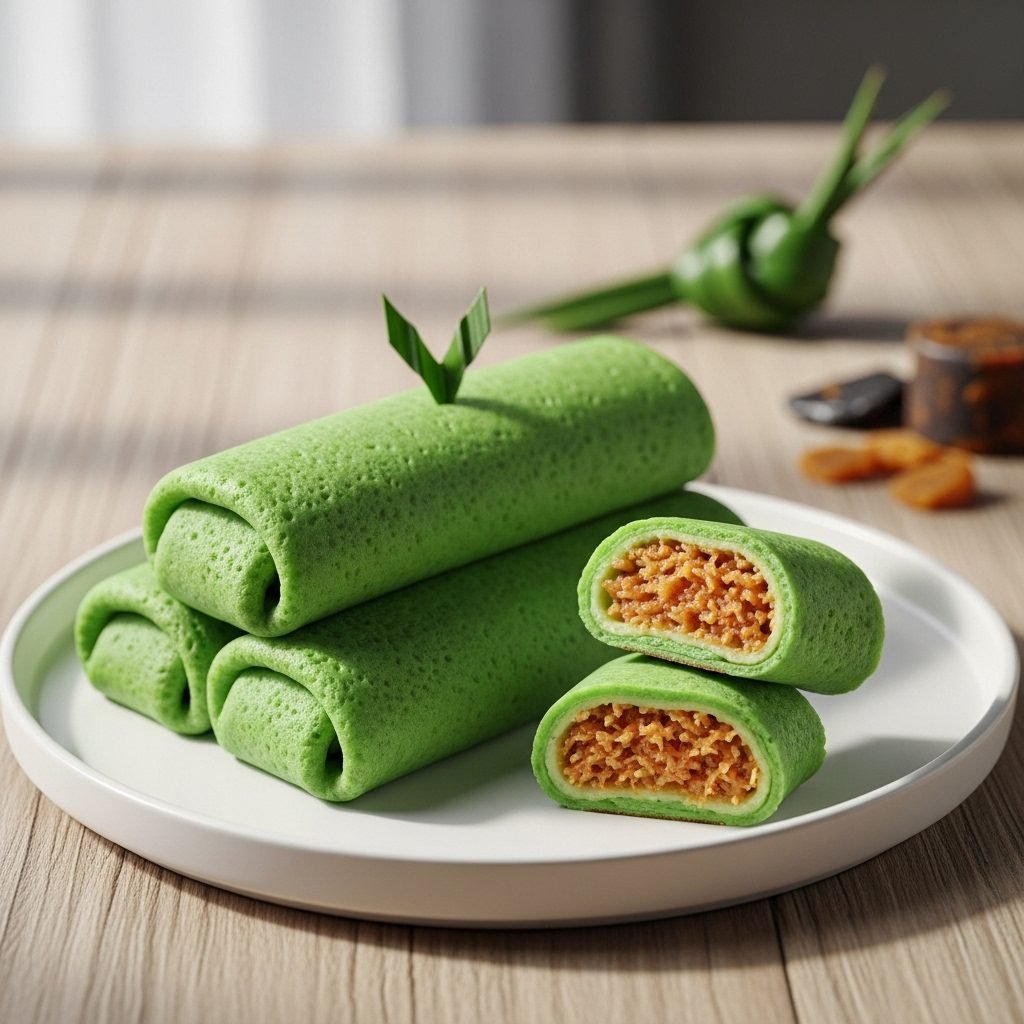
Get ready to fall in love with these vibrant green, sweet coconut-stuffed crepes! Kuih Dadar are delicate, pandan-infused parcels of joy, filled with a juicy, palm sugar-sweetened coconut filling. They’re a stunningly beautiful and delicious treat that’s surprisingly simple to make at home.
25 minutes
30 minutes
55 minutes
12-15 crepes
Dessert
Stovetop
Southeast Asian
N/A
Why You’ll Love This Recipe
- Vibrant green color from real pandan leaves
- Sweet, moist, and fragrant coconut filling
- Soft, delicate, and slightly chewy crepes
- A stunning and unique dessert for any occasion
Equipment You’ll Need
- 8-inch non-stick skillet or crepe pan
- 2 medium mixing bowls
- Small saucepan
- Whisk
- Fine-mesh sieve
- Blender
- Spatula
- Ladle
Ingredients
- For the Sweet Coconut Filling (Inti):
- 2 cups freshly grated coconut (or unsweetened desiccated coconut, rehydrated)
- 3/4 cup palm sugar (gula melaka), finely chopped
- 1/2 cup water
- 1 pandan leaf, knotted
- 1/4 teaspoon salt
- For the Pandan Crepes (Dadar):
- 1 1/2 cups all-purpose flour
- 2 tablespoons rice flour (or tapioca starch)
- 1 large egg
- 1 cup thick coconut milk
- 1 cup pandan juice (from 10-12 pandan leaves blended with 1 cup water, then strained)
- 1/2 cup water
- 1/4 teaspoon salt
- 1 tablespoon vegetable oil, plus more for greasing the pan
Instructions
- First, prepare the sweet coconut filling. In a small saucepan, combine the chopped palm sugar and 1/2 cup of water. Heat over medium heat, stirring until the sugar is completely dissolved.
- Strain the sugar syrup through a fine-mesh sieve into the saucepan to remove any impurities. Return the saucepan to the stove.
- Add the grated coconut, knotted pandan leaf, and salt to the syrup. Cook over medium-low heat, stirring constantly, until the liquid has been absorbed and the mixture is moist and fragrant, about 10-15 minutes. Do not let it dry out.
- Remove from heat, discard the pandan leaf, and set the filling aside to cool completely.
- Next, make the pandan crepe batter. To make fresh pandan juice, wash and cut 10-12 pandan leaves into small pieces. Place them in a blender with 1 cup of water and blend until smooth. Strain the mixture through a fine-mesh sieve or cheesecloth, pressing down on the pulp to extract all the vibrant green juice. You should have about 1 cup.
- In a medium mixing bowl, whisk together the all-purpose flour, rice flour, and salt.
- In a separate bowl, whisk the egg, coconut milk, pandan juice, 1/2 cup of water, and 1 tablespoon of vegetable oil until well combined.
- Gradually pour the wet ingredients into the dry ingredients, whisking continuously until you have a smooth, thin batter with no lumps. Strain the batter through a sieve for an extra-smooth consistency. Let the batter rest for at least 15-20 minutes.
- Heat an 8-inch non-stick skillet or crepe pan over medium-low heat. Lightly grease the pan with a little oil using a paper towel. The pan is ready when a drop of water sizzles and evaporates quickly.
- Pour about 1/4 cup of batter into the center of the pan and immediately swirl the pan to create a thin, even crepe. Cook for about 1-2 minutes, or until the top is set and no longer looks wet. You don’t need to flip the crepe.
- Carefully slide the cooked crepe onto a plate. Repeat the process with the remaining batter, lightly greasing the pan as needed. Stack the crepes with the cooked side up.
- To assemble, lay a crepe flat with the cooked, smoother side down. Place about 1-2 tablespoons of the cooled coconut filling in a line across the center.
- Fold in the sides of the crepe, then roll it up tightly like a spring roll or burrito. Repeat with the remaining crepes and filling.
- Serve immediately or at room temperature.
Expert Cooking Tips
- Resting the batter is a non-negotiable step! It allows the gluten to relax, resulting in much softer, more tender crepes.
- For the most vibrant green color and authentic flavor, use fresh pandan leaves to make your own juice. The aroma is incomparable.
- Keep your pan on medium-low heat. If the heat is too high, the crepes will cook too fast, get crispy, and might burn before they are set.
- Don’t overfill the crepes. About 1 to 2 tablespoons of filling is perfect. Overfilling can cause them to burst when you roll them.
- The crepe is cooked only on one side. The uncooked side will be slightly tacky, which helps seal the roll when you fold it.
Substitutions and Variations
For the filling, you can substitute palm sugar (gula melaka) with dark brown sugar or coconut sugar, though the flavor will be slightly different. If you can’t find fresh pandan leaves, use 1 teaspoon of pandan extract or paste in the batter. Unsweetened desiccated coconut can be used if rehydrated first with a little warm water. To make this recipe gluten-free, substitute the all-purpose and rice flours with a good quality 1-to-1 gluten-free baking flour blend.
Common Mistakes to Avoid
A common mistake is making the crepe batter too thick, which results in doughy, heavy crepes instead of delicate ones; the batter should be thin, like heavy cream. Another issue is overcooking the coconut filling until it’s dry. You want to cook it just until the syrup is absorbed, keeping it wonderfully moist and juicy. Finally, avoid using high heat when cooking the crepes, as they can easily burn and become brittle, making them difficult to roll without tearing.
Serving Suggestions
Kuih Dadar are delightful on their own, served warm or at room temperature. They make a perfect pairing with a cup of hot jasmine tea or a simple black coffee for a lovely afternoon snack. For a beautiful presentation at a party or gathering, arrange them on a platter lined with banana leaves and garnish with an extra knotted pandan leaf or edible flowers.
Storage and Reheating Tips
Store any leftover Kuih Dadar in a single layer in an airtight container in the refrigerator for up to 3 days. The crepes may firm up when chilled. To serve, let them come to room temperature for about 30 minutes, or warm them gently in the microwave for 10-15 seconds to restore their softness.
Nutrition Facts (Estimated)
| Serving Size | 1 crepe |
| Calories | 148 kcal |
| Fat | 7 g |
| Saturated Fat | 6 g |
| Unsaturated Fat | 1 g |
| Trans Fat | 0 g |
| Cholesterol | 15 mg |
| Sodium | 55 mg |
| Carbohydrates | 19 g |
| Fiber | 2 g |
| Sugar | 12 g |
| Protein | 2 g |
Frequently Asked Questions
What is pandan and what does it taste like?
Pandan is a tropical plant whose leaves are used widely in Southeast Asian cooking. It has a unique, fragrant aroma that is grassy, vanilla-like, and slightly nutty. It’s often called the ‘vanilla of the East’ and adds a beautiful green hue to dishes.
Can I make the components ahead of time?
Yes! You can prepare the coconut filling a day in advance and store it in an airtight container in the fridge. The crepe batter can also be made ahead and refrigerated for up to 24 hours. Just give it a good whisk before you start making the crepes.
Why are my crepes sticking to the pan?
Sticking usually happens for two reasons: your pan isn’t hot enough when you pour the batter, or it’s not a good quality non-stick pan. Make sure the pan is preheated to medium-low heat and lightly but evenly greased with oil before cooking each crepe.
Where can I find palm sugar (gula melaka) and pandan leaves?
You can typically find both at most Asian grocery stores. Pandan leaves are usually in the refrigerated or frozen section. Palm sugar, or gula melaka, is often sold in cylindrical blocks or as a paste.
Conclusion
There you have it – your very own homemade Kuih Dadar! These beautiful, fragrant crepes are such a rewarding treat to make and share. The combination of the soft pandan crepe and the sweet, chewy coconut is truly a match made in heaven. If you try this recipe, I’d love to see your creations! Snap a photo and share it on Pinterest or Instagram, and don’t forget to tag us!