Chewy Glazed Sweet Potato Doughnuts (Kuih Keria)
Kuih Keria Recipe
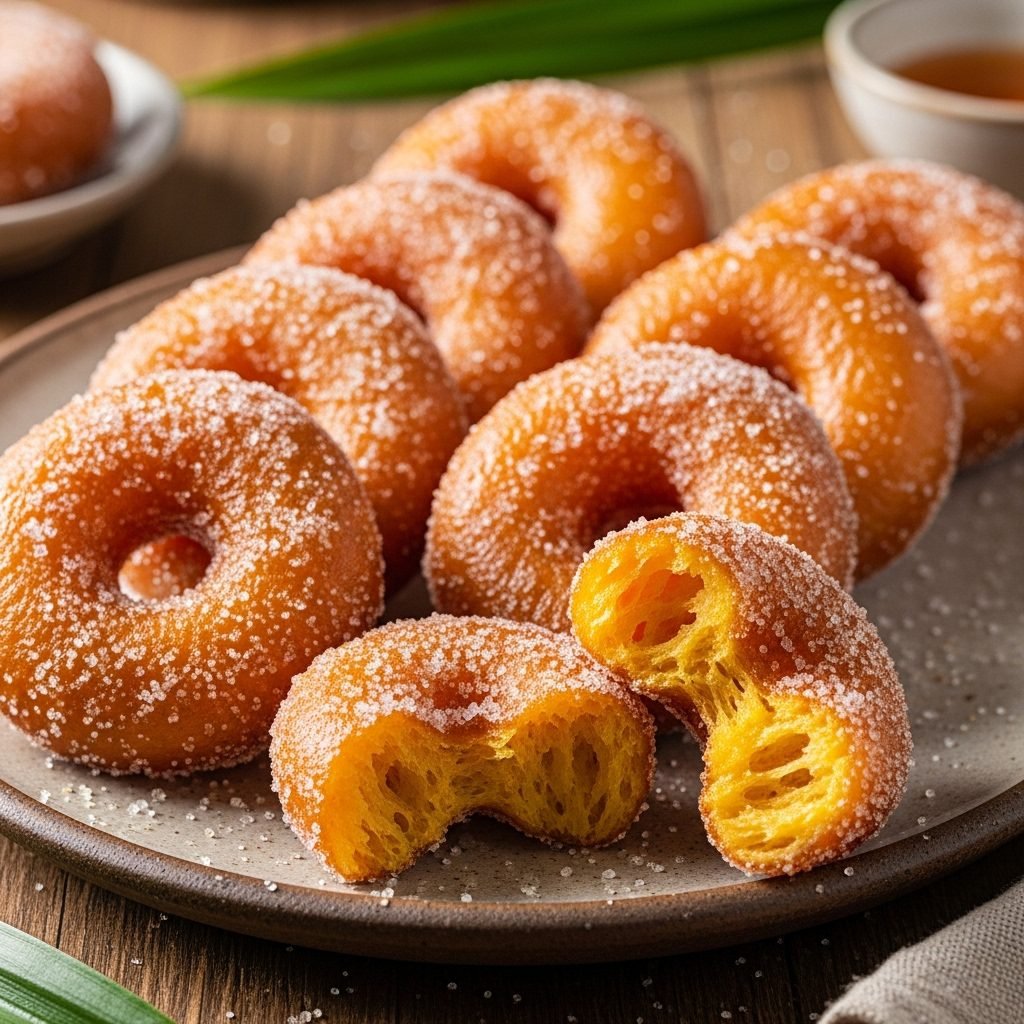
Get ready to fall in love with Kuih Keria, the most delightful Malaysian doughnuts you’ll ever make! These rustic little rings are made with sweet potato, giving them a wonderfully soft, chewy, and slightly cakey texture. Coated in a unique, crackly sugar glaze that shatters with every bite, they are an irresistible treat that’s surprisingly simple to whip up at home.
25 minutes
15 minutes
40 minutes
About 18 doughnuts
Dessert
Frying
Malaysian
Vegan
Why You’ll Love This Recipe
- Incredibly soft and chewy texture
- A unique, crisp, and crackly sugar glaze
- Made with simple, minimal ingredients
- Naturally vegan and dairy-free
Equipment You’ll Need
- Steamer or large pot with a steamer basket
- Large mixing bowl
- Potato masher or fork
- Wok, Dutch oven, or deep skillet
- Spider strainer or slotted spoon
- Wire cooling rack set over a baking sheet
- Small saucepan
Ingredients
- 1 lb orange-fleshed sweet potatoes (about 2 medium), peeled and cut into 1-inch chunks
- 1 cup all-purpose flour, plus more for dusting
- 1/4 cup tapioca starch
- 1 teaspoon baking powder
- 1/2 teaspoon salt
- Vegetable oil or other neutral oil, for frying
- For the Glaze:
- 1/2 cup granulated sugar
- 3 tablespoons water
Instructions
- First, prepare the sweet potatoes. Place the peeled and chopped sweet potatoes in a steamer basket over simmering water. Cover and steam for 15-20 minutes, or until they are completely tender and easily pierced with a fork.
- Transfer the steamed sweet potatoes to a large mixing bowl. While they are still hot, use a potato masher or a fork to mash them until smooth. Let the mashed potatoes cool for about 10 minutes – they should be warm, not hot.
- In a separate small bowl, whisk together the all-purpose flour, tapioca starch, baking powder, and salt.
- Add the dry ingredients to the warm mashed sweet potatoes. Use a spatula or your hands to gently mix and knead until a soft, pliable dough forms. Be careful not to overwork the dough, or the doughnuts will be tough.
- Lightly flour your hands and a clean work surface. Take about 2 tablespoons of dough and roll it into a smooth ball. Gently flatten the ball into a small disc, about 1/2-inch thick.
- Use your finger to poke a hole in the center of the disc and gently stretch it to create a doughnut shape. Place the shaped doughnut on a lightly floured tray or piece of parchment paper. Repeat with the remaining dough.
- Pour about 2-3 inches of oil into a wok or deep skillet. Heat the oil over medium-high heat until it reaches 350°F (175°C). If you don’t have a thermometer, test the oil by dropping a tiny piece of dough into it; it should sizzle immediately and float to the surface.
- Carefully place 4-5 doughnuts into the hot oil, making sure not to overcrowd the pan. Fry for 2-3 minutes per side, or until they are a beautiful golden brown and puffed up.
- Use a spider strainer or slotted spoon to remove the doughnuts from the oil, allowing any excess oil to drip off. Transfer them to a wire rack to cool completely.
- While the doughnuts are cooling, make the glaze. In a small saucepan, combine the granulated sugar and water. Place it over medium heat and stir until the sugar dissolves completely.
- Bring the syrup to a boil and let it bubble away, without stirring, for about 3-5 minutes. It will thicken slightly and look foamy. You’re looking for the ‘thread’ stage, where a drop of syrup pulled between two fingers forms a thin thread.
- Remove the saucepan from the heat. Immediately add the cooled doughnuts to the pan. Use two spoons to quickly and gently toss the doughnuts in the hot syrup, coating them all over.
- Continue tossing for about a minute. You will see the clear syrup start to turn opaque and crystallize into a fine, white coating on the doughnuts. This happens quickly!
- Once coated, immediately transfer the glazed doughnuts back to the wire rack to set. The glaze will harden into a crisp, crackly shell as it cools. Serve and enjoy!
Expert Cooking Tips
- Steam, don’t boil! Steaming the sweet potatoes prevents them from absorbing excess water, which can make your dough sticky and require too much flour, leading to dense doughnuts.
- Cool the mash slightly. Adding flour to piping hot sweet potatoes can affect the texture. Letting it cool for 10 minutes makes the dough easier to handle.
- The magic is in the glaze. The key to the perfect crackly glaze is not to stir the syrup once it starts boiling and to cook it just until it thickens. Tossing the doughnuts off the heat allows the sugar to re-crystallize perfectly.
- Fry in batches. Don’t overcrowd the pan when frying. This ensures the oil temperature stays consistent, giving you evenly cooked, golden-brown doughnuts instead of greasy, pale ones.
Substitutions and Variations
For a gluten-free version, you can substitute the all-purpose flour with a good quality 1-to-1 gluten-free baking blend. While orange-fleshed sweet potatoes are classic, you can experiment with Japanese sweet potatoes (the purple-skinned, yellow-fleshed variety) for a denser, less sweet doughnut. If you don’t have tapioca starch, cornstarch can work, but you’ll lose some of that signature chewiness.
Common Mistakes to Avoid
The most common mistake is having a dough that’s too wet. This usually happens from boiling the sweet potatoes instead of steaming them. If your dough is unmanageably sticky, add a little more flour, one tablespoon at a time, but be careful not to add too much, which will make the doughnuts heavy. Another pitfall is the glaze; if you overcook the syrup, it will turn into caramel, and if you undercook it, it won’t crystallize. Watch for the foamy bubbles and slight thickening.
Serving Suggestions
Kuih Keria are absolutely divine when served warm, just after the glaze has set. They are a perfect afternoon pick-me-up alongside a hot cup of coffee or a traditional Malaysian pulled tea, Teh Tarik. For a simple yet elegant presentation, arrange them on a platter and let their beautiful, sugary crust be the star.
Storage and Reheating Tips
These doughnuts are at their peak on the day they are made, when the glaze is crisp and the inside is soft. If you have leftovers, store them in a single layer in an airtight container at room temperature for up to 2 days. Note that the glaze will soften and become a bit sticky over time. Reheating is not recommended as it can dry them out.
Nutrition Facts (Estimated)
| Serving Size | 1 doughnut |
| Calories | 165 kcal |
| Fat | 8 g |
| Saturated Fat | 1.5 g |
| Unsaturated Fat | 6.5 g |
| Trans Fat | 0 g |
| Cholesterol | 0 mg |
| Sodium | 45 mg |
| Carbohydrates | 22 g |
| Fiber | 1.5 g |
| Sugar | 12 g |
| Protein | 2 g |
Frequently Asked Questions
Can I bake these kuih keria instead of frying them?
While you can try baking them at 375°F (190°C) for 15-20 minutes, the texture will be quite different. Frying is what gives them their classic light, airy interior and slightly crisp exterior before glazing. Baking will result in a denser, more scone-like texture.
Why did my sugar glaze not turn white and crackly?
This usually happens for one of two reasons: the sugar syrup was not cooked long enough to reach the crystallization stage, or it was too watery. Make sure you let the syrup boil and bubble until it thickens slightly and looks foamy before you add the doughnuts. Then, toss them quickly off the heat to encourage the sugar to crystallize.
My dough was really tough to work with. What did I do wrong?
A tough dough is almost always the result of overworking it. Once you add the flour to the sweet potato, mix only until a cohesive dough forms. Kneading it like bread dough will develop the gluten too much, resulting in dense, tough doughnuts instead of soft, chewy ones.
Can I prepare the dough in advance?
Yes, you can make the dough, wrap it tightly in plastic wrap, and store it in the refrigerator for up to 24 hours. Let it sit at room temperature for about 20-30 minutes before shaping and frying, as it will be quite firm when cold.
Conclusion
There’s something truly special about biting through that crisp, sugary shell into the warm, pillowy sweet potato doughnut beneath. This Kuih Keria recipe brings a taste of Malaysian street food magic right into your kitchen, and it’s a joy to both make and eat. I hope you give these incredible treats a try! If you do, I’d be thrilled to see your creations—snap a photo and tag me on Pinterest and Instagram!