Pillowy-Soft Filipino Mamon Sponge Cakes
Mamon Recipe
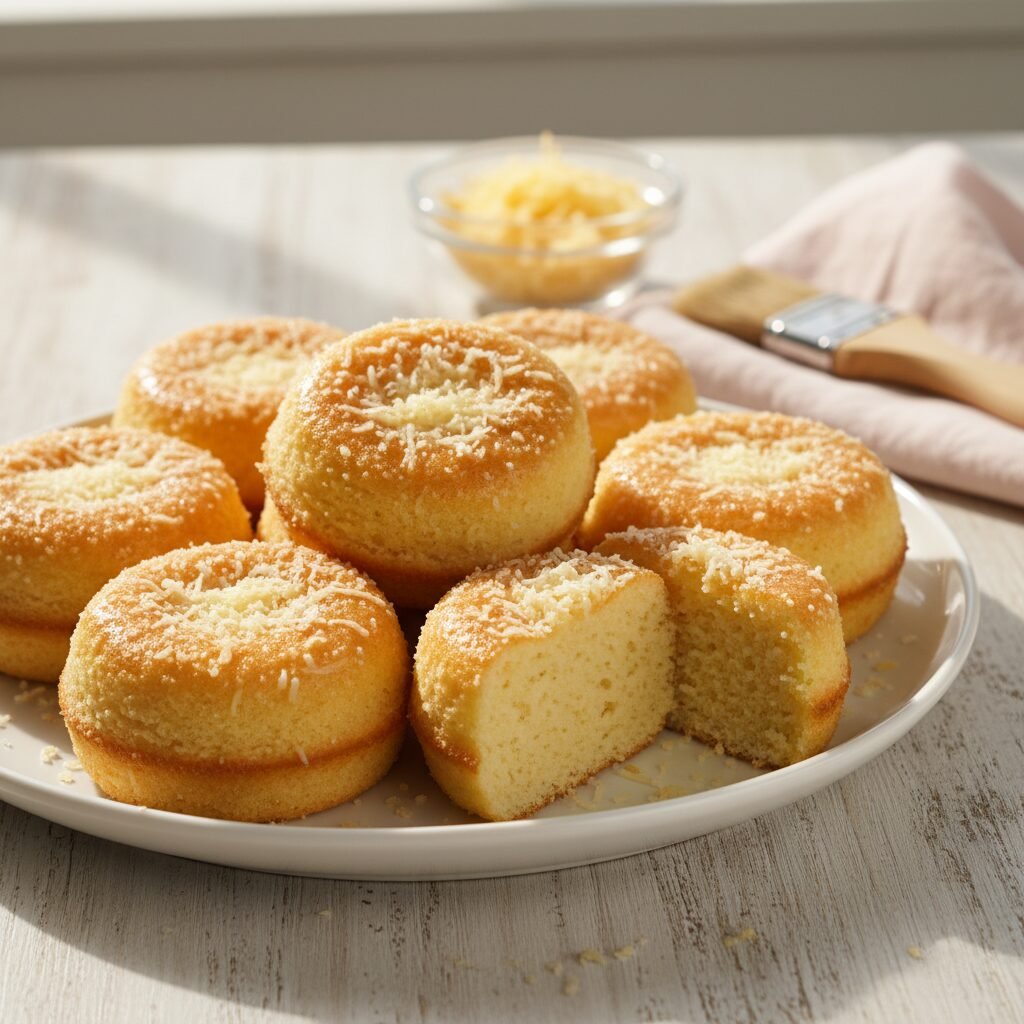
Get ready to fall in love with these unbelievably light and airy Filipino Mamon! These delicate sponge cakes are a classic Filipino treat, boasting a tender, melt-in-your-mouth texture and a sweet, buttery flavor that’s simply irresistible. Perfect with a cup of coffee, this recipe brings the authentic taste of a Filipino bakery right into your kitchen.
20 minutes
18 minutes
38 minutes
12 mamon cakes
Dessert
Baking
Filipino
N/A
Why You’ll Love This Recipe
- Incredibly light, fluffy, and airy texture
- Sweet, buttery, and cheesy topping
- A beloved Filipino classic for any occasion
- Ready in under an hour from start to finish
Equipment You’ll Need
- Stand mixer with whisk attachment (or electric hand mixer)
- Mamon molds or large muffin tins
- 3 Mixing bowls (large, medium, small)
- Flour sifter or fine-mesh sieve
- Rubber spatula
- Wire rack for cooling
- Pastry brush
Ingredients
- 6 large eggs, separated, at room temperature
- 1 cup cake flour, sifted
- 1/2 teaspoon baking powder
- 1/4 teaspoon salt
- 3/4 cup granulated sugar, divided
- 1/4 cup water
- 1/4 cup vegetable oil
- 1 teaspoon vanilla extract
- 1/2 teaspoon cream of tartar
- For the Topping:
- 1/4 cup unsalted butter, melted
- 1/4 cup granulated sugar
- 1/2 cup finely shredded cheddar cheese or Edam cheese
Instructions
- Preheat your oven to 325°F (165°C). Generously grease and flour 12 mamon molds or line a standard muffin tin with paper liners. Set aside.
- First, prepare the dry ingredients. In a medium bowl, sift together the cake flour, baking powder, and salt. Sifting is crucial for achieving that signature light texture, so don’t skip it! Sift it two to three times if you can.
- Now, let’s work on the yolk batter. In a large bowl, whisk the egg yolks with 1/2 cup of the granulated sugar until the mixture becomes pale yellow and slightly thickened. This step helps dissolve the sugar and creates a smooth base.
- Pour in the water, vegetable oil, and vanilla extract into the egg yolk mixture. Whisk everything together until it’s well-combined and smooth. There should be no streaks of oil.
- Gently add the sifted dry ingredients to the wet ingredients in the large bowl. Mix with a whisk or rubber spatula just until no dry spots of flour remain. Be careful not to overmix; a few small lumps are okay. Set this yolk batter aside.
- In the clean, dry bowl of a stand mixer fitted with the whisk attachment (or using a hand mixer), beat the 6 egg whites on medium-low speed until they become foamy and bubbly, about 1 minute.
- Add the cream of tartar to the egg whites. Increase the mixer speed to medium-high and continue to beat until the whites form soft peaks. Soft peaks are when the peaks curl over when you lift the whisk.
- With the mixer still running on medium-high, gradually and slowly sprinkle in the remaining 1/4 cup of granulated sugar. Continue beating until the meringue is glossy and forms stiff, firm peaks. This means the peaks will stand straight up when the whisk is lifted. This stable meringue is the secret to a light Mamon.
- Now for the most important part: folding. Take about one-third of the meringue and gently fold it into the yolk batter using a rubber spatula. This lightens the batter, making it easier to incorporate the rest of the meringue without deflating it.
- Add the remaining meringue to the batter in two more additions. Use a gentle ‘down, across, up, and over’ folding motion, scraping the bottom of the bowl as you go. Continue folding just until no white streaks remain. The final batter should be light, airy, and uniform.
- Carefully pour or spoon the batter into your prepared mamon molds, filling each one about two-thirds to three-quarters full. Gently tap the molds on the counter a couple of times to release any large air bubbles.
- Bake in the preheated oven for 15-18 minutes, or until the tops are a beautiful golden brown and a toothpick inserted into the center comes out clean. They will be beautifully puffed up.
- Once baked, immediately remove the mamon from the oven and let them cool in the molds on a wire rack for about 5 minutes. Then, carefully invert the molds to release the cakes onto the wire rack to cool completely.
- While the mamon are still slightly warm, generously brush the tops with melted butter. Immediately sprinkle with granulated sugar, followed by a generous topping of finely shredded cheese. The warmth helps the toppings adhere perfectly.
- Serve immediately while they are at their softest and freshest, or let them cool completely before storing.
Expert Cooking Tips
- Room Temperature is Key: Ensure your eggs are at room temperature. This helps the egg whites whip up to their maximum volume, which is essential for that light and airy texture.
- Don’t Skip the Sifting: Sifting the cake flour and baking powder together removes lumps and aerates the flour. For an extra-fine crumb, sift your dry ingredients two or even three times.
- Perfect Meringue Technique: Make sure your mixing bowl and whisk are impeccably clean and dry. Any trace of fat or grease will prevent the egg whites from whipping up properly. Beat until you have stiff, glossy peaks that hold their shape.
- The Art of Folding: Be gentle! When folding the meringue into the yolk batter, use a light hand. The goal is to combine them without knocking out all the air you just incorporated. Over-mixing at this stage will result in dense, tough cakes.
- Avoid Overbaking: Keep a close eye on your mamon as they bake. Overbaking will dry them out. They are done when the tops are golden and a toothpick comes out clean.
Substitutions and Variations
If you don’t have cake flour, you can make a substitute: for every 1 cup of all-purpose flour, remove 2 tablespoons of flour and replace it with 2 tablespoons of cornstarch. Sift together well before using. For the cream of tartar, you can substitute with 1/2 teaspoon of lemon juice or white vinegar to help stabilize the egg whites. For the topping, traditional Edam cheese (queso de bola) offers a sharper, saltier contrast, but a good quality sharp cheddar works beautifully.
Common Mistakes to Avoid
The most common mistake is deflating the batter. This happens from over-folding the meringue into the yolk mixture or being too aggressive. Fold gently and only until just combined. Another mistake is under-whipping the egg whites. If your meringue isn’t at the stiff peak stage, the mamon won’t have enough structure and may collapse after baking. Lastly, opening the oven door too early during baking can cause a sudden temperature drop, leading to sunken centers.
Serving Suggestions
Mamon is best enjoyed fresh and slightly warm with a hot cup of coffee, tea, or traditional Filipino hot chocolate (tsokolate). They are a perfect afternoon snack (merienda), a light dessert after a meal, or a wonderful treat to pack for school or work lunches. For a party, arrange them on a platter for a beautiful and delicious display.
Storage and Reheating Tips
Store leftover mamon in an airtight container at room temperature for up to 2 days. For longer storage, you can keep them in the refrigerator for up to 5 days. Note that refrigeration can make them slightly firmer; let them sit at room temperature for about 15-20 minutes before serving to restore their softness.
Nutrition Facts (Estimated)
| Serving Size | 1 mamon cake |
| Calories | 188 kcal |
| Fat | 8 g |
| Saturated Fat | 4.5 g |
| Unsaturated Fat | 3 g |
| Trans Fat | 0 g |
| Cholesterol | 110 mg |
| Sodium | 195 mg |
| Carbohydrates | 24 g |
| Fiber | 0.5 g |
| Sugar | 15 g |
| Protein | 5 g |
Frequently Asked Questions
Why did my mamon collapse after baking?
Collapsing is usually caused by one of three things: under-whipped egg whites that didn’t provide enough structure, over-mixing the batter and deflating the air, or a drastic temperature change from opening the oven door too soon. Ensure your meringue is at a stiff peak stage and be very gentle when folding.
Can I make mamon without special mamon molds?
Absolutely! A standard 12-cup muffin tin is a great substitute. Just be sure to grease and flour it well or use paper liners for easy removal. The shape will be slightly different, but the taste and texture will be just as delicious.
What is the difference between cake flour and all-purpose flour?
Cake flour has a lower protein content than all-purpose flour, which results in a finer, softer, and more tender crumb. This is crucial for delicate cakes like mamon. While you can use an all-purpose flour substitute (with cornstarch), using real cake flour will yield the best, most authentic results.
Can I make this recipe gluten-free?
You can try substituting the cake flour with a high-quality gluten-free all-purpose baking blend that contains xanthan gum. The texture might be slightly different, but it can be a good alternative for those with gluten sensitivities. Be sure your baking powder is also certified gluten-free.
Conclusion
There’s nothing quite like biting into a homemade Mamon—it’s like tasting a sweet, buttery cloud! This recipe breaks down the process into simple steps, making it achievable for everyone. I hope you and your family adore these fluffy little cakes as much as we do. If you try this recipe, please let me know how it turned out and share a photo on Pinterest or Instagram, I’d love to see your creations!