Cozy Coconut Banana Porridge (Pengat Pisang)
Pengat Pisang Recipe
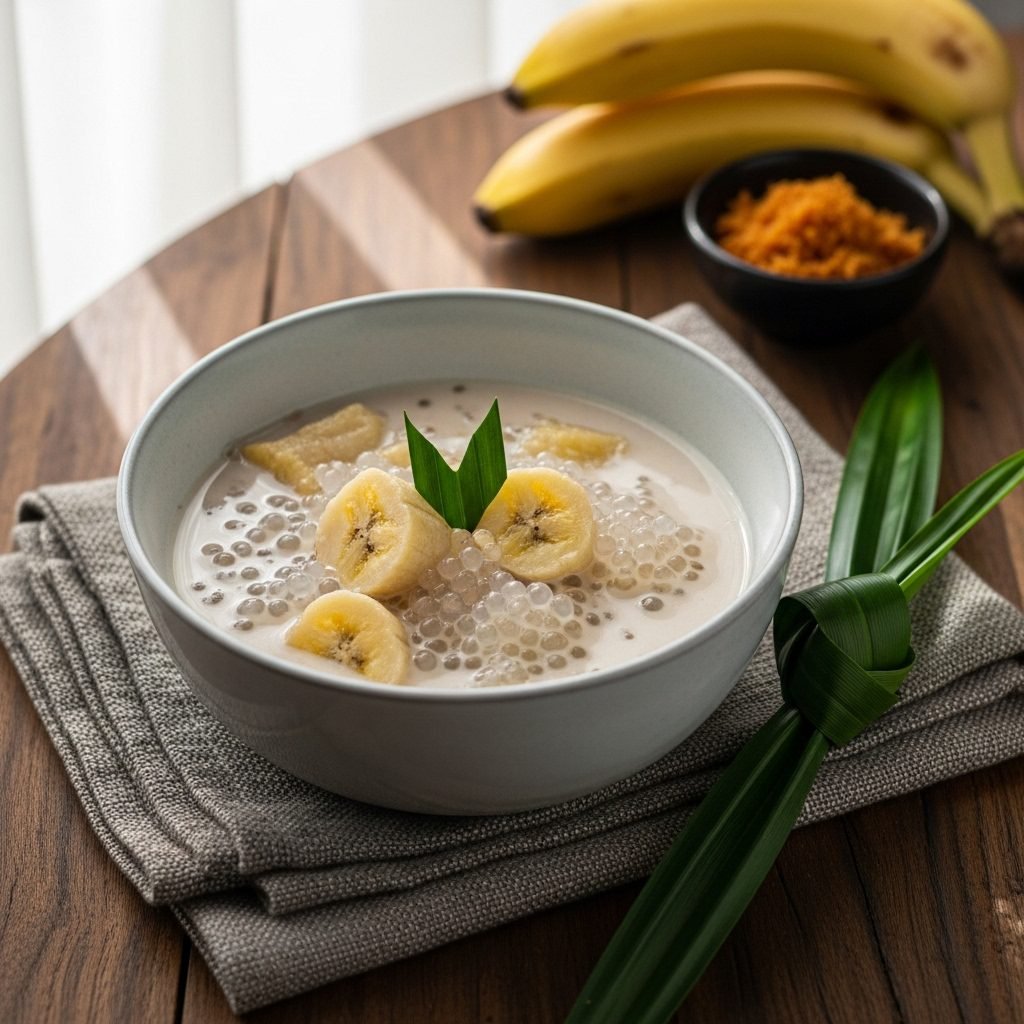
Get ready to fall in love with Pengat Pisang, a dreamy and comforting Malaysian dessert soup. Imagine sweet, tender bananas swimming in a luscious, fragrant coconut milk broth, sweetened with rich palm sugar and studded with chewy sago pearls. It’s a tropical hug in a bowl that comes together in under 30 minutes!
10 minutes
15 minutes
25 minutes
4-6 servings
Dessert
Stovetop
Malaysian
Vegan
Why You’ll Love This Recipe
- Ready in just 25 minutes
- Naturally vegan and gluten-free
- Creamy, fragrant, and incredibly comforting
- Uses simple, accessible ingredients
Equipment You’ll Need
- Medium saucepan or pot
- Cutting board
- Knife
- Measuring cups and spoons
- Small bowl (for soaking sago)
- Fine-mesh sieve
- Ladle
Ingredients
- 1/4 cup small sago pearls (or small tapioca pearls)
- 1 can (13.5 oz) full-fat coconut milk
- 1 cup water
- 1/2 cup shaved palm sugar (gula melaka), or substitute with dark brown sugar, packed
- 2 pandan leaves, tied into a knot
- 1/4 teaspoon salt
- 4 large, ripe bananas (plantains or firm Cavendish bananas work best), peeled and sliced 1-inch thick
Instructions
- First, prepare the sago. Place the sago pearls in a small bowl and cover them with water. Let them soak for about 10 minutes while you prepare the other ingredients. After soaking, drain them through a fine-mesh sieve.
- In a medium saucepan, combine the full-fat coconut milk, 1 cup of water, shaved palm sugar, knotted pandan leaves, and salt. Place the pot over medium heat.
- Stir the mixture gently and continuously until the palm sugar has completely dissolved. Allow the liquid to come to a gentle simmer, but do not let it come to a rolling boil, as this can cause the coconut milk to separate or curdle.
- Once the coconut broth is simmering gently, add the drained sago pearls. Continue to simmer, stirring occasionally, for about 8-10 minutes. The sago pearls are ready when they have become mostly translucent.
- Now, gently add the sliced bananas to the pot. Reduce the heat to low and let the bananas cook for just 2-3 minutes, or until they are heated through and slightly softened but still hold their shape. Be careful not to overcook them, or they will become mushy.
- Turn off the heat and remove the knotted pandan leaves. Give the Pengat Pisang one last gentle stir.
- Ladle the warm dessert into individual bowls. Serve immediately and enjoy the creamy, tropical goodness.
Expert Cooking Tips
- For the richest flavor, use very ripe bananas. The ones with plenty of brown spots on the peel are perfect as they are naturally sweeter and more aromatic.
- Toasting the pandan leaf over an open flame for a few seconds before tying it into a knot will release its fragrant oils, making your dessert even more aromatic.
- Always cook coconut milk on a gentle simmer. A hard, rolling boil can cause the fats and liquids to separate, resulting in a grainy texture.
- Stir the pot occasionally after adding the sago pearls to prevent them from clumping together and sticking to the bottom of the pot.
Substitutions and Variations
You can use different types of bananas, but firm, sweet varieties like plantains, Saba, or even slightly-less-ripe Cavendish work best to hold their shape. If you can’t find palm sugar (gula melaka), dark brown sugar or coconut sugar are excellent substitutes, offering a similar caramel-like depth. No fresh pandan leaves? Use 1/2 teaspoon of pandan extract, but add it at the very end of cooking for the best flavor. Small tapioca pearls are a perfect substitute for sago pearls.
Common Mistakes to Avoid
The most common mistake is boiling the coconut milk too vigorously, which causes it to curdle and become grainy. Maintain a gentle simmer throughout the cooking process. Another pitfall is overcooking the bananas; they should be tender but not falling apart. Add them in the last few minutes of cooking. Finally, don’t skip rinsing the sago pearls after soaking, as this removes excess starch and helps prevent the dessert from becoming overly thick or gluey.
Serving Suggestions
Pengat Pisang is absolutely divine served warm, fresh off the stove, in individual bowls. For a little extra texture and flavor, you can garnish it with a sprinkle of toasted shredded coconut or a few toasted sesame seeds. While traditionally a warm dessert, it can also be enjoyed chilled. Let it cool to room temperature before refrigerating for a few hours for a refreshing treat on a hot day.
Storage and Reheating Tips
Store any leftover Pengat Pisang in an airtight container in the refrigerator for up to 3 days. The dessert will thicken considerably as it cools due to the sago pearls. To reheat, gently warm it in a saucepan over low heat, adding a splash of water or coconut milk to thin it back to its original consistency. Avoid reheating in the microwave, as it can make the bananas mushy.
Nutrition Facts (Estimated)
| Serving Size | 1 serving (approx. 1 cup) |
| Calories | 380 kcal |
| Fat | 22 g |
| Saturated Fat | 19 g |
| Unsaturated Fat | 1.5 g |
| Trans Fat | 0 g |
| Cholesterol | 0 mg |
| Sodium | 150 mg |
| Carbohydrates | 45 g |
| Fiber | 3 g |
| Sugar | 28 g |
| Protein | 4 g |
Frequently Asked Questions
What are the best bananas for Pengat Pisang?
Traditionally, varieties like ‘Pisang Raja’ or ‘Pisang Tanduk’ (a type of plantain) are used in Malaysia. In the US, the best accessible options are ripe plantains or firm Cavendish bananas that aren’t overly ripe, as they hold their shape well during cooking.
Where can I find palm sugar and pandan leaves?
You can typically find palm sugar (often sold in cylinders or discs labeled ‘gula melaka’) and fresh or frozen pandan leaves at most Asian grocery stores. If you can’t find fresh pandan, frozen is the next best thing, followed by pandan extract as a last resort.
Why did my coconut milk curdle?
Coconut milk can separate or curdle if it’s boiled too rapidly or for too long. To prevent this, always cook it over medium-low to medium heat and maintain a gentle simmer. Stirring gently and avoiding drastic temperature changes also helps keep it smooth and creamy.
Can I make this dessert ahead of time?
Yes, you can make it a day ahead. However, it will thicken significantly in the fridge. You’ll need to reheat it gently on the stovetop and stir in a little extra water or coconut milk to loosen it up to your desired consistency before serving.
Conclusion
This Creamy Coconut Banana Porridge is more than just a dessert; it’s a comforting experience that transports you to a tropical paradise with every spoonful. It’s the perfect sweet treat for a cozy evening in or a unique dessert to share with friends and family. If you try this recipe, I’d love to see it! Tag me in your photos and share your creation on Pinterest and Instagram!