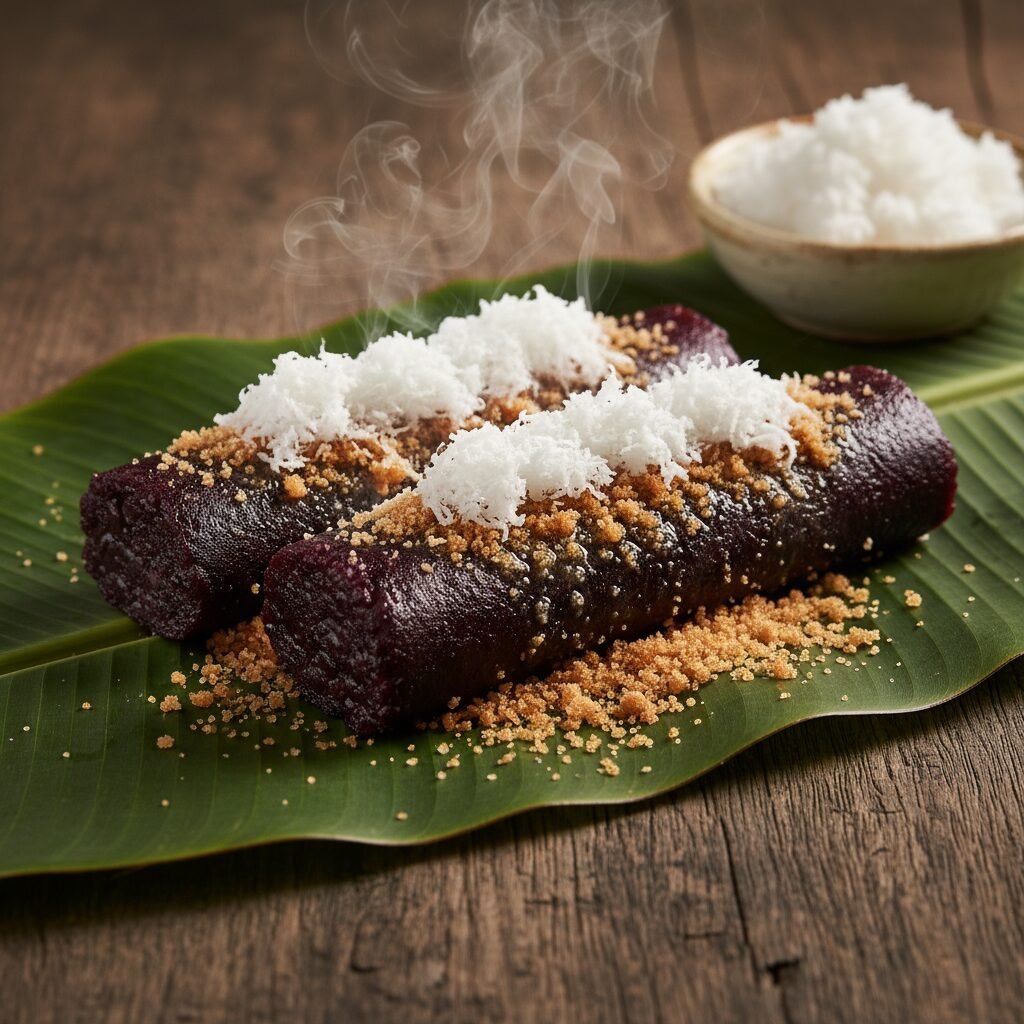
Heavenly Chewy Purple Rice Cakes (Puto Bumbong)
Puto Bumbong Recipe
Transport your kitchen to the festive streets of the Philippines with this incredible Puto Bumbong recipe! These vibrant purple rice cakes are steamed to chewy perfection inside bamboo tubes, then slathered in butter and topped with sweet coconut and muscovado sugar. It’s a beloved holiday treat that tastes like pure comfort and nostalgia, and now you can make it right at home.
20 minutes (plus overnight soaking)
15 minutes
35 minutes (plus overnight soaking)
12-15 pieces
Dessert
Steaming
Filipino
Gluten-Free
Why You’ll Love This Recipe
- Authentic Filipino holiday flavor
- Irresistibly soft, chewy, and sticky texture
- Naturally gluten-free and endlessly delicious
- A step-by-step guide to mastering a classic
Equipment You’ll Need
- Puto Bumbong steamer (or a standard steamer pot with a rack)
- Bamboo tubes (or a DIY alternative using foil)
- Blender or food processor
- Large bowl for soaking
- Fine-mesh sieve or colander
- Cheesecloth or muslin cloth
- Spatula
Ingredients
- 1 cup pirurutong (black glutinous rice)
- 1 cup white glutinous rice (malagkit)
- Water, for soaking
- 1/4 teaspoon salt
- 1 teaspoon ube extract or purple food coloring (optional, for a more vibrant color)
- For Topping:
- 1/4 cup salted butter, melted
- 1 cup freshly grated coconut
- 1/2 cup muscovado sugar (or dark brown sugar)
Instructions
- First, prepare the rice. In a large bowl, combine the black and white glutinous rice. Cover generously with water and let it soak overnight, or for at least 8 hours. This step is crucial for achieving the perfect soft and chewy texture.
- The next day, drain the rice thoroughly using a fine-mesh sieve. Do not rinse. Spread the soaked rice on a tray for about 30 minutes to an hour to allow excess surface water to evaporate.
- Transfer the drained rice to a high-powered blender or food processor. Pulse in short bursts until you have a coarse, flour-like consistency, similar to damp sand. Be careful not to over-process it into a paste.
- Place the ground rice mixture into a clean bowl. Add the salt and the optional ube extract or food coloring. Use your hands to mix everything together until the color is evenly distributed and the mixture is uniform.
- Prepare your steamer. If using a traditional puto bumbong steamer, fill the base with water and bring it to a rolling boil. If using a standard steamer, fill the pot with a few inches of water and bring to a boil.
- Grease the inside of your bamboo tubes (or DIY foil tubes) lightly with butter or oil to prevent sticking. This will make it much easier to release the cooked cakes later.
- Loosely fill each bamboo tube with the ground rice mixture. Do not pack it down! Packing it too tightly will result in dense, hard rice cakes instead of light and chewy ones. Fill them up to the top.
- Place the filled tubes onto the steamer vents. Steam for about 5 to 7 minutes per batch, or until steam billows out of the top of the tubes. The color will also intensify, and the rice cake will look solid.
- Carefully remove the hot tubes from the steamer using tongs. Gently tap one end of the tube on a plate or banana leaf to release the cooked puto bumbong. It should slide out in a cylindrical log.
- Immediately brush the hot puto bumbong generously with melted butter. This not only adds amazing flavor but also keeps them from drying out.
- To serve, sprinkle the buttered rice cakes with a generous amount of muscovado sugar and top with a fluffy pile of freshly grated coconut.
- Repeat the steaming process with the remaining rice mixture. Serve immediately while warm for the best experience.
Expert Cooking Tips
- The overnight soak is non-negotiable! It hydrates the rice grains properly, which is the key to that signature chewy texture. Rushing this step will result in a gritty, hard puto.
- If you don’t have a traditional steamer, you can create a makeshift one. Use a standard pot with a steamer rack. Form tubes using heavy-duty aluminum foil wrapped around a dowel, and poke holes in the bottom of the foil tubes to let steam pass through.
- The consistency of your ground rice mixture is vital. It should feel like damp sand and hold its shape when squeezed but crumble easily. If it’s too wet, the puto will be mushy; if too dry, it will be crumbly.
- For the best flavor, use freshly grated coconut. You can find it in the frozen section of most Asian markets. If you must use desiccated coconut, rehydrate it by soaking it in a little warm water or coconut milk for 15 minutes before using.
Substitutions and Variations
If you can’t find pirurutong (black glutinous rice), you can use 2 cups of white glutinous rice instead. In this case, you’ll definitely want to add ube extract or purple food coloring to achieve the iconic color. For the toppings, dark brown sugar is a great substitute for muscovado sugar. Margarine can be used in place of butter for a dairy-free option, though the flavor will be slightly different. Unsweetened desiccated coconut can work if fresh isn’t available; just be sure to rehydrate it first.
Common Mistakes to Avoid
The most common mistake is not soaking the rice long enough, which leads to a hard, unpleasant texture. Another frequent error is packing the rice mixture too tightly into the bamboo tubes. This prevents the steam from circulating properly, resulting in a dense, heavy cake instead of a light and chewy one. Finally, avoid under-steaming; if the center is still powdery or raw, it needs more time. The color should be a deep, uniform purple when fully cooked.
Serving Suggestions
Puto bumbong is traditionally served hot and fresh, right off the steamer. It’s a quintessential part of the Filipino Christmas season, often enjoyed after early morning mass. For the perfect pairing, serve it with a cup of hot salabat (ginger tea) or a rich, thick tsokolate (Filipino hot chocolate) to cut through the sweetness and complement the cozy flavors.
Storage and Reheating Tips
These purple rice cakes are best enjoyed immediately after cooking for the ultimate soft and chewy texture. If you have leftovers, store them in an airtight container at room temperature for up to one day. Store the toppings (coconut and sugar) separately. To reheat, steam the puto bumbong for 1-2 minutes until soft and warm again before adding the toppings.
Nutrition Facts (Estimated)
| Serving Size | 2 pieces |
| Calories | 215 kcal |
| Fat | 8 g |
| Saturated Fat | 5 g |
| Unsaturated Fat | 3 g |
| Trans Fat | 0 g |
| Cholesterol | 15 mg |
| Sodium | 35 mg |
| Carbohydrates | 33 g |
| Fiber | 2 g |
| Sugar | 14 g |
| Protein | 3 g |
Frequently Asked Questions
Do I absolutely need a special puto bumbong steamer and bamboo tubes?
No, you don’t! While traditional tools are great, you can easily make it with a standard steamer pot. You can create makeshift tubes by wrapping heavy-duty aluminum foil around a thick dowel or the handle of a wooden spoon to form a cylinder. Crimp one end shut, leaving the top open, and poke a few holes in the bottom to allow steam to enter.
Can I use regular rice instead of glutinous rice?
Unfortunately, no. This recipe relies on the high starch content of glutinous rice (also called sticky rice or malagkit) to achieve its characteristic chewy, sticky texture. Using regular rice varieties like jasmine or basmati will result in a crumbly, dry product that won’t hold together.
Why did my puto bumbong turn out hard and dry?
This usually happens for a few reasons. The most likely cause is that the rice wasn’t soaked long enough (at least 8 hours is essential). Another reason could be packing the rice mixture too tightly into the steamer tubes, which prevents proper cooking. Lastly, it might have been over-steamed, causing it to dry out.
Where can I find pirurutong or black glutinous rice?
You can typically find pirurutong at well-stocked Asian grocery stores, especially those that specialize in Filipino products. If you can’t find it locally, it’s also available from various online retailers.
Conclusion
There’s something truly magical about the aroma of puto bumbong steaming in the kitchen. It’s more than just a dessert; it’s a taste of celebration, tradition, and warmth. I hope you love making this classic Filipino treat as much as my family does. If you try this recipe, I’d be thrilled to see your creations! Snap a photo and share it on Pinterest or Instagram—don’t forget to tag me!