Creamy Venezuelan Quesillo: The Ultimate Caramel Flan Dream
Quesillo Recipe
Get ready to fall in love with the silkiest, most decadent dessert you’ve ever made! This Venezuelan Quesillo is a dreamy, creamy custard baked to perfection, then drenched in a rich, homemade caramel sauce. It’s a show-stopping treat made with just a handful of simple ingredients that will have everyone asking for the recipe.
20 minutes
1 hour 15 minutes
1 hour 35 minutes (plus 4 hours chilling time)
8-10 servings
Dessert
Baking
Venezuelan
Gluten-Free
Why You’ll Love This Recipe
- Incredibly smooth, rich, and creamy texture
- Deep, luscious homemade caramel sauce
- Made with just 6 simple pantry staples
- A stunning, impressive dessert for any occasion
Equipment You’ll Need
- 8-inch round cake pan or flan mold (quesillera)
- Heavy-bottomed saucepan
- Blender
- Large roasting pan (for the water bath)
- Aluminum foil
- Oven mitts
- Fine-mesh sieve
Ingredients
- For the Caramel:
- 1 cup granulated sugar
- 1/4 cup water
- For the Custard:
- 1 (14-ounce) can sweetened condensed milk
- 1 (12-ounce) can evaporated milk
- 5 large eggs, at room temperature
- 1 tablespoon pure vanilla extract
- 1 tablespoon dark rum (optional)
- 1/8 teaspoon salt
Instructions
- Preheat your oven to 350°F (175°C). Have your 8-inch round cake pan ready.
- Make the caramel: In a heavy-bottomed saucepan over medium heat, combine the 1 cup of sugar and 1/4 cup of water. Swirl the pan gently as the sugar dissolves and begins to bubble. Do not stir. Continue to cook, swirling occasionally, until the mixture turns a beautiful deep amber color, like honey. This can take 5-8 minutes—watch it closely as it can burn quickly!
- Immediately pour the hot caramel into the cake pan. Quickly and carefully tilt the pan to coat the bottom and about an inch up the sides. The caramel will harden almost instantly. Set the pan aside.
- Prepare the custard: In a blender, combine the sweetened condensed milk, evaporated milk, room temperature eggs, vanilla extract, optional rum, and salt. Blend on medium speed for about 30-45 seconds, or just until the mixture is smooth and homogenous. Don’t over-blend, as this can create too many air bubbles.
- Pour the custard mixture through a fine-mesh sieve directly into the caramel-coated pan. This step ensures an extra-silky final product.
- Create the water bath (baño de María): Place the filled pan inside a larger roasting pan. Carefully pour hot water into the larger pan until it comes halfway up the sides of the cake pan. Be careful not to splash any water into the custard.
- Cover the cake pan tightly with aluminum foil. This traps the steam and helps the quesillo cook gently.
- Bake for 1 hour to 1 hour and 15 minutes. The quesillo is done when the edges are set and the center is still slightly jiggly, like gelatin. You can test it by inserting a knife near the center; it should come out mostly clean.
- Carefully remove the roasting pan from the oven. Let the quesillo cool in the water bath for about 30 minutes. Then, remove it from the water bath, take off the foil, and let it cool completely on a wire rack to room temperature.
- Once at room temperature, cover the pan with plastic wrap and transfer it to the refrigerator. Chill for at least 4 hours, but preferably overnight. This step is crucial for the custard to set fully.
- To serve, run a thin knife around the edge of the pan to loosen the quesillo. Place a large serving platter with a rim over the pan. In one swift, confident motion, flip the pan and platter together. The quesillo should release, and the glorious caramel sauce will pour over the top. Serve chilled and enjoy!
Expert Cooking Tips
- Don’t stir the caramel! To avoid crystallization, gently swirl the pan instead. This helps the sugar cook evenly without forming grainy clumps.
- Room temperature ingredients are key. Using room temperature eggs and milk helps them blend more evenly, resulting in a smoother, more uniform custard without any curdling.
- The water bath is essential. It provides gentle, even heat that steams the custard, preventing it from cracking or becoming rubbery. Don’t skip it!
- For a bubble-free surface, after blending the custard, let it sit for a few minutes to allow the bubbles to rise, then skim them off with a spoon before pouring into the pan.
Substitutions and Variations
For an alcohol-free version, you can simply omit the rum. To add a different flavor note, consider adding a teaspoon of orange or lime zest to the custard mix. While the classic recipe relies on dairy, you could experiment with full-fat canned coconut milk and sweetened condensed coconut milk for a dairy-free version, though this will alter the traditional taste and texture.
Common Mistakes to Avoid
The three most common mistakes are: 1) Burning the caramel—it goes from perfect amber to burnt in seconds, so don’t walk away from the stove. 2) Over-baking the quesillo, which results in a tough, rubbery texture; remember to pull it from the oven when it still has a slight jiggle in the center. 3) Not chilling it long enough—the chill time is critical for the custard to set properly for that perfect slice, so be patient!
Serving Suggestions
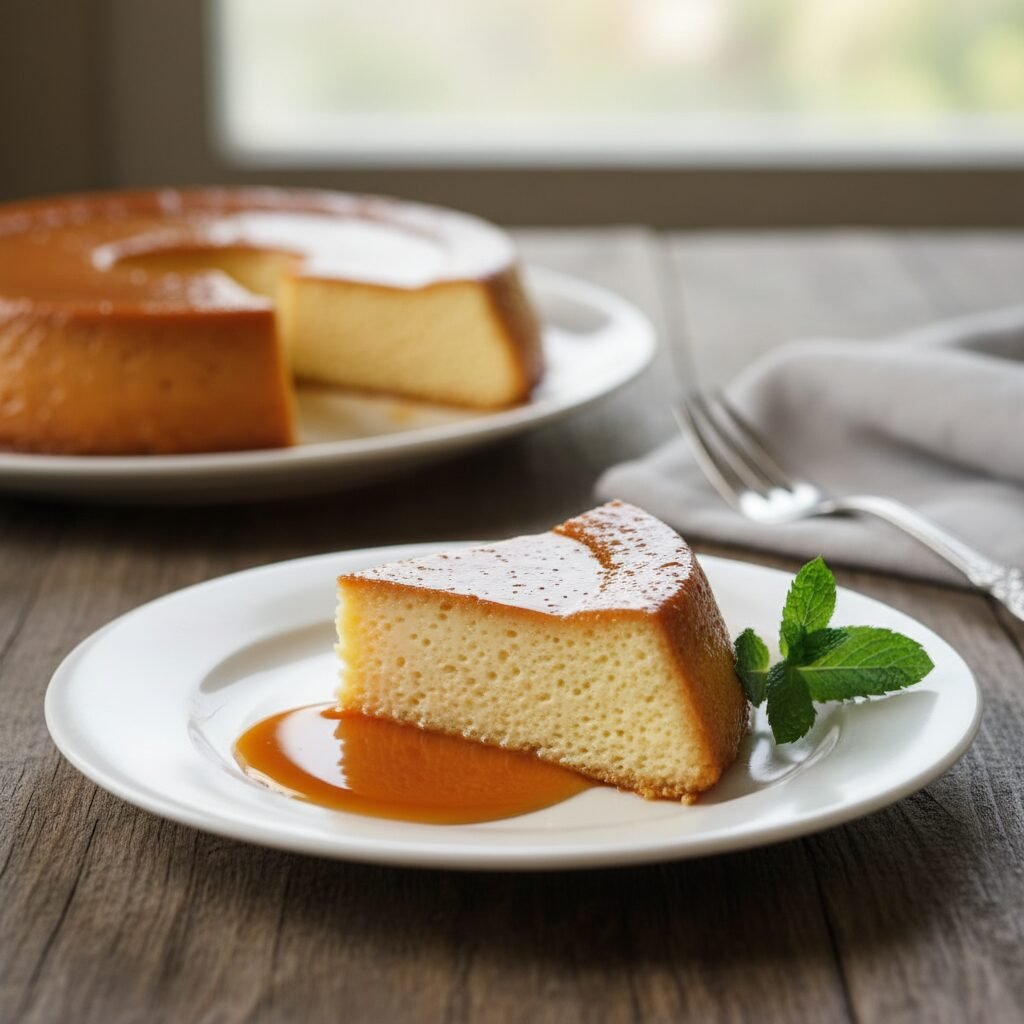
Serve slices of this beautiful quesillo chilled, allowing the liquid caramel to pool on the plate. It’s a star on its own, but a few fresh raspberries or a sprig of mint can add a lovely pop of color. For a truly decadent experience, pair it with a small cup of strong black coffee or espresso to cut through the sweetness.
Storage and Reheating Tips
Leftover quesillo can be stored in the refrigerator, tightly covered with plastic wrap, for up to 4 days. The caramel sauce will help keep it moist. Freezing is not recommended, as it will ruin the delicate, silky texture of the custard upon thawing.
Nutrition Facts (Estimated)
| Serving Size | 1 slice |
| Calories | 320 kcal |
| Fat | 12 g |
| Saturated Fat | 7 g |
| Unsaturated Fat | 4 g |
| Trans Fat | 0 g |
| Cholesterol | 180 mg |
| Sodium | 150 mg |
| Carbohydrates | 48 g |
| Fiber | 0 g |
| Sugar | 45 g |
| Protein | 7 g |
Frequently Asked Questions
Why does my quesillo have tiny holes? Did I do something wrong?
Not at all! Those characteristic tiny holes are actually what distinguishes Venezuelan Quesillo from a classic flan. The name ‘quesillo’ means ‘little cheese,’ referring to this unique, slightly porous texture. It’s a sign you made it authentically!
My caramel hardened into a rock in the pan. Is it ruined?
Nope, that’s exactly what’s supposed to happen! The hot caramel seizes when it hits the cooler pan. As the quesillo bakes in the water bath, the heat and moisture will magically re-melt the caramel into a perfect liquid sauce that will cascade over the top when you flip it.
What’s the difference between Quesillo and Mexican Flan?
They’re close cousins! The main difference lies in the ingredients and resulting texture. Quesillo is typically made with whole eggs and has a firmer, denser, and slightly bubbly texture. Mexican flan often uses more egg yolks and sometimes cream cheese, which gives it an ultra-smooth, richer, and creamier consistency.
Can I make this recipe without a blender?
Yes, you can. In a large bowl, use a whisk to combine the custard ingredients. Be sure to whisk vigorously for a couple of minutes until the mixture is completely smooth with no streaks of egg. For the best texture, always strain the mixture through a fine-mesh sieve before pouring it into the pan.
Conclusion
There you have it—a slice of Venezuelan heaven that’s as fun to make as it is to eat. That magical moment when you invert the pan and a river of golden caramel cascades over the silky custard is pure dessert drama. I promise, once you try this creamy, dreamy Quesillo, it’ll become a staple for special occasions and quiet weeknights alike. If you make this recipe, I’d love to see it! Tag me on social media and share your beautiful creations on Pinterest!