That Glorious, Rum-Soaked, Fruit-Filled Cake: A Classic Savarin Recipe
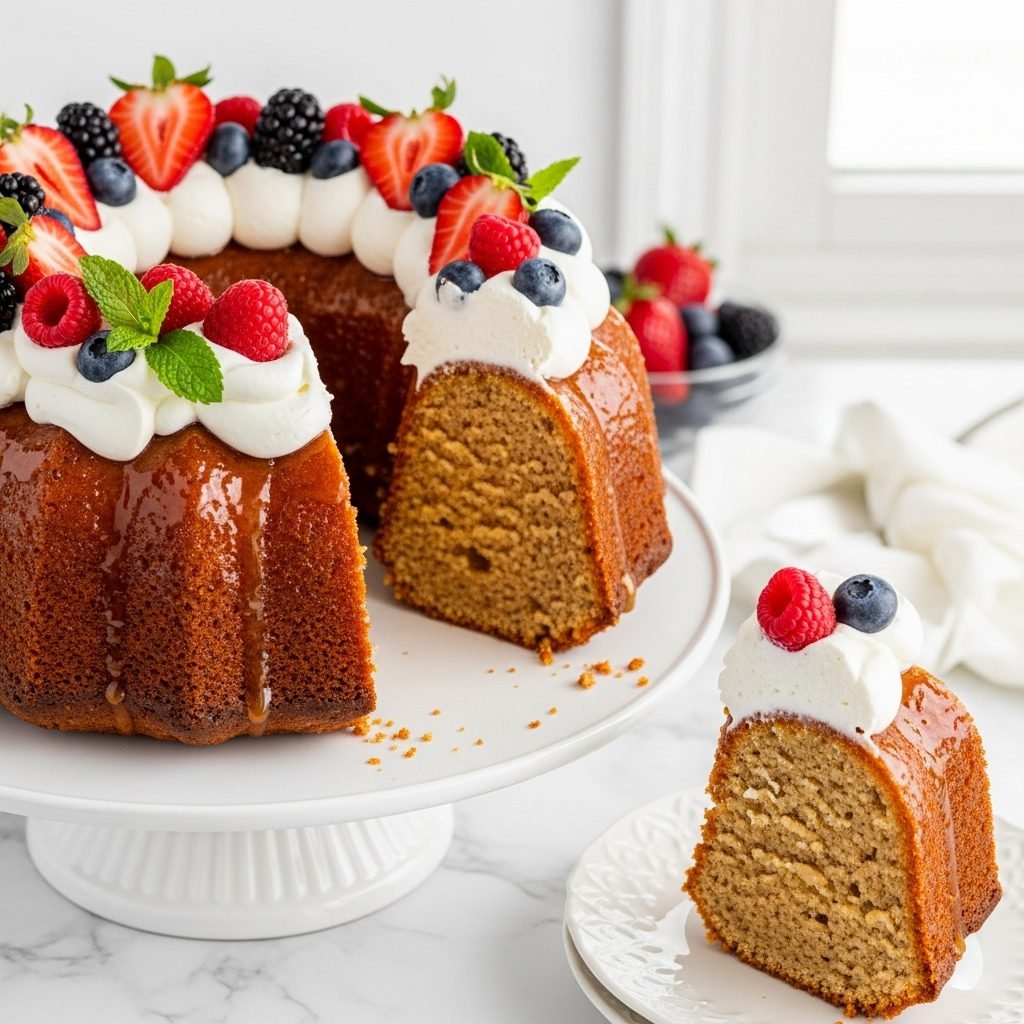
If you’ve ever pressed your nose against the glass of a high-end French pâtisserie, you’ve seen it: a beautiful, glistening, ring-shaped cake, with a cloud of cream and a pile of jewels—I mean, fruit—in the center.
That, my friends, is a Savarin. And it is a true showstopper.
At first glance, it looks like a simple Bundt cake. But a Savarin is a whole different, magical experience. It’s not really a “cake” at all; it’s a light, tender, yeasted bread. It’s a cousin to the rich, buttery brioche, but even lighter.
The magic happens after the bake. The plain, golden ring is completely transformed when it’s drenched, and I mean drenched, in a warm, fragrant syrup of rum, vanilla, and sugar. The bread soaks it all up like a sponge, becoming impossibly moist, tender, and luxurious.
This is a “project bake,” and it’s one of my all-time favorites for a special occasion. It takes an afternoon, but not a single step is “hard.” It’s just a process. When you bring this to the table, and your guests take a bite, they will be absolutely stunned. It’s a taste of pure, old-world elegance.
Why You’ll Fall for This Recipe
- The Flavor: This is all about balance. The bread itself is just lightly sweet and buttery. The syrup is warm, fragrant, and boozy (in the best way). This is all cut by a cloud of unsweetened whipped cream and the bright, tart pop of fresh berries.
- The Texture: This is the best part. The crumb is soft, open, and spongy. When it’s soaked, it becomes meltingly tender, moist, and juicy, but it doesn’t fall apart. It’s a texture you just can’t get from a regular cake.
- The Time: This is a yeasted bread, so patience is key. It’s not a 30-minute dessert. You’ll need about 45 minutes of active time, but the real “work” is in the waiting—about 2 hours of total rising time, plus baking and soaking.
- The “Wow” Factor: This is an “intermediate” bake, but only because it has multiple steps. The final presentation is a 10/10. It’s the ultimate make-ahead dessert for a dinner party.
What You’ll Need
This recipe is built in three glorious parts. Don’t let the list scare you!
For the Savarin Dough (The “Sponge”):
- 1/2 cup whole milk, warmed (about 105-115°F, just like a warm bath)
- 1 packet (1/4 oz) active dry yeast
- 1 tbsp granulated sugar
- 2 1/2 cups (300g) all-purpose flour
- 1/4 cup (50g) granulated sugar
- 1 tsp salt
- 3 large eggs, at room temperature
- 6 tbsp (3/4 stick) unsalted butter, very soft, at room temperature
For the Rum Soaking Syrup:
- 2 cups (480ml) water
- 1 cup (200g) granulated sugar
- 1/2 cup (120ml) dark rum (See notes for substitutions)
- 1 vanilla bean, split (or 1 tbsp vanilla extract)
For the Topping & Filling:
- 1/2 cup apricot jam
- 1 tbsp water or rum
- 2 cups (480ml) cold heavy whipping cream
- 2 cups mixed fresh berries (strawberries, raspberries, blueberries, blackberries)
- Fresh mint sprigs, for garnish (optional)
How to Make a Savarin, Step by Step
This is a labor of love. Let’s take it one part at a time. A stand mixer is highly recommended here.
Part 1: Make the Savarin Dough
- Activate the Yeast: In the bowl of your stand mixer, add the warm milk, 1 tbsp of sugar, and the packet of yeast. Give it a gentle whisk and let it sit for 5-10 minutes. It should become foamy and bubbly. (If it doesn’t, your yeast is no good, and you’ll need to start over!)
- Mix the Batter: Fit your mixer with the paddle attachment (not the dough hook!). Add the all-purpose flour, the remaining 1/4 cup of sugar, and the salt to the yeast mixture.
- Add Eggs: Turn the mixer on low and add the eggs, one at a time, beating well after each.
- Beat the Batter: Once the eggs are in, turn the mixer up to medium speed and beat for 3-4 minutes. The “dough” will be a very wet, sticky, elastic batter. This is correct! It’s not a knead-able dough.
- Add Soft Butter: With the mixer on low, add your very soft butter, one tablespoon at a time, letting it incorporate before adding the next.
- Final Beat: Once all the butter is in, turn the mixer to medium and beat for 5 more minutes. The batter should be smooth, glossy, and very elastic.
Part 2: The First Rise (The “Bulk Ferment”)
- Scrape down the sides of the bowl. Cover the bowl with plastic wrap or a clean kitchen towel.
- Place it in a warm, draft-free spot in your kitchen (like an off oven with the light on) for 1 to 1.5 hours, or until the batter has doubled in size.
Part 3: The Second Rise (In the Pan)
- Prep Your Pan: This is crucial. You need a 10-cup (9- or 10-inch) Bundt pan or a traditional, smooth-sided Savarin ring mold. Generously grease every single nook and cranny of the pan with soft butter, then dust it with flour, tapping out the excess.
- Fill the Pan: Gently “punch down” the batter (it will deflate). Scrape the very sticky batter into your prepared pan. Use a spatula to spread it as evenly as you can.
- Rise Again: Cover the pan loosely with plastic wrap. Let it rise in that same warm spot for another 30-45 minutes, or until the batter has risen to about 1 inch below the rim of the pan.
- Preheat: While it’s rising, preheat your oven to 375°F (190°C).
Part 4: Bake the Savarin
- Bake the risen Savarin for 25-30 minutes. It’s done when it’s a deep, rich golden-brown and a wooden skewer inserted in the center comes out clean.
- Let the cake cool in the pan on a wire rack for 10 minutes. Then, confidently invert it onto the wire rack to cool.
Part 5: The Syrup & The Soak (The Magic!)
- Make the Syrup: While the Savarin is baking, make the syrup. In a medium saucepan, combine the water, sugar, and the split vanilla bean (scrape the seeds in!). Bring to a boil, stirring until the sugar is dissolved.
- Let it simmer for 5 minutes. Remove from the heat and let it cool for 10 minutes.
- Add Rum: Stir in the 1/2 cup of dark rum.
- The Soak: You should have your warm (not hot) cake on a wire rack, and the rack should be set over a large baking sheet (to catch the drips). Your syrup should also be warm (not hot).
- Soak Slowly: Using a pastry brush or a ladle, slowly and patiently drizzle the warm syrup all over the warm cake. Go slowly! Let the cake absorb it.
- Be Generous: Keep going until you’ve used at least 3/4 of the syrup. The cake should feel heavy and saturated. The syrup that dripped onto the baking sheet? Pour it back into your saucepan and drizzle it over the cake again.
- Let the cake sit and soak for at least 30 minutes.
Part 6: Glaze and Fill
- The Glaze: In a small bowl, microwave the 1/2 cup of apricot jam and 1 tbsp of water (or rum) for 20-30 seconds, until it’s hot and runny. Strain it through a small sieve to remove any lumps.
- Brush this hot, smooth glaze all over the outside of the soaked, cooled Savarin. This gives it that beautiful, professional, glistening shine.
- Chill: Carefully transfer the glazed cake to its serving platter. Let it chill in the fridge for at least 1 hour (or up to a day).
- Fill: Just before serving, make the whipped cream. Whip the 2 cups of cold heavy cream until it holds stiff peaks. (I don’t add sugar to it, as the cake is sweet enough, but you can add 2 tbsp of powdered sugar if you like).
- Spoon the whipped cream into the center hole of the cake. Pile it high!
- Garnish with all your fresh berries, piling them on the cream and around the base. Add a few mint sprigs.
My Top Tips for a Flawless Savarin
- Grease That Pan!: I cannot say this enough. A Bundt pan has many corners. Use soft butter and a pastry brush, then flour it well. A non-stick spray with flour also works.
- The “Batter-Dough”: Don’t be scared by the sticky batter. This is not a pizza dough. It’s a “batter-bread.” The stand mixer’s paddle attachment is your best friend; it develops the gluten without you ever having to touch the sticky mess.
- The Slow Soak: Do not dump the syrup on all at once. You’ll get a soggy bottom and a dry top. A slow, patient ladling and brushing is the secret. The cake should feel heavy and saturated when you’re done.
- Apricot Glaze is Key: Don’t skip this! It’s not just for looks. It seals the moist cake and adds a tiny, tart, fruity note that balances the rum.
Ingredient Swaps and Variations
- Non-Alcoholic Savarin: This is an easy swap! For the syrup, replace the 1/2 cup of rum with 1/2 cup of fresh orange juice or a tart apple cider. Add 1/2 tsp of almond extract or an extra 1 tsp of vanilla to make it feel special.
- The Liqueur: Dark rum is classic for “Baba au Rhum,” but a true Savarin was often made with Kirsch (cherry brandy) or Grand Marnier (orange). Feel free to swap!
- Individual Savarins: You can bake this batter in a well-greased muffin tin! They will bake faster (about 15-20 minutes). Soak them individually in the warm syrup.
Common Pitfalls (and How to Avoid Them)
- “My Cake is Stuck in the Pan!” The pan wasn’t greased and floured in every single crevice.
- “My Cake is Dry!” You were too shy with the syrup! This cake is meant to be soaked. Use all of it. Ladle the drippings back on top.
- “My Cake is a Soggy Mess!” You dumped the syrup on too fast. A slow, patient soak is the only way.
- “My Batter Didn’t Rise.” Your yeast was old, or your milk was too hot (it should be 105-115°F, no hotter!).
How to Serve and Store Your Masterpiece
- Serving: This is the centerpiece. Bring the whole, un-sliced, cream-filled ring to the table for the “wow” moment. Slice it into thick wedges with a sharp, serrated knife.
- It’s a “wet” cake, so it needs to be served on a plate with a fork. It’s lovely with a cup of strong coffee or espresso to cut the richness.
- Storage: This is the ultimate make-ahead dessert! Once you add the cream, it must be stored in the refrigerator. It will keep, covered, for 2-3 days. In my opinion, it’s even better on Day 2, when the syrup has had a full 24 hours to meld with the cake.
- Make-Ahead Plan:
- Day 1: Bake, soak, and glaze the Savarin. Wrap it without the cream and store in the fridge.
- Day 2 (Serving Day): Whip the cream, fill the center, and top with fruit just before serving.
Your Savarin Questions, Answered
What’s the difference between a Savarin and a Baba au Rhum? They are very close cousins! The batter is nearly identical. The main difference is the shape. A Savarin is always a large ring. A Baba is usually a small, individual, cork-shaped cake. Babas also sometimes have raisins in the dough, while Savarins almost never do.
Can I make this with a hand mixer? You can! It will be a workout. Use the standard beaters. The batter will be very thick and elastic, but it’s possible. A stand mixer just makes it a 10-minute, hands-off job.
Is it supposed to be this “boozy”? Yes! It’s a dessert for adults. The alcohol flavor is part of its charm and balances the sweetness. But if it’s not for you, the non-alcoholic version is just as delicious.
A True Taste of a French Pâtisserie
This is one of those bakes that feels like a real “accomplishment.” It’s a true labor of love, and it’s one of the most rewarding, impressive desserts you will ever make.
When you make that first slice, and you see that perfect, moist crumb, the cloud of cream, and the bright fruit… it’s just pure, old-world magic.
A Quick Summary
This classic Savarin recipe guides you through making a stunning, ring-shaped, yeasted cake. The light, brioche-like sponge is baked until golden, then completely saturated in a warm, fragrant rum-and-vanilla syrup. It’s finished with a shiny apricot glaze and a generous center-filling of fresh whipped cream and mixed berries.