“Little Sighs”: The Cloud-Like Lemon Meringue Cookies That Melt in Your Mouth (Suspiros)
Have you ever had one of those desserts that just seems to defy physics? That’s what these are. Suspiros, which means “sighs” in Portuguese, are the most charming, delicate, and cloud-like cookies you will ever make.
They are, quite simply, meringue kisses.
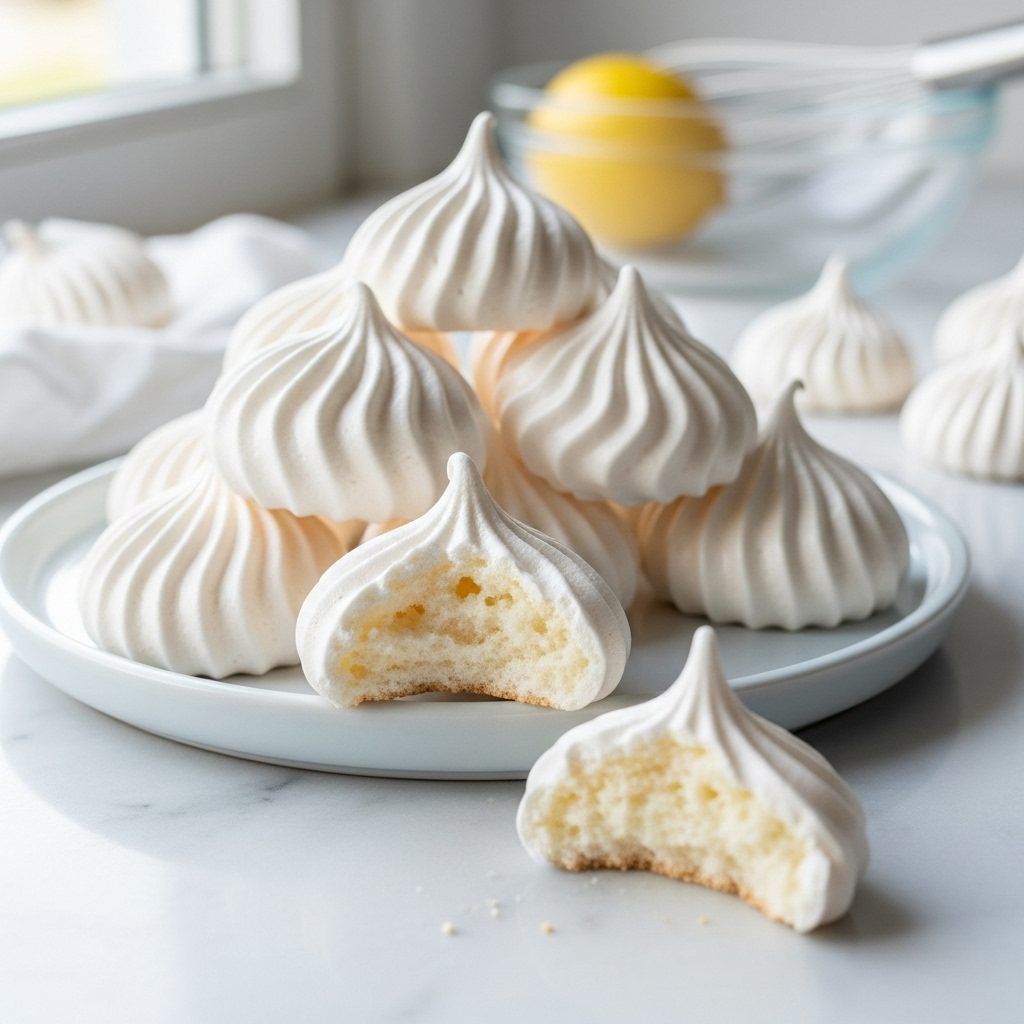
Biting into one is such a fun experience. You get a light, crisp, delicate shell that gives way to a center that’s soft, a little mallowy, and instantly starts to dissolve on your tongue. It’s like eating a sweet, sugary cloud.
I make these almost every time I have leftover egg whites from another recipe (like a custard or pastry cream). With just four main ingredients—egg whites, sugar, cream of tartar, and vanilla—you can create something that looks so elegant and impressive.
They’re a staple in Portuguese and Spanish bakeries, and they’re the kind of simple, old-world treat that feels both nostalgic and fancy. I add a little lemon zest to mine, which cuts the sweetness and makes them taste bright and fresh. They are a true delight and so much fun to make.
What Makes These Meringues So Special
- The Flavor: Pure, sweet vanilla with a bright, floral hit of fresh lemon. They taste clean and light.
- The Texture: This is the magic. An eggshell-thin, crisp exterior gives way to a soft, slightly chewy, mallowy center that just melts in your mouth.
- Difficulty: I’d call this easy, but technical. The ingredients are simple, but the method is what matters. Success is all about a clean bowl, patience, and a low, slow oven.
- What’s Special: They are naturally gluten-free and dairy-free! They look stunning on a dessert tray and you can make dozens from just a few egg whites.
What You’ll Need
You only need a few pantry staples for this. The most important thing on this list isn’t an ingredient, it’s a tool: a spotlessly clean, grease-free bowl.
- 3 large egg whites, at room temperature
- ¼ tsp cream of tartar (a stabilizer, don’t skip it!)
- A tiny pinch of salt
- ¾ cup (150g) superfine sugar (also called caster sugar)
- 1 tsp pure vanilla extract
- ½ tsp finely grated lemon zest (optional, but lovely)
A Note on Sugar: Superfine sugar is best because it dissolves easily, preventing a “gritty” meringue. If you only have regular granulated sugar, you can make your own! Just pulse 1 cup of regular sugar in a food processor or blender for 30-45 seconds until it’s much finer.
Let’s Make These “Little Sighs”
The whole process is about two things: building a stable meringue and then drying it out. You’ve got this.
Step 1: Get Your Oven and Pans Ready
- Preheat your oven to a very low 225°F (110°C). This is a “low and slow” bake.
- Line two large baking sheets with parchment paper. Do not grease the pans or the parchment.
- Set aside a large piping bag fitted with a star tip (like a Wilton 1M) or a large round tip.
Step 2: The “Spotlessly Clean Bowl” Rule
- This is the most important rule of meringue: any trace of fat or grease (from your fingers, a speck of egg yolk, or a poorly washed bowl) will stop your egg whites from whipping up.
- Take a large, clean glass or metal bowl. As a bit of insurance, I like to wipe the inside of the bowl and the whisk attachment with a paper towel dampened with a little white vinegar or lemon juice. Let it air dry.
Step 3: Start Whipping the Whites
- Place your room-temperature egg whites, cream of tartar, and pinch of salt in your spotlessly clean bowl.
- Using an electric mixer (handheld or stand mixer), start beating on low speed until the whites get foamy, like a bubble bath.
- Increase the speed to medium-high and continue beating until they form soft peaks (when you lift the whisk, a peak forms and then gently flops over).
Step 4: The Slow Sugar Shower
- This is the most patient part of the process. With the mixer still running on medium-high, begin adding the superfine sugar, one tablespoon at a time.
- Wait about 30 seconds between each addition to give the sugar time to dissolve before you add the next spoonful. This is the secret to a stable, glossy meringue.
- Don’t rush this! This whole process of adding sugar should take you a good 5-8 minutes.
Step 5: Whip to Stiff, Glossy Peaks
- Once all the sugar is in, turn the mixer speed up to high.
- Continue to beat for another 4-5 minutes. You’ll see the meringue transform. It will become incredibly thick, billowy, and brilliantly glossy.
- You’ll know it’s ready when it forms stiff peaks: when you lift the beaters, the peak that forms holds its shape completely. It might have a tiny curl at the very tip (like a bird’s beak), but it should stand up proudly.
- The Rub Test: Stop the mixer. Take a tiny bit of the meringue and rub it between your thumb and forefinger. It should feel completely smooth. If it feels gritty, the sugar hasn’t dissolved, so keep mixing for another minute or two and test again.
Step 6: Fold in Flavor
- Pour the vanilla extract and sprinkle the lemon zest over the meringue.
- Using a spatula, gently fold them in with just a few turns. You don’t want to deflate all that beautiful air you just whipped in.
Step 7: Pipe Your Suspiros
- Transfer your meringue to the prepared piping bag. (A good trick: place the bag, tip-down, in a tall drinking glass and fold the edges over the rim. This holds it open for you!)
- Pipe small, 1.5-inch “kisses” or swirls onto your parchment-lined baking sheets, leaving about 1 inch of space between them (they won’t spread much).
- If you don’t have a piping bag, you can just use two spoons to drop rustic, cloud-like dollops onto the parchment.
Step 8: The Low, Slow Bake (Drying Phase)
- Place the baking sheets in your preheated 225°F oven.
- Bake for 1 hour to 1 hour and 15 minutes. They should be firm, dry to the touch, and very pale. They shouldn’t be “browning” at all—if they are, your oven is too hot.
- The bottoms should peel off the parchment paper cleanly.
Step 9: The “No-Crack” Cool Down (Secret Step!)
- Turn the oven off.
- Crack the oven door open with a wooden spoon.
- Leave the meringues in the cooling oven for 1 more hour (or even longer).
- This slow, gentle cool-down is the key to preventing cracks and ensuring a crisp exterior.
Helpful Tips from My Kitchen
- Weather Matters! This is a real thing. Meringue is famously fickle. Sugar is “hygroscopic,” meaning it attracts water from the air. Try to make these on a dry, low-humidity day. On a rainy or humid day, they can absorb moisture and become sticky or chewy.
- Room Temperature Eggs: Cold eggs are easier to separate, but room-temperature eggs whip up with much more volume. Separate your eggs while they’re cold, then let the whites sit on the counter for 30 minutes.
- No Yolks Allowed: Not even a tiny speck. Egg yolk is a fat, and it will ruin your meringue. If you get a drop of yolk in your whites, it’s best to save that white for scrambled eggs and start over.
- Piping Bag Trick: To fill your piping bag without making a mess, place it tip-down in a tall glass and fold the top 3-4 inches of the bag down over the rim of the glass. It creates a wide, stable opening to spoon your meringue into.
Substitutions and Fun Variations
- Cream of Tartar Sub: If you don’t have it, you can stabilize the egg whites by adding 1 teaspoon of white vinegar or fresh lemon juice for every 3 egg whites. Add it in Step 3.
- Different Extracts: Swap the vanilla and lemon for 1 tsp of almond extract, 1 tsp of peppermint extract, or 1 tsp of rose water.
- Make Them Chocolate: Fold in 1-2 tablespoons of unsweetened cocoa powder (sifted!) along with the vanilla.
- Add Chocolate Chips: Gently fold in ½ cup of mini chocolate chips right at the end.
- Add Color: For colorful meringues, add a tiny drop of gel food coloring (gel is better than liquid) at the same time as the vanilla.
Common Meringue Mistakes (and How to Fix Them)
- “My Meringues are Sticky and Chewy.”
- Cause: This is almost always humidity or they were underbaked.
- Fix: You can’t fix the humidity, but if they’re just underdone, pop them back into a 225°F oven for 15-20 more minutes to dry out.
- “My Meringues are ‘Weeping’ (little sugar beads).”
- Cause: The sugar didn’t fully dissolve.
- Fix: Next time, add the sugar even more slowly. And always do the “rub test” between your fingers to make sure it’s smooth. Using superfine sugar really helps prevent this.
- “My Meringues Cracked!”
- Cause: The oven was too hot, or they cooled too quickly.
- Fix: Next time, double-check your oven temp (it might run hot!). And never skip the “cool in the oven with the door cracked” step.
- “My Egg Whites Won’t Get Stiff.”
- Cause: This is the big one. 99% of the time, it means a speck of fat (egg yolk) or grease (from the bowl or your hands) got into the whites.
- Fix: Unfortunately, there’s no fix for this. You have to start over with fresh whites and a spotlessly cleaned bowl.
- “My Meringues are Flat and Spread Out.”
- Cause: This could be grease (see above) or you over-mixed the meringue after adding the sugar, which started to deflate it.
- Fix: Once you hit stiff, glossy peaks, stop. Fold in your flavors gently and pipe immediately.
How to Serve and Store Your Suspiros
- Serving: These are a dream on their own with a cup of coffee or tea. They are also a classic component of an “Eton Mess”—casually crumble them over a bowl of fresh berries and whipped cream. You can also sandwich two of them together with lemon curd, chocolate ganache, or strawberry jam.
- Storage (Very Important!): Meringues are enemies of moisture. They must be stored in a completely airtight container at room temperature.
- Do NOT put them in the fridge! The refrigerator is a high-moisture environment, and they will turn into a sticky, weepy mess.
- Stored correctly, they will stay crisp and delicious for at least one week, and up to two.
Your Meringue Questions, Answered
- What can I do with all my leftover egg yolks? This is the best “problem” to have! You can make homemade mayonnaise, hollandaise sauce, a rich crème brûlée, pastry cream (for éclairs!), or my personal favorite, a batch of bright, tangy lemon curd (which is amazing with these meringues!).
- Can I use a sugar substitute like Stevia or Splenda? I would not recommend it for this recipe. In meringue, sugar is not just for sweetness; it is a critical structural ingredient. It’s what dissolves and creates the thick, stable, glossy foam.
- Can I freeze them? Yes! Meringues freeze beautifully. Place them in an airtight, freezer-safe container (they are fragile, so a container is better than a bag). They will last for up to 3 months. Let them thaw at room temperature for about an hour.
A Sweet, Simple Sigh
There is something so satisfying about making these. You take the humblest of ingredients and, with a little patience and air, turn them into these beautiful, ethereal little treats. They look so impressive on a cookie plate, and they’re so light you can almost convince yourself to have five of them.
I hope you’ll try them. They’re a fun, technical bake that’s a joy to master.
Recipe Summary
This recipe guides you through making light, airy, and crisp Portuguese meringue cookies, or Suspiros. Using just a few ingredients like egg whites and sugar, the detailed steps focus on the proper technique for achieving a stable, glossy meringue. The cookies are flavored with vanilla and fresh lemon zest, piped into small kisses, and baked “low and slow” to dry them out, resulting in a cookie that’s crisp on the outside and soft and mallowy on the inside.
Share Your Bake!
I would be so thrilled to see your beautiful, cloud-like Suspiros! If you make them, please tag me on social media [Your Social Handle Here] or leave a comment below. And if you loved this recipe, please Pin it to share with your friends!
Happy baking!