Flaky Tau Sar Piah: A Tender, Sweet-Savory Pastry You Can Bake at Home
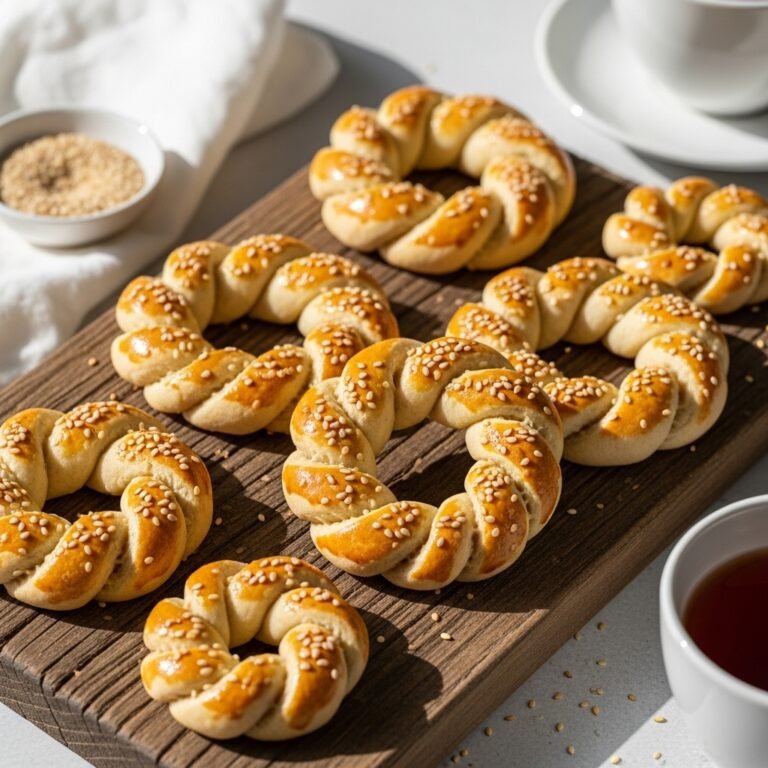
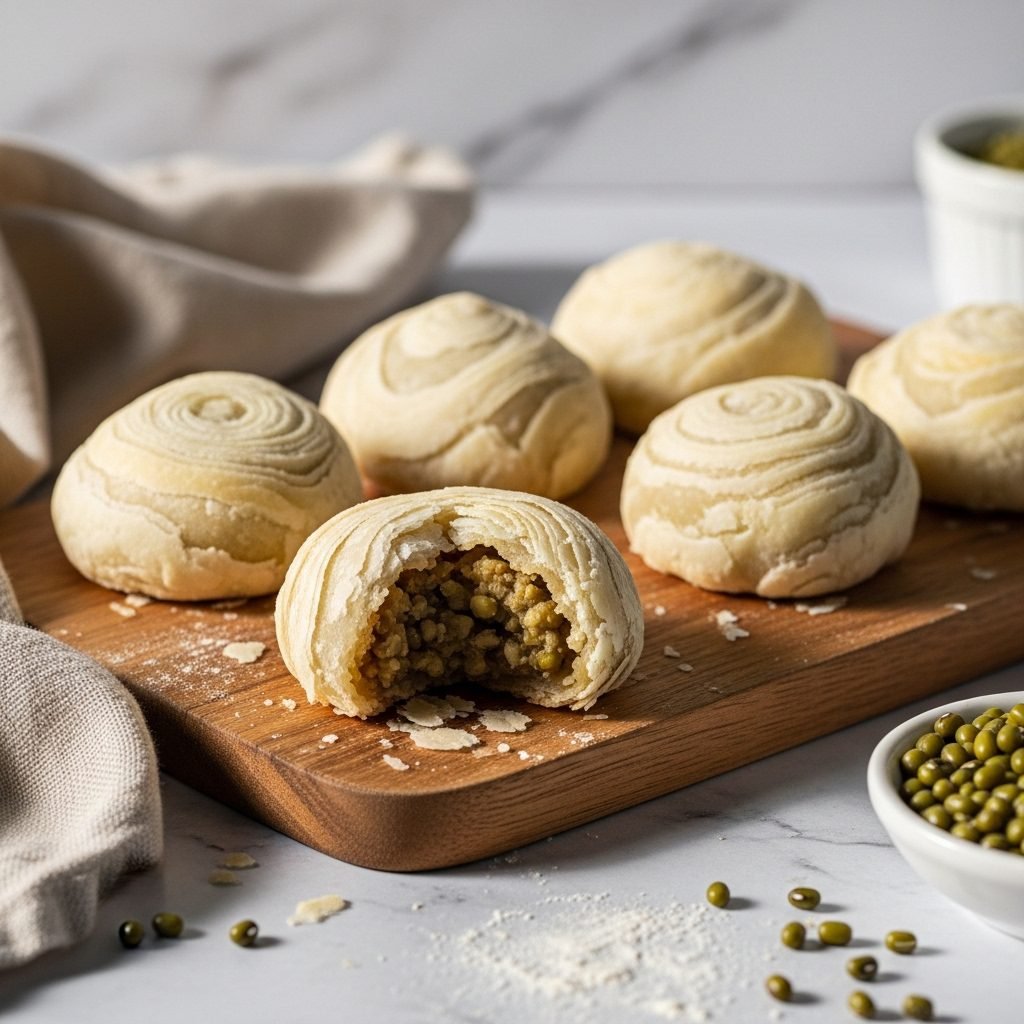
Tau Sar Piah is one of those nostalgic pastries that instantly brings to mind old-style bakeries and warm afternoons. These little round pastries have a wonderfully flaky exterior and a soft, sweet-salty mung bean filling inside. They’re delicate, comforting, and feel like something lovingly handmade.
If you’ve ever enjoyed Tau Sar Piah warm from a bakery box — the crumbly layers, the buttery aroma, the melt-in-your-mouth filling — this recipe brings that same experience right into your kitchen.
Why This Recipe Feels So Special
Tau Sar Piah has a unique charm: it’s lightly sweet, slightly savory, and beautifully flaky without being greasy. The mung bean filling is soft and fragrant, while the dough breaks into tender layers with every bite. It’s the kind of pastry you enjoy slowly with tea or pack into a gift box for friends.
This recipe keeps things approachable, using simple tools and easy-to-follow steps so even beginners can make these traditional pastries.
Highlights at a Glance
- Taste: Sweet-salty mung bean filling wrapped in buttery, flaky pastry.
- Texture: Crisp outside, tender layered interior.
- Time: About 1 hour 45 minutes.
- Difficulty: Beginner-friendly with simple shaping.
- What Makes It Special: A classic Asian bakery treat made with everyday ingredients.
Ingredients
For the Mung Bean Filling
- 1 cup split mung beans (soaked 2 hours)
- 1/4 cup sugar
- 1/4 tsp salt
- 2 tbsp oil
For the Dough (Oil Dough)
- 1 cup all-purpose flour
- 1/4 cup oil
For the Dough (Water Dough)
- 1 1/4 cups all-purpose flour
- 2 tbsp sugar
- 1/4 cup oil
- 1/3 cup water
- A pinch of salt
For Brushing
- 1 egg yolk
- Sesame seeds (optional)
Step-by-Step Instructions
- Prepare the filling: Drain soaked mung beans and steam for 20 minutes until soft. Mash while warm, then mix with sugar, salt, and oil. Shape into 12 small balls and set aside.
- Make the oil dough: Mix flour and oil until a soft dough forms. Cover and set aside.
- Make the water dough: Combine flour, sugar, salt, oil, and water. Knead for 2–3 minutes until smooth.
- Divide both doughs: Portion each dough into 12 equal pieces.
- Wrap the doughs: Wrap each oil dough ball with a water dough ball.
- Roll and fold: Flatten each ball, roll into a long oval, fold into thirds, and roll again. This creates the flaky layers.
- Shape: Flatten again and place a mung bean filling ball in the center. Wrap and pinch to seal, shaping into a round pastry.
- Egg wash: Brush tops with egg yolk and add sesame seeds if desired.
- Bake: Bake at 350°F for 22–25 minutes until lightly golden.
- Cool: Let cool slightly before serving.
Helpful Cooking Tips
- Steam the mung beans instead of boiling — it keeps the filling from becoming watery.
- Use warm beans when mashing for a smoother texture.
- Keep the oil dough soft — it helps the layers develop.
- Don’t over-knead the water dough; just enough to bring it together.
- Seal tightly so the filling doesn’t leak during baking.
Ingredient Substitutions & Dietary Options
- Oil: Use neutral oil, coconut oil, or melted butter.
- Sugar: Adjust to taste; these pastries work with more or less sweetness.
- Mung beans: Substitute with red bean paste, lotus paste, or black sesame paste.
- Egg wash: For vegan pastries, brush with coconut milk.
Common Mistakes to Avoid
- Skipping the fold: The roll-and-fold step creates the signature flaky layers.
- Overworking the dough: Can make the pastry tough.
- Wet filling: Ensure mung beans are steamed, not boiled.
- Baking too long: Leads to a dry, crumbly texture.
Serving Suggestions
- Enjoy with hot tea or coffee.
- Pack into tins as edible gifts.
- Serve alongside fresh fruit.
- Warm slightly before serving for the softest interior.
Storage & Reheating Tips
- Store in an airtight container for 3–4 days.
- Reheat in a 300°F oven for 3–4 minutes.
- Freeze unbaked pastries and bake straight from frozen (add 3–4 minutes).
Frequently Asked Questions
Why is the filling dry?
You may have steamed too long or added too little oil. Add 1–2 tsp more oil to smooth it out.
Can I use canned mung bean paste?
Yes — it works well and saves time.
Why aren’t my pastries flaky?
The layering step wasn’t done evenly or the doughs were too dry.
Can I make them smaller?
Absolutely — reduce baking time by 3–4 minutes.
Final Thoughts
Tau Sar Piah is a gentle, nostalgic pastry that brings comfort with every bite. The flaky layers, the buttery crumble, the sweet-salty filling — everything comes together in such a satisfying way.
Making these at home feels grounding and rewarding, and once you try it, you may find yourself baking a fresh batch for quiet afternoons or thoughtful gifts.
Short Summary
Flaky layered pastries filled with sweet-salty mung bean paste — a cozy, nostalgic treat.
If you enjoyed this recipe, feel free to share it on Pinterest or your favorite social platform!